
Porsche is not only the iconic 911. The German company has created remarkable models such as the 550 Spyder of the 1950s, associated with James Dean, and the 1965 912, lighter alternative to 911. Centralist 914 was a precursor to Boxster and Cayman, while the '80s 944 Turbo threatened 911 itself. Carrera GT with the V10 engine offered proportional driving experience, 718 Boxster GTS 4.0 maintains an atmospheric six-cylinder, and electric Taycan proves that the brand adapts to the new seasons without losing its sport character.
Analyticalally:
When we hear Porsche, the mind goes almost automatically to 911. But the German company has also created other important models that prove how great its expertise is. From racing light cars to modern electric cars, Porsche has shown many different aspects of its character.
Porsche 550 Spyder
One of the most important was 550 Spyder of the 1950s. It was a very light racer, which could gain much stronger opponents. She stayed in history and because of James Dean, who led her, making her a symbol of pop culture.
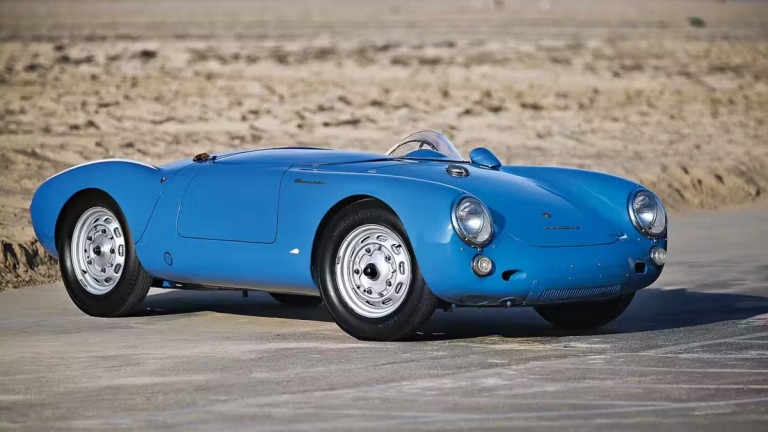
It was the company's first thoroughbred racing and one of the most important models in its history. With a weight of about 550 kg and an advanced boxer engine age with four camshafts, he managed to win much stronger cars on technical routes.
It used a four-cylinder boxer 1.498 cubic centimetre engine with a power of about 110 horsepower on 7,800 p.a.. Her weight was just 550 kg, which gave her an excellent price per horse. Acceleration of 0-100 km/h took place in about 7.5 seconds and the top speed reached 220 km/h.
Porsche 912
A few years later came the 912, which looked like 911 but had a smaller engine. It was lighter and easier to drive, which today makes it particularly dear to brand friends.
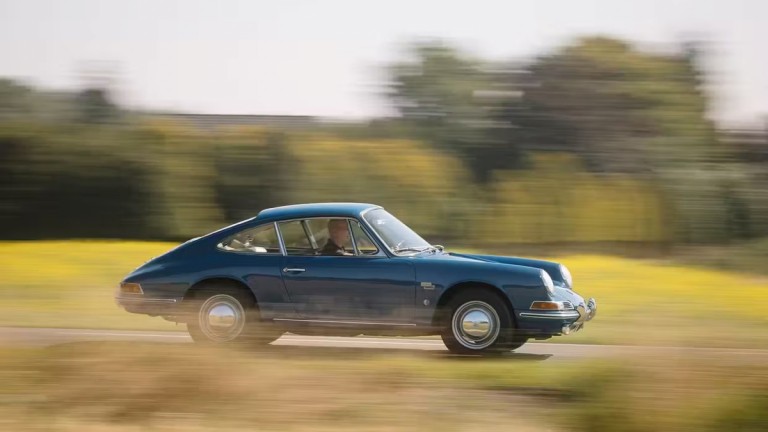
It was presented in 1965 as a more affordable alternative to 911. He was using his four-cylinder engine of 356, which made it more light and balanced. It did not have the power of 911, but it offered better control and more friendly behavior, elements that are now highly appreciated.
912 was based on the body of the first 911, but with significant differences in road behaviour. The smaller engine meant less weight on the rear axle, which improved stability and made the car more predictable at the limit.
He also had lower maintenance costs, which made it more accessible to a wider audience in its time.
He wore a 1.582 cubic centimetre engine with a power of 90 horsepower at 5,800 p.m. Her weight was about 970 kg, at maximum speed 185 km/h and acceleration 0-100 in 13.5 seconds. Consumption was lower than 911 of the time, which made it more practical.
Porsche 914
The 914 was a different proposal with the engine in the center. At first it was not particularly appreciated, but today it is considered a precursor to Boxster and Cayman, thanks to its balance and road behaviour.
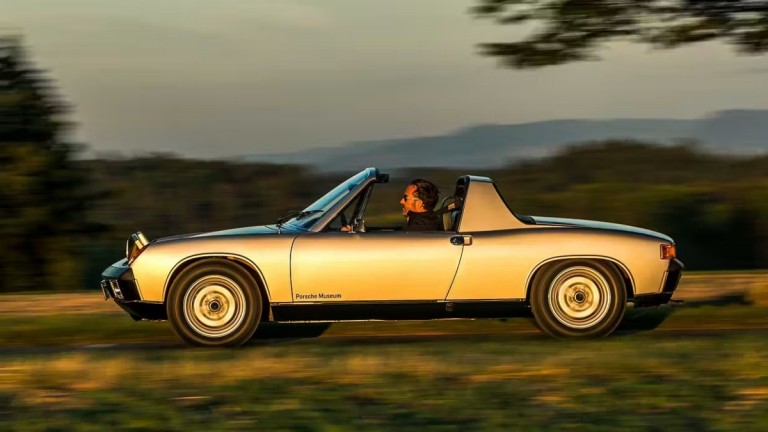
It was a radical proposition with center-mannered layout and targa-type design. Working with Volkswagen affected its image, but in practice it was a very well-built sports car with excellent flexibility. Today it is considered a forerunner of modern centre-manager Porsche.
914 singled out for the targa-type frame with detachable roof and for weight distribution near 50:50. Her suspension and geometry gave her very good grip on the turns, while the driving position was lower and «racing» in relation to other Porsches of the time.
The Porsche 914 in version 2.0 it had a 1,971 cubic centimetre engine with 100 horsepower at 5,000 p.a. Its weight was about 950 kg, with 0-100 in 10.5 seconds and top speed near 190 km/h. There were also smaller versions of 1.7 and 1.8 liters with lower power.
Porsche 944 Turbo
In the 1980s, the 944 Turbo brought a separate technology with the engine in front and the crate back. This gave ideal weight distribution and excellent stability, to the point where it even threatened 911.
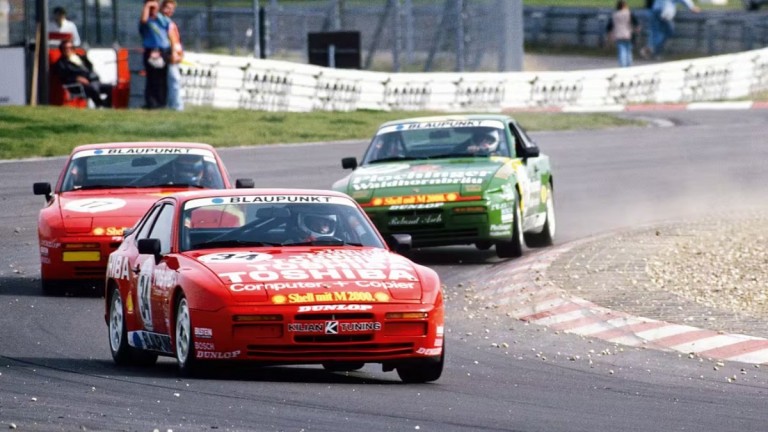
944 Turbo brought sophisticated supercharge and advanced control systems for the season. Her engine had intercooler and provided linear power efficiency, while the frame was designed for high speeds with great stability. The transaxle system carried the crate back, reducing inertia and improving the balance in turns.
It was equipped with a four cylinder engine 2.479 cubic centimetres with turbo. Power started from 220 horsepower and reached 250 horsepower in the most powerful versions. The 0-100 was about 5.9 seconds and the top speed reached 260 km/h, weighing around 1,350 kg.
Porsche Carrera GT
The Carrera GT showed her most extreme face Porsche. With one V10 engine and manual box, offered a clean, «analogue» Experience that today is considered unique. Without many electronic aids, he required an experienced driver, but offered one of the most authentic driving experiences ever.
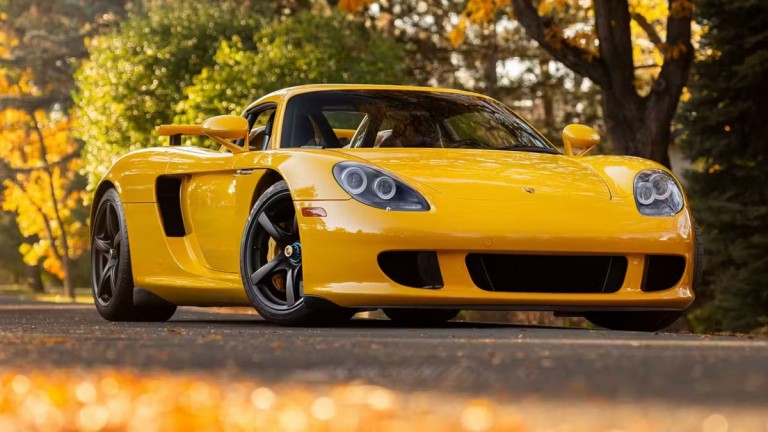
He also stood out for the use of carbon in the chassis and for the ceramic clutch, which was difficult to use but extremely light.
The Porsche Carrera GT had a V10 engine 5,733 cubic with a power of 612 horses at 8,000 p.a. and a torque of 590 Nm. The weight was about 1,380 kg. Acceleration of 0-100 was done in 3.9 seconds, 0-200 in 9.9 seconds and the top speed reached 330 km/h.
Porsche 718 Boxster
From modern models, 718 Boxster GTS 4.0 It stands out for the atmospheric engine and its intense character, at a time when everything becomes more electrical.
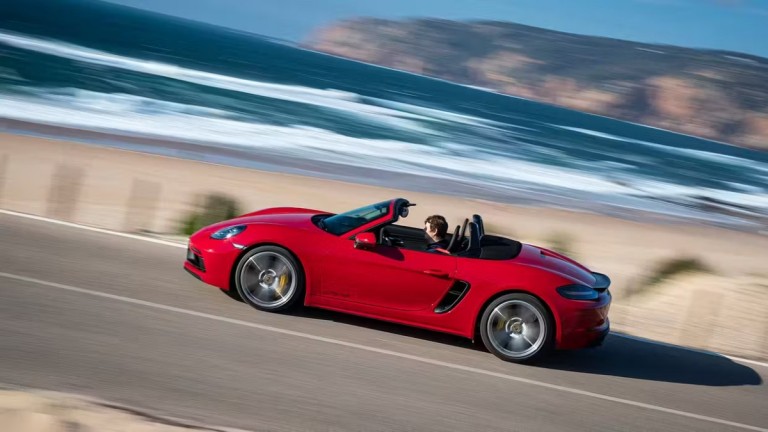
The 718 Boxster GTS 4.0 It stands out today because it maintains an atmospheric six-cylinder engine at a time when most manufacturers use turbo. This engine gives immediate response and characteristic sound, while placing it in the center ensures an ideal balance.
It uses an atmospheric six-cylinder engine that delivers its power linearly. The gas response is immediate, without delay by turbo, while placing in the center ensures ideal weight distribution and very good feeling at the steering wheel, as the manual box capacity enhances the driving character.
It has a six-cylinder engine boxer 3,995 cubic with a power of 400 horsepower at 7,000 p.a. and a torque of 420 Nm. The 0-100 is 4.5 seconds with a manual box and 4.0 seconds with PDK, while the top speed reaches 293 km/h.
Porsche Taycan
The Taycan proves that Porsche can also succeed in electrification without losing her sport character.
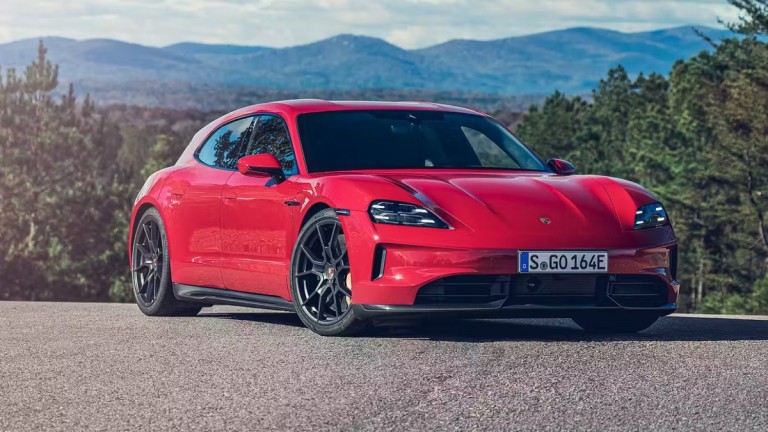
It's the Porsche's first electric model and brought new technologies, such as the 800 Volt system that allows very fast charging. Despite its great weight, it offers very good road behavior and performance that compete traditionally sports cars.
The placing of the battery low on the floor lowers the centre of gravity, while the four-wheel drive with two electric motors allows accurate torque distribution. In addition, it has a two-relation box on the rear axle, something rare for an electric car, which helps both performance and efficiency.
The Porsche Taycan the GTS version yields up to 700 horsepower in overboost mode. It has two electric motors and four-wheel drive. The battery has a capacity of approximately 105 kWh (mixed), with an autonomy of up to 628 km against WLTP. Acceleration 0-100 is approximately 3.3 seconds and the maximum speed is limited to 250 km/h. The maximum charge power reaches 320 kW.
These figures clearly show the evolution of Porsche in the decades. From the 110 horse racing to the 700 horsepower electric models, the brand has managed to adapt to the seasons without losing its sport character.
NEWS TODAY
The traditions of Ferrari, Maserati and Bentley in the Middle East stop
The Greek company that caught the 1 billion euro turnover
Season end for BMW i4, the successor is already here
Share it

