
Since the end of 2022, when ChatGPT abruptly invaded our everyday life, «Cassanders» warning of an imminent work revelation. Until now, these fears seemed excessive, as new technology It had not led to mass redundancies.
However, note is taken of Financial Times, in 2026 it appears to be the turning year. The labour market is now being reformed in a violent and extremely visible way, meaning red alert, especially for young graduates who see the doors of traditional «safe» Professionals shut down hermetically.
The central concern that wanders over the global economy is that governments, in their effort to win the race of Artificial Intelligence (AI), have left completely unprotected those suffering the consequences of the transition.
THE «silent» exclusion of new graduates
The problem is not necessarily identified in spectacular, mass layoffs, but in something more subtle: «freeze» of new recruitments. Molly Kinder, a senior researcher at the Brookings Institute, expresses her deep concern: «It is a clear and stated intention of employers and investors to develop the AI to create efficiency, with the aim, in many cases, of reducing labour costs». She warns that the medium and long-term impact of this transformation is underestimated.
Red alert for new graduates, as the Artificial Intelligence «freezes» Quietly new recruitments
The situation is already critical. More and more analyses, such as those of McKinsey in the UK invoked by senior consultant Terra Alas, show one «clear pattern» a sharp reduction in job ads in professions most exposed to Artificial Intelligence. Even if companies have not fired existing personnel, reason has changed radically. As described in features, in many groups AI may not do all the work of a man, but a manager can now make one «bot» Which will do enough of the work of five people to never have to hire a sixth.
The perfect alibi for corporate stagnation
Of course, the unemployment of graduates is not solely because of robots. Ben May, director of global macroeconomic research at Oxford Economics, points out that the current rise in youth unemployment in the US and Europe mainly reflects a wider recession in recruitment. This is exacerbated by the Trump government's unpredictable policies, the increase in wage tax in the United Kingdom and the oversupply of graduates in the Eurozone.
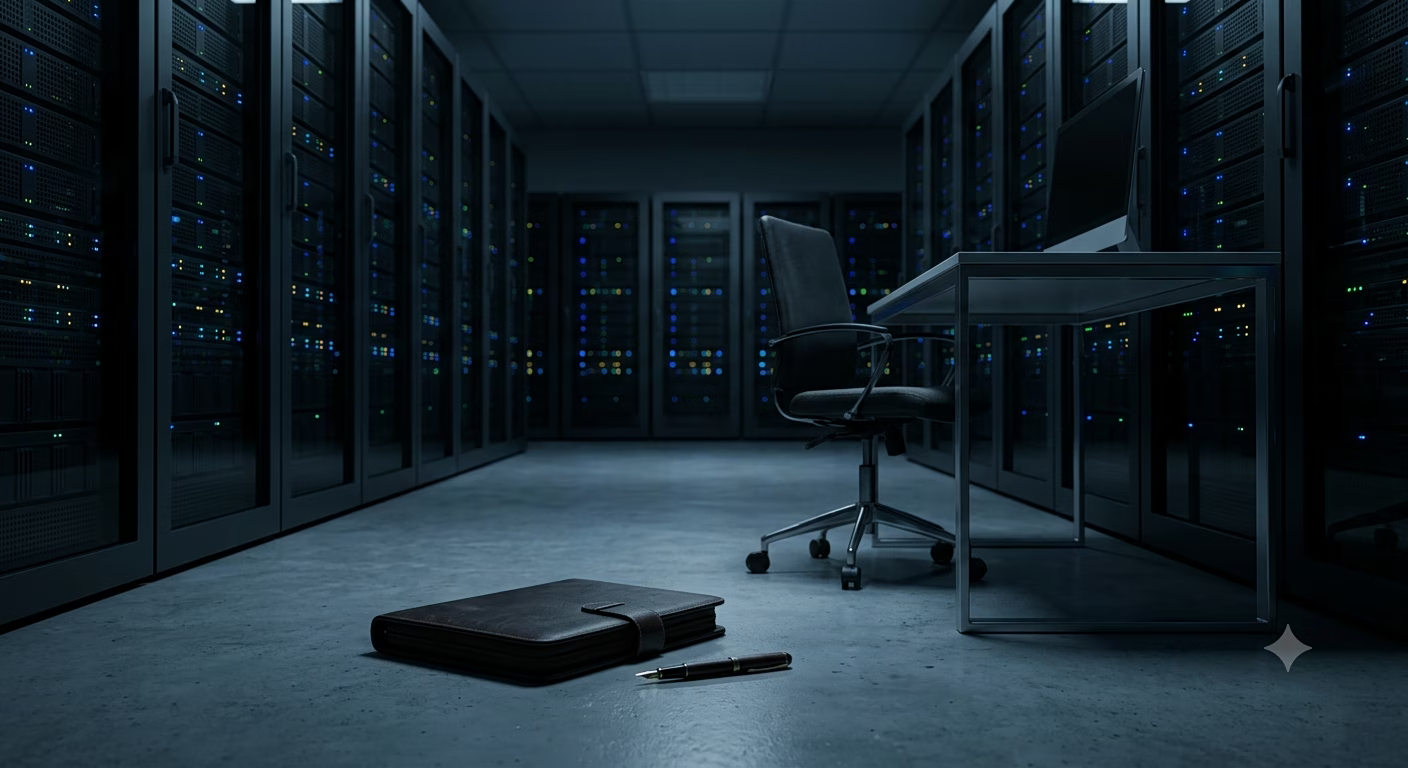
Artificial Intelligence «Closes the door» to young graduates
Many giants, in fact, use AI as the perfect communication «alibi»They connect their cuts to Artificial Intelligence because this goes through a «more positive message to investors», hiding under the carpet the weak demand or the wrong hirings of the past. However, in the fields of technology, financial and customer service, hitting the AI is absolutely real.
The other side: End of «boring» Work
Despite the alarm, there is also a positive look, especially for those already in the labour market. Stefano Scarpetta, the OECD employment director, observes that small and medium-sized enterprises that adopted Generic AI did not proceed to redundancies. Instead, they managed to develop, reduce workload and limit their dependence on external consultants.
This also confirms the Nobel Laureate Professor of LSE, Sir Christopher Pissaridis, noting that employees are generally very happy with the AI, as it relieves them of «Boring part of their work».
A political time bomb
Nevertheless, the future of those who now enter the track remains grim. 2026 emerges in the year when the despair of young graduates can turn into a political time bomb.
Mr. Pissarides draws attention to a crucial social difference in relation to the past: Unlike the previous waves of automation that destroyed jobs in processing, now the hit concerns graduates. These are the children of middle-class people who have belonged to stable professions throughout their lives. Because of this, the problem will become much more visible, both socially and politically.
The tragic irony is that these young people did "all they were told" to ensure economic stability, only to discover that the professions they chose are now the most vulnerable. If political leadership does not immediately understand the need for mass retraining —In particular, in the cultivation of critical thinking needed to identify the "feelings" of Artificial Intelligence— and does not go into a radical reinvention of professional paths, this generation is in danger of remaining permanently on the sidelines of the labour market.

