
There are crises that leave marks and crises that overturn everything. What the great European motor giants are experiencing today is in the second category. The electric motor and the rise of Chinese car industry do not simply act as pressure factors. They overthrow business models built in decades, dissolve strategies that seemed indisputable and challenge even the strongest names of the car industry.
To understand the magnitude of the earthquake, just look at the numbers. The China It produced in 2024 the record number of 31.4 million vehicles, i.e. more than a third of world production. At the same time, new energy vehicles as they call them in China (electric, hybrid etc.) amounted to 12.9 million units. Note that two-thirds of electric vehicles built worldwide in 2024 was made in China.
The worst for Western manufacturers is not just production numbers. It is the speed at which Chinese brands gain ground in both inside and outside China. BYD surpassed the Volkswagen Group in sales in China for the first time in 2024, with a difference of over 900,000 units. But this is also due to the subsidies given by the Chinese State for the purchase of Chinese electric cars, which is demonstrated during the first four months of 2026 where the Volkswagen Group returned to the top of the Chinese market through its joint ventures, taking advantage of the parallel rise of hybrids.
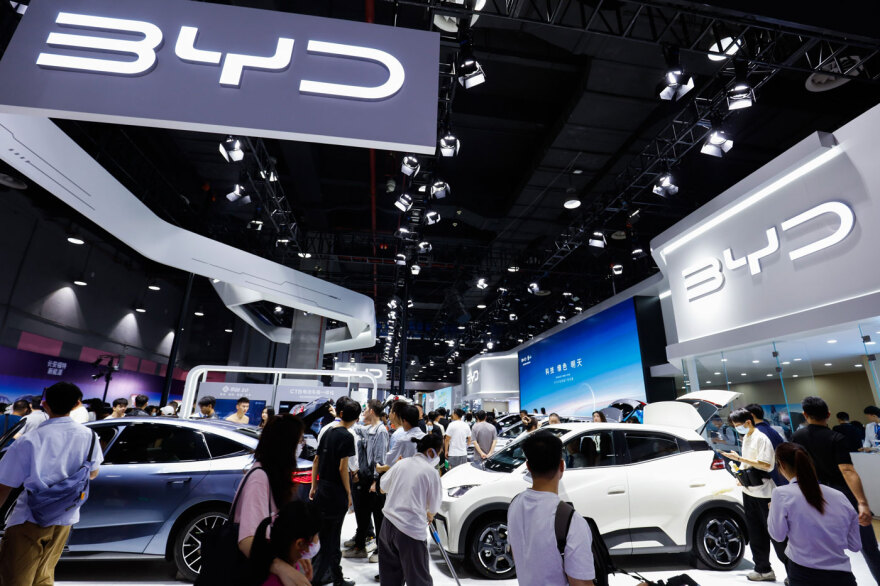
The market share of Chinese marks in Europe It nearly doubled from 2025 to over 800,000. Market share rose to 6.1% across Europe (EU, United Kingdom, Norway, Switzerland), led by SAIC (MG et al) and BYD.
The diamond that struggles to preserve its glow
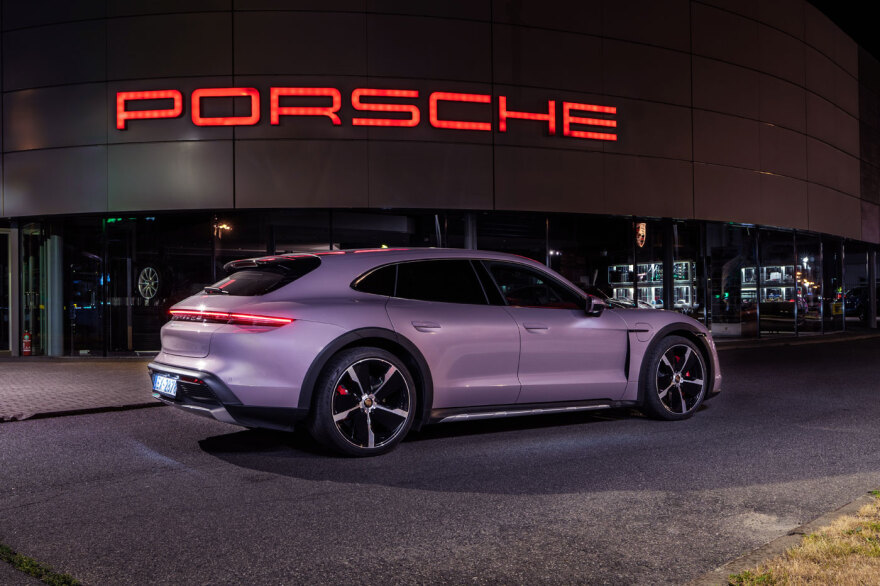
No example illustrates the above situation more glamorous than Porsche. The company that survived world wars, economic crises and all sorts of shocks today faces a collapse of profits with its operating profits falling from 4 billion euros to just 40 million in nine months, while the operating profit margin plummeted from 18% to 1.1%.
This is not the first time Porsche has been in a difficult position. The largest economic crisis in the company's history came in the early 1990s. In 1992 it recorded damage of some 240 million German marks, while its sales had fallen below 15,000 units worldwide. The range was considered old, production expensive, and the strong German mark had dissolved exports. Then Wendelin Wiedeking took over, implemented Japanese Toyota production methods, and the company was first saved with Boxster in 1996 and then with Cayenne in 2002 — an SUV that many viewed as a disgrace to the brand, but proved to be the financier of every subsequent hypercar, from Carrera GT to 918 Spyder.
But today's crisis has a different nature. It does not stem from productive inefficiency or monetary difficulties. It comes from a strategic weakness: Porsche chose to bet a lot on her electric future by targeting 80% of her sales to be purely electric models by 2030.
He dropped billions of investments in infrastructure for this purpose, at the same time the Chinese market collapsed for premium electric models, and Chinese brands had already set new standards on price, autonomy and technology.
Data changes time by year, month by month. In 2023 the German company was at the ultimate peak of its history. Sales had reached historical levels, profitability moved to unseen heights and investors felt that Porsche had found the ideal model to dominate the electric age as well. Taycan was presented as the ultimate premium electric model that would bring Porsche to the top of the new EV market, while China had evolved into the biggest brand market.
Except reality turned out to be a lot tougher.
The Chinese car market, the largest in the world, changed dramatically within a few years. Local Chinese brands were no longer limited to cheap cars. They invested huge amounts in technology, batteries, software and artificial intelligence, presenting premium electric models with much lower prices and more modern digital experience.
This hit European premium companies directly.
Porsche saw its sales in China retreat strongly, while Taycan began to face a serious demand problem. Consumers in China turned massively to local manufacturers offering more technology, greater autonomy and lower market costs.
The transition to EVs proved more expensive, slower and much more complex.
A culmination of all this was a leaked letter from CEO Oliver Blume to the company's 36,700 workers in Germany, in which she seldom admitted that Porsche's business model no longer stands for new reality: a world of Trump American tariffs from one and damaged sales to China on the other.
Porsche is but a Volkswagen Group brand, which is perhaps the giant who feels the pressure more intense. The Volkswagen Group's deliveries to China decreased by 9.5% in 2024, to 3.2 million units. In 2025, the Group delivered 2.69 million vehicles to China, reducing 8% annually, partly due to the increasing penetration of electric vehicles by domestic Chinese brands, reaching 53.28% of retail sales.
The strategic response of the Germans was policy «In China, for China»: model development exclusively for the Chinese market, acquisition of a share in XPeng for access to electrical platforms, and programming over 20 new electric and hybrid models for China in 2026. Whether this will suffice remains an open question.
Stellantis
It is not only the Germans who react to this situation. The great Stellantis, the group that collects brands such as Jeep, Peugeot, Opel, Citroën, Fiat, Maserati and Alfa Romeo. Stellantis' net profits in 2024 collapsed 70% compared to 2023, reaching 5.5 billion euros from 18.6 billion. In China, the picture is dramatic. Maserati, who once had a prominent place in the preferences of Chinese buyers, saw her sales collapse from 14,400 units in 2017 to just 1,228 in 2024, falling 71%. The joint joint venture with GAC Group for the production of Jeep in the country was led to bankruptcy in 2025. The Group was forced to delete 14.7 billion euros associated with forecasts for electric vehicles and to proceed with extensive restructurings.
Mercedes and Hyundai-Kia
Mercedes-Benz recorded a 3% decrease in global car sales in 2024, with main cause of difficulties in the Chinese market. Sales of top-end models such as S-Class and Maybach decreased 14% in 2024, while its fully electric models fell nearly 25%.
Hyundai-Kia, who presents a generally positive picture worldwide, does not escape pressure. Hyundai sold just 256,400 cars to China in 2022, from 1,13 million sold in 2016 — a collapse of almost 80% of its presence in a market it once considered secure. Both Korean brands are in the process of strategic repositioning, faced with intense pressures that escape the traditional industry data.
Map changes
What we are experiencing is not just a circular crisis. It is the deepest structural restructuring the car industry has known for a century. Foreign brands have lost nearly 30% of their share in the huge Chinese passenger car market from 2020 to 2025. Their inability to react to the speed at which domestic Chinese companies move, developing new models in less than two years, while Westerners need three to four, has already caused an earthquake.
Φυσικά τα μεγάλα ονόματα δεν θα εξαφανιστούν. Η Porsche, η Volkswagen, η Mercedes, η Stellantis, η Hyundai-Kia έχουν τους πόρους, το οικονομικό λίπος και την τεράστια τεχνογνωσία και θα προσαρμοστούν. Αλλά η εποχή που το όνομα εξασφάλιζε αυτόματα προνομιακή θέση σε κάθε αγορά ανήκει στο παρελθόν. Η λαίλαπα των κινεζικών αυτοκινήτων έχει φτάσει και στην Ευρώπη, και οι παλιοί κανόνες δεν ισχύουν πλέον.
Τάκης Τρακουσέλης

