When mercury hits red in the European SouthThe first spontaneous move is the push of a button. The air conditioner gets ahead, the familiar bomb fills the room and an artificial breath of frozen air offers immediate relief.
While air conditioning is now considered necessary the peoples of the South have been applying alternative cooling methods for centuries.
But this electric oasis is relatively recent conquest. For generations, people in Mediterranean —from the whitewashed alleys of the Greek islands to the stone villas of the Italian countryside and the shady Andalusian courtyards— survived from the toughest summers without any access to modern cooling systems at all.
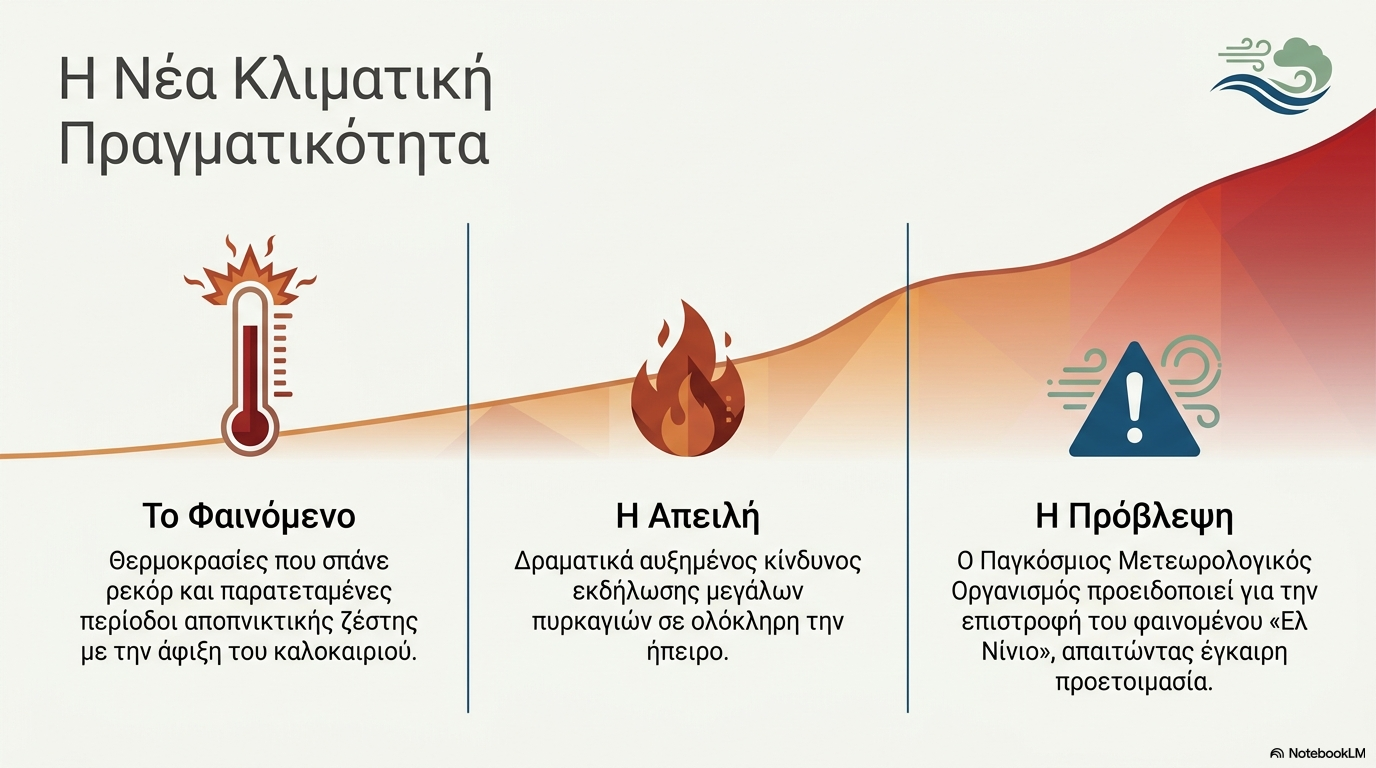
This summer arrived early, with Europe already hit under record breaking temperatures. Forecasts speak of prolonged periods of suffocating heat and an increased risk of large fires. A few days ago the World Weather Organization warned of the possible return of the El Niño phenomenon, calling on countries to prepare themselves in time.
Northern Europe alert
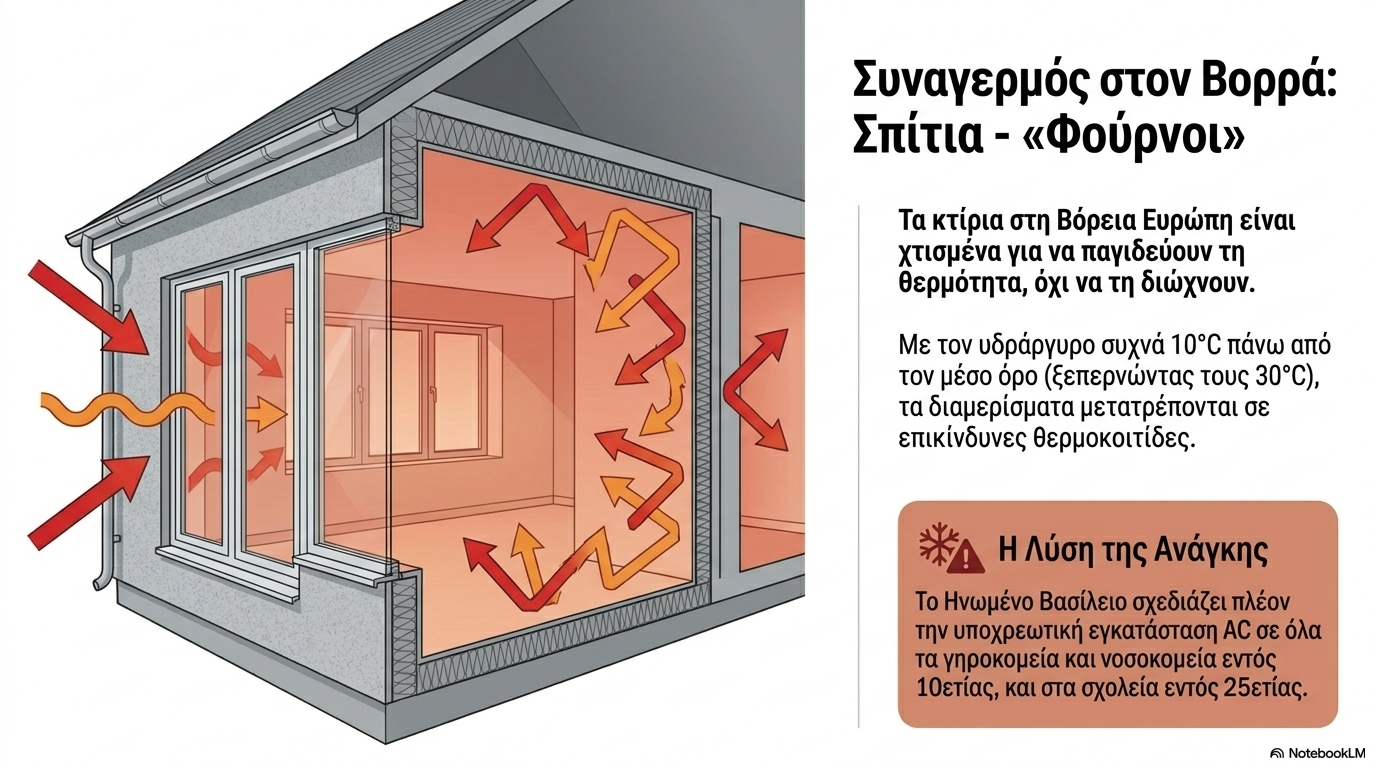
The houses in northern Europe, where a warm wave recently struck, are built to keep the heat inside, not to drive it away. Thus, many houses or apartments were converted into «ovens» during high temperatures, which in some places exceeded 30°C – more than 10°C above the average for the season.
In a report published by the Commission on Climate Change in the United Kingdom, air conditioning is proposed in all nursing homes and hospitals within the next 10 years and in all schools within the next 25 years.
Although some population categories the quick cooling offered by air conditioning may be necessary, for most people residing in northern Europe the alternatives are more than sufficient.
Long before air conditioning became the ultimate protagonist of urban summer, South Europeans had developed a deep, almost instinctive understanding of physics and architecture. Instead of fighting heat with ferocious energy consumption, their ally was the time, physical shading and materials of their own homes.
Spain has developed an extensive network «climate shelters». These are free public spaces, such as libraries or museums, where anyone can go to cool down, sit down and drink water. As the rest of Europe slowly begins to organize corresponding cool spaces, it makes sense to think about how to keep your home cool on the warm days and nights that will follow.
Many houses in Sicily have no air conditioner
Many houses in Sicily, Italy, in the south of Europe, do not have air conditioners.
While the recent heat wave was the only subject of discussion for the British on the largest island in the Mediterranean, heat is rarely an issue. It is simply considered a given about which you must organize your life, using methods passed from generation to generation.
Survival in the heat is a way of life. From building a new house to working hours to a new job...
Although Sicily was always warm, it happens as elsewhere: heat waves become more frequent, more extreme and last longer due to man-made climate change.
Euronews shares some useful tips on how to stay cool during a heat wave.
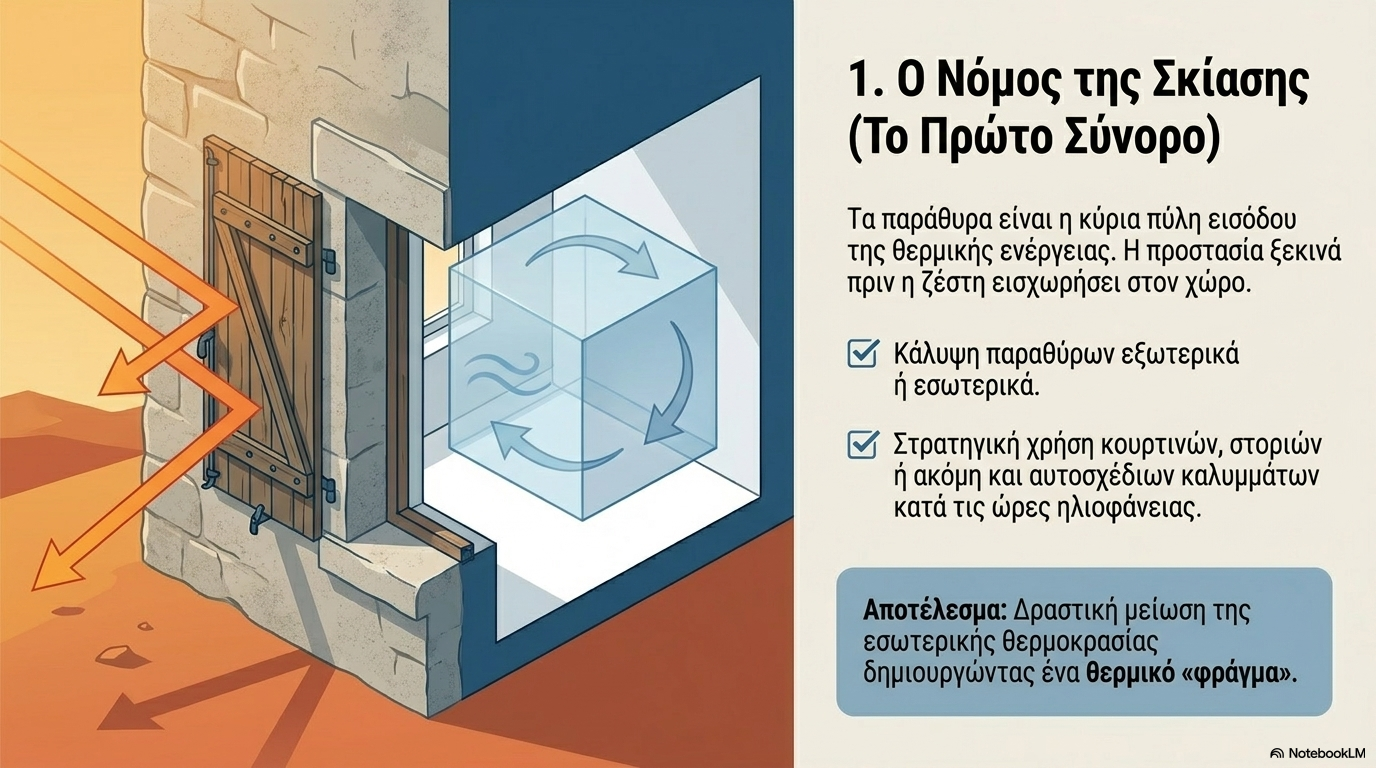
Keep the windows closed and covered
The windows must be covered from the outside or from the inside, or even from both sides, to prevent the heat from entering and maintaining the internal temperature as low as possible. Keeping curtains, blinds, or improvised windows makes a huge difference in the temperature inside the house.
Keep the clothes and sheets fresh
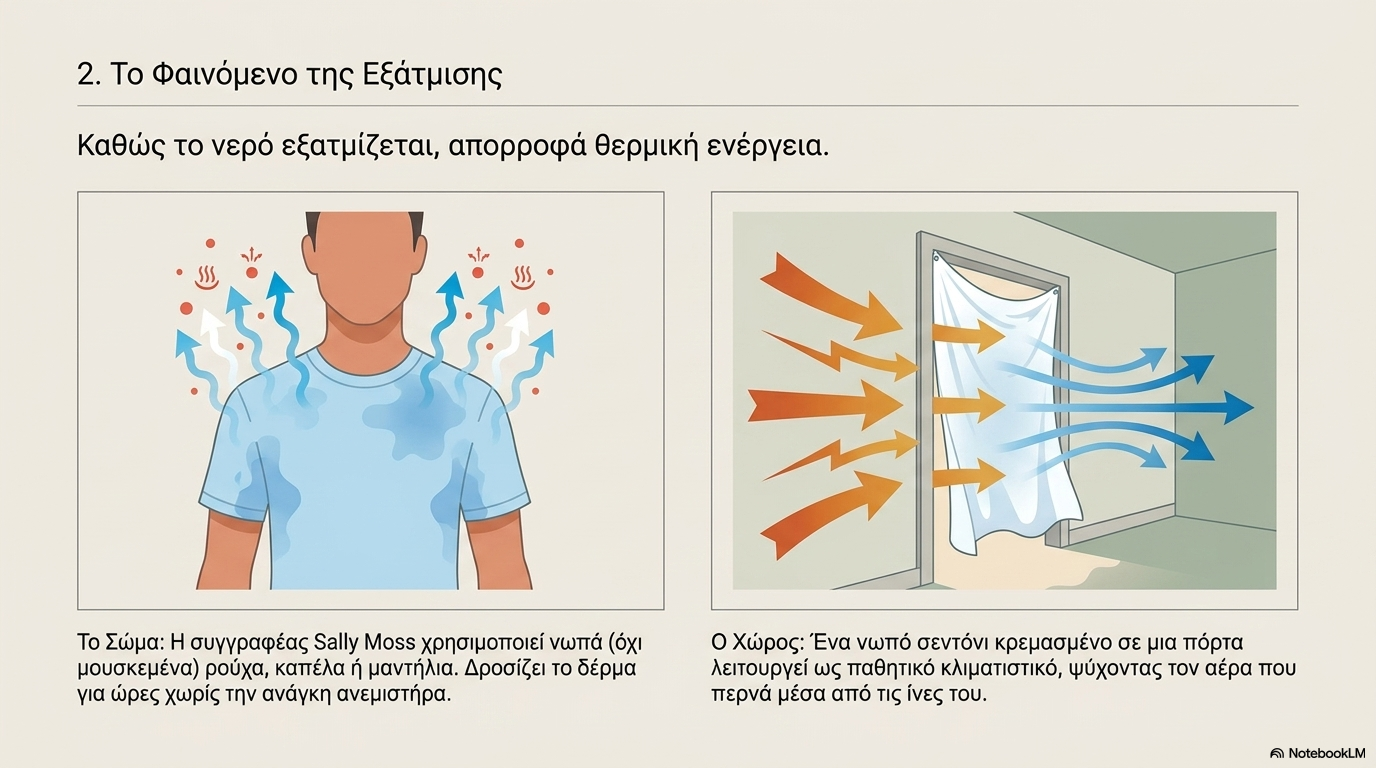
Writer Sally Moss says she has found a free way to stay cool. As he explains, it rains on a shirt, squeezes it so it's fresh and not soaked and wears it while it works. As the water evaporates, it cools the skin.
Sally says this trick is holding her. «really cool for hours without needing a fan» and that «improves significantly» the quality of her life. You can do the same with a fresh hat, handkerchief or piece of fabric around your neck.
Don't limit yourself to the clothes. Wet a sheet or any large piece of cloth, so that it is simply fresh, and hang it on a door. As the air passes through the fabric, it will cool the space.
Lunch is not lazy.
The Spaniards are famous for the afternoon nap after lunch – what they call siesta. Some talk about a lazy habit, but it actually makes perfect sense. In many warm countries, life stops from early noon until late afternoon: shops and businesses close, while adults share a nap with their children at a cool spot.
Sicilians take lunch break very seriously. The locals leave their homes this afternoon and start the «second shift» of the day. They return to work and often stay there until 7 or 8 at night. Working when the sun is set makes much more sense than trying to work with a lazy mind in the hottest hours of the day.
Yeah, but...
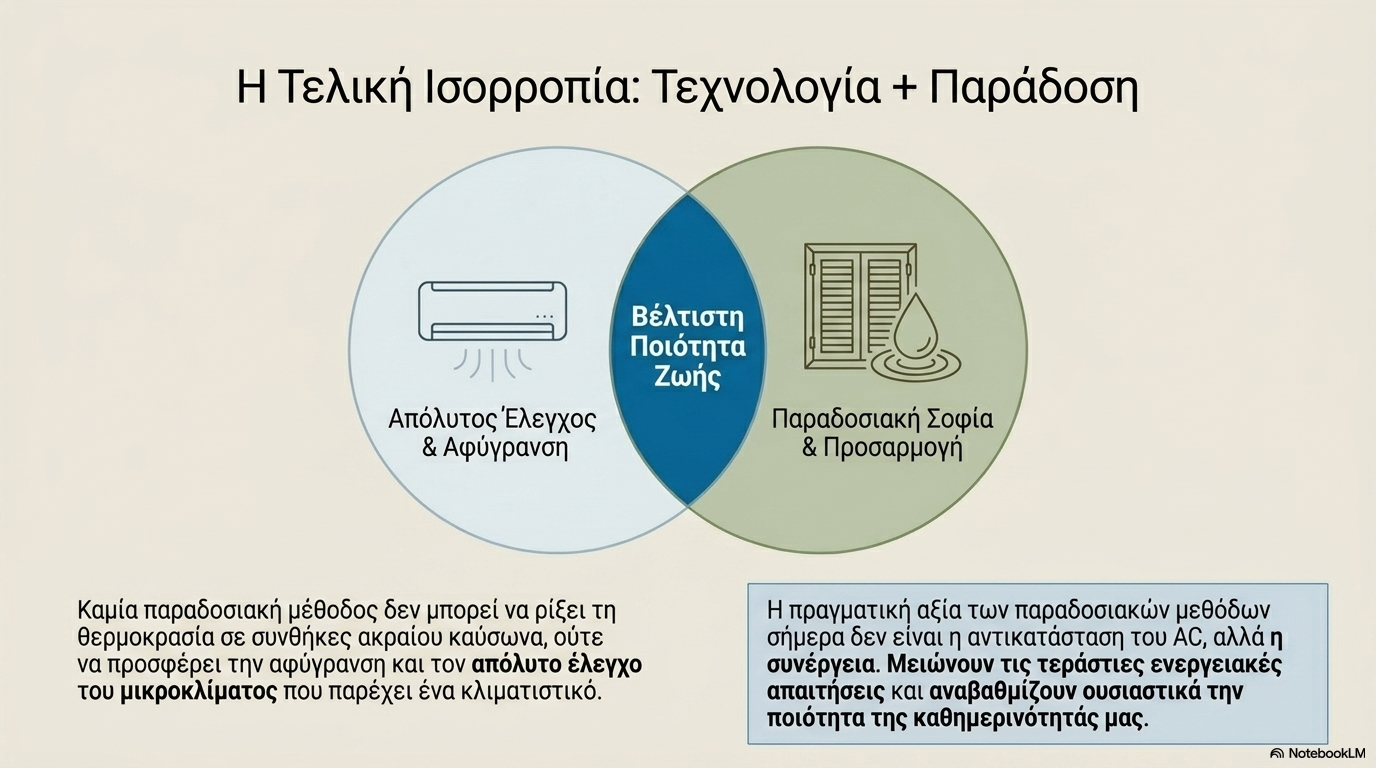
It should be noted that no traditional method, however wise or tested, is going to drop the temperature when the heat is out. The air conditioner offers something nature cannot give itself: absolute control of the microclimate and, above all, dehydration.
The real value of these traditional methods today is not to replace the air conditioner, but to help improve even a little our quality of life.