
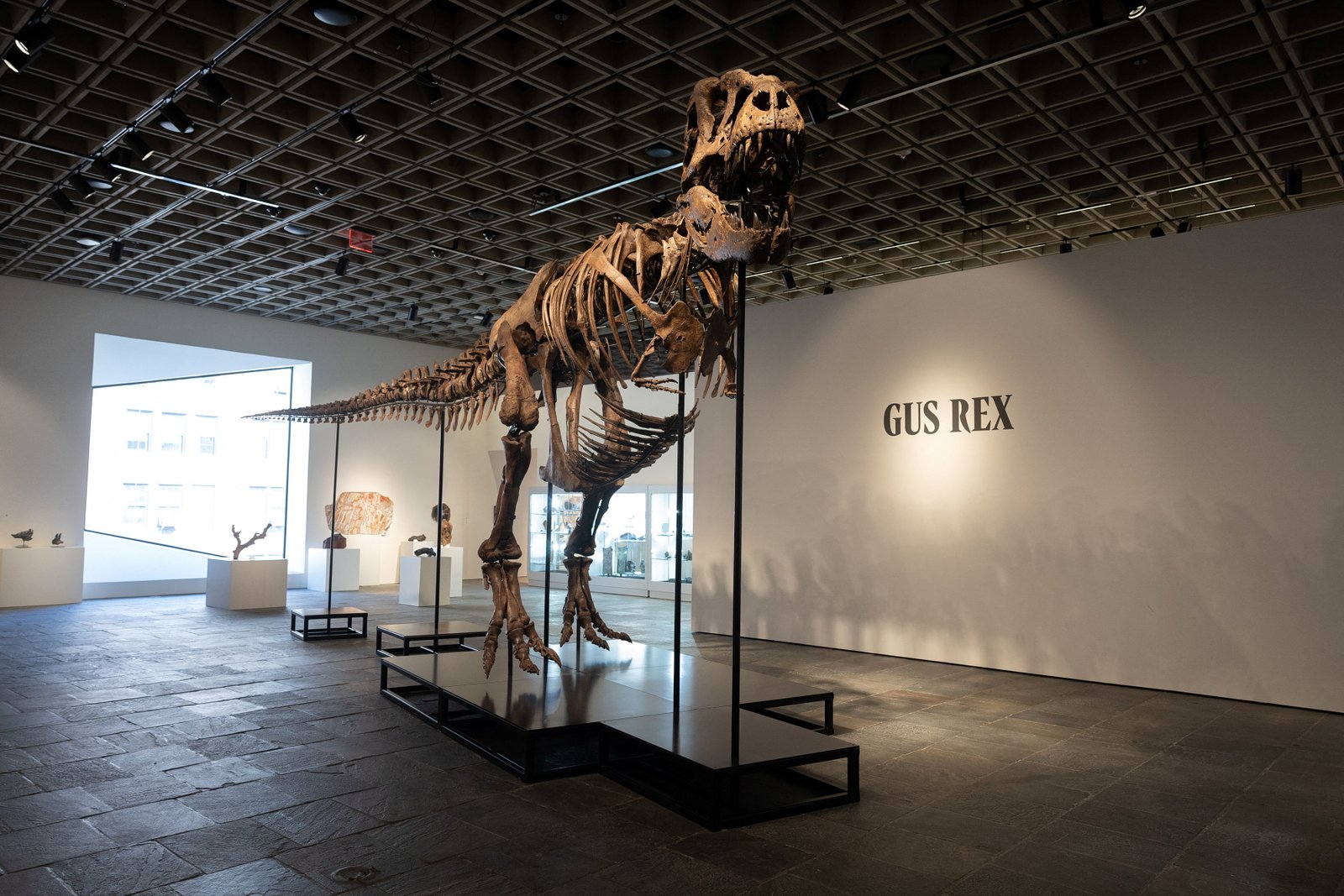
Tyrannosaurus Rex, and more specifically one of the largest and most complete skeletons T-Rex Who have ever been discovered, made history in New York.
In a long-awaited auction of the Sotheby’s house, this prehistoric giant was awarded to a buyer who participated by telephone for the astronomical amount of $50.1 million, including related supplies.
This final price far exceeded the original house estimates, which ranged between $20 million and $30 million, making T-Rex named Gus (Gus) the most expensive dinosaur fossil ever sold at auction.
With this sale the previous world record, held by a stegosaurus named Apex, which had been sold by the same house in 2024 for $44.6 million was dropped.
The impressive skeleton was discovered and excavated between the years 2021 and 2023 on a ranch in Harding County, South Dakota by the commercial fossil company Theropoda Expeditions.
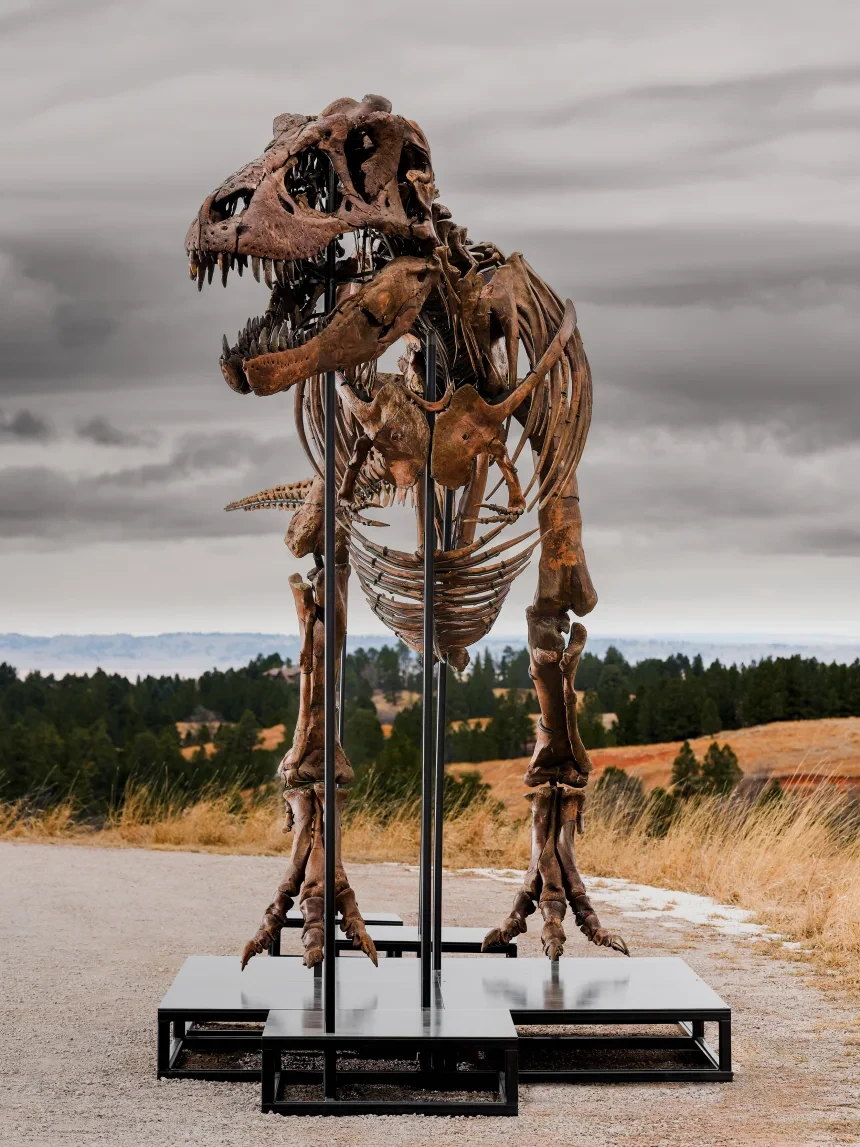
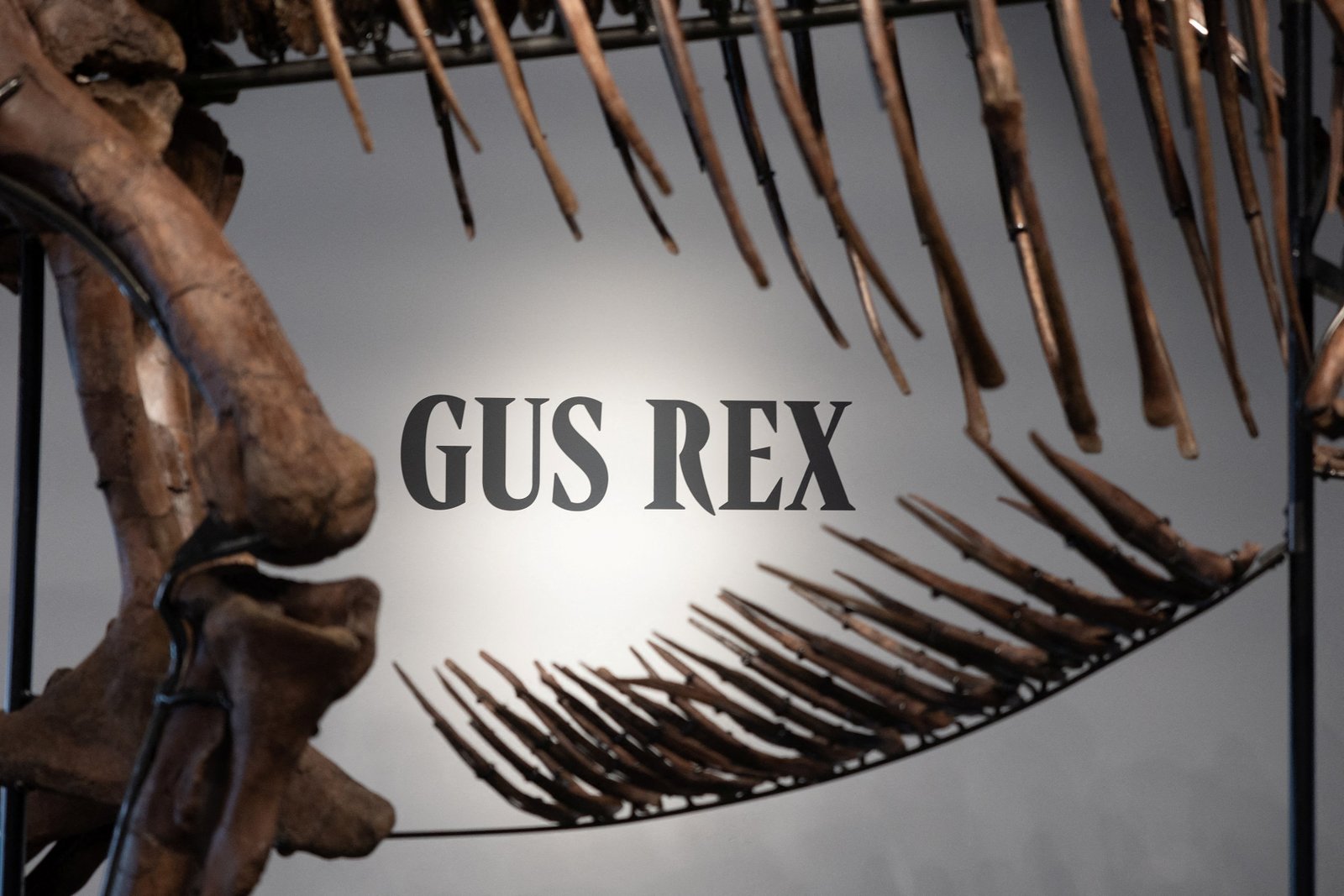
Name «Gus» was given in honor of Gary «Gus» Licking, who is the owner of the land where the fossils were found.
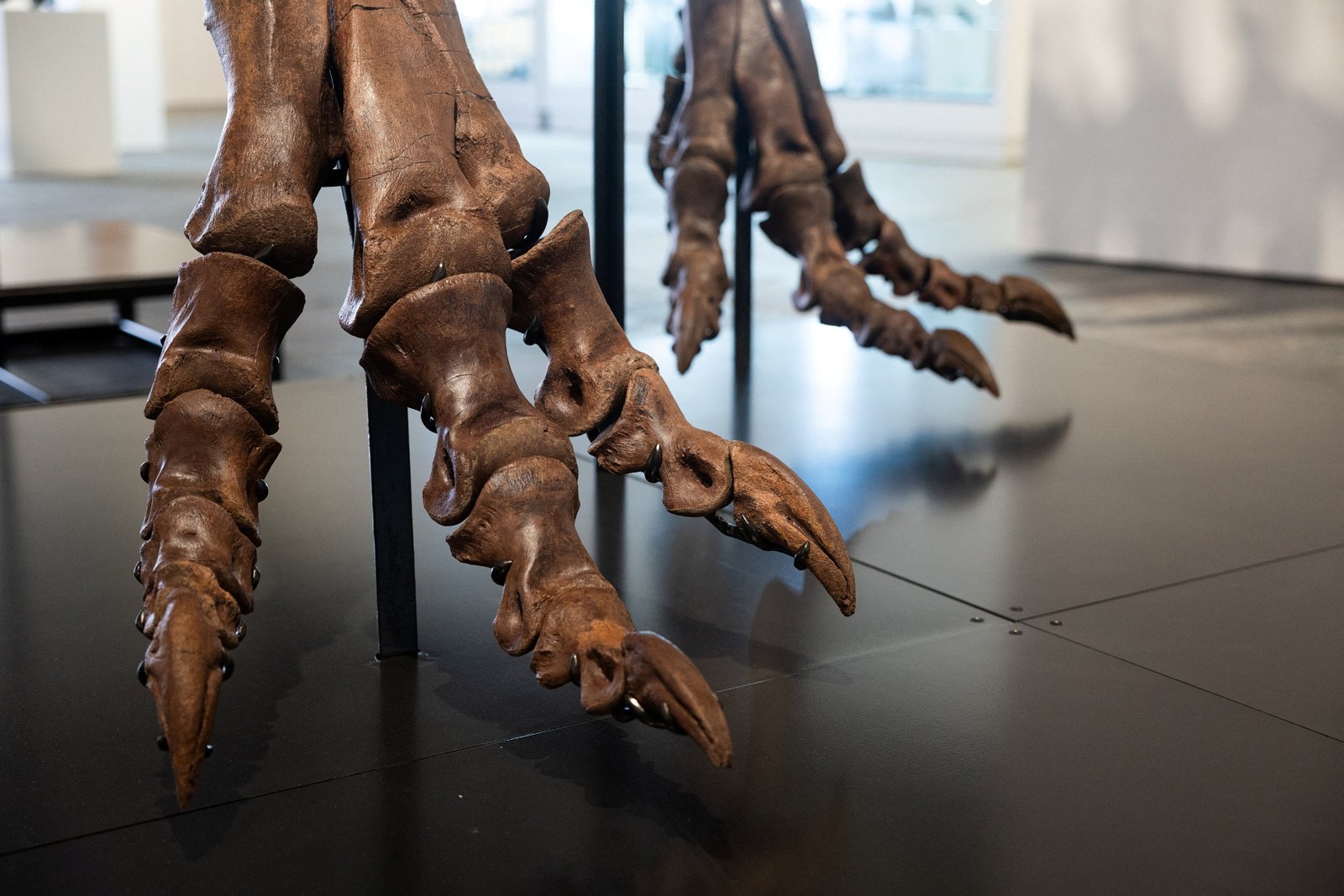
The skeleton, dating to 67 million years, is 3.8 metres tall, a total body length of about 11.5 meters, while its skull reaches 54 inches and the femur of 50.39 inches.
It consists of 183 fossilized bone elements, including 30 extremely rare gastric ribs, meaning that the skeleton is 61% complete in terms of bone number and 75% to 80% in terms of total bone mass.
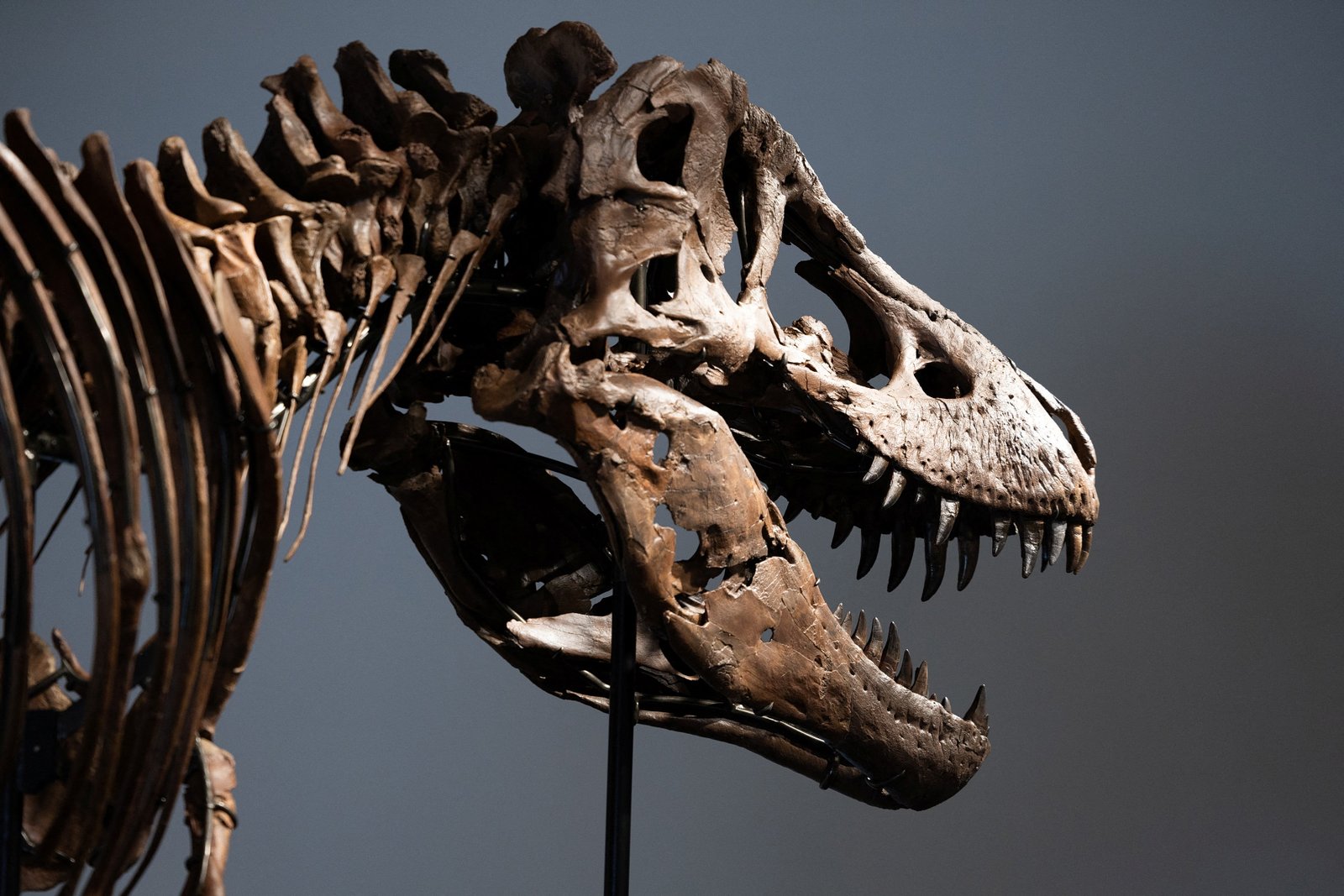
Gus' skull is so large and heavy it was impossible to place directly on the rest of the skeleton.
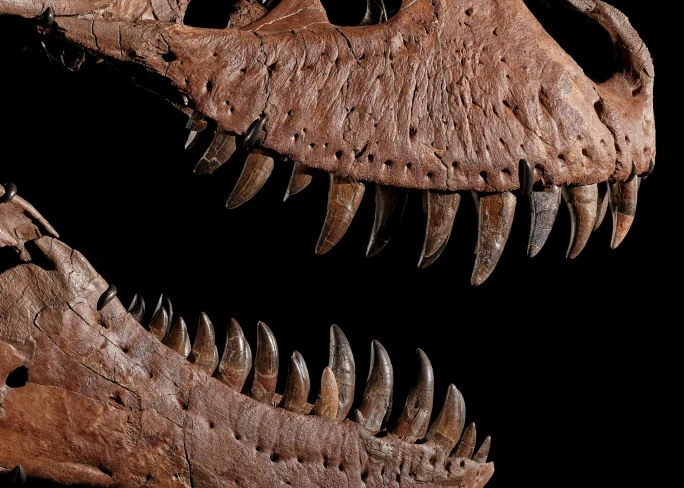
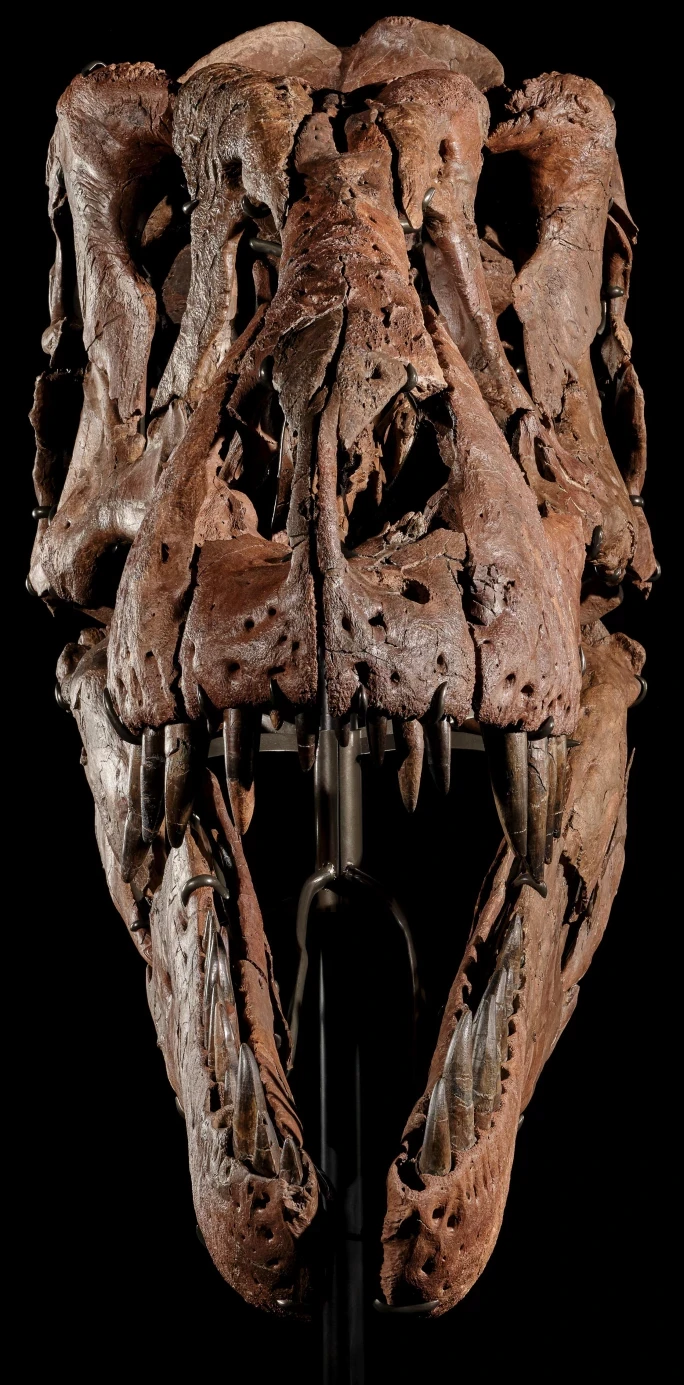
For this reason, Sotheby’s house placed a faithful copy of the skull on the frame, while the original, with its huge and sharp teeth, was exposed separately to the lobby of the Broyer building in New York City.
Beyond its size, the skeleton reveals valuable details of the battle-filled life that Tyrannosaurus lived in the hills of South Dakota.
His bones bear various pathologies, such as apparent signs of bites of other T-Rex on the skull, on the right jaw and on other parts of the body, which were caused either during battles or by postmortem plundering of his carcass.
At the same time, earlier fractures were detected on several sides of it, which had healed while the dinosaur was still alive.
Scientific rage
Despite the commercial success of the auction, Gus's sale to a private individual has sparked intense reactions to the global scientific community.
Many paleontologists express serious concerns that turning fossils into luxury goods and social status symbols deprive universities and museums of the possibility of studying them.
«The current tendency to promote and sell dinosaur fossils as rare works of art at outrageous prices from auction houses is extremely worrying, as is the idea of their purchase as a symbol of social status or as a commodity» commented Richard Butler, professor of Paleontology Spongemakers at the University of Birmingham.
«A fossil not found in a recognized museum collection cannot be studied and therefore lost for any research. Prices are now inaccessible to museums, at the expense of science».
Professor Stephen Brusate from the University of Edinburgh on his part points to the legal vacuum that allows such sales to the United States. «Since this Tyrannosaurus Rex has been found on American soil, the auction is perfectly legal, as in the US everyone can dispose as he wishes in his private land».
However, he stresses that this reality continues to deeply concern scientists, especially when in other countries, such as Brazil or Mongolia, the legislation stipulates that all fossils are state property and are protected as national heritage.
Practice is not unprecedented in the fossil market. When billionaire Ken Griffin acquired Stegosaurus Apex in 2024 from the same house, he granted him to the American Museum of Natural History in the form of a four-year loan.
However, this is not a solution to a problem that employs paleontologists. When a finding remains in the ownership of a private individual, it can at any time be withdrawn from the museum facilities, depriving researchers of the continuous access, stability and possibility of verifying the data which ensures only a state, public collection notes CNN International.
Sotheby’s house defends these auctions by showing the position that without the contribution of private excavation workshops, much of these prehistoric treasures would remain forever buried. This is also the main argument of those who support the fossil trade. «Commercialization acts as a lifesaver for findings that would otherwise be altered or lost in the underground» support.
Scientists, however, project an unwavering counter venture. A fossil preserved from oblivion only to end up locked up in a private mansion, in fact not saved for humanity, becomes just another high-value investment product.
Legally, a Tyrannosaurus Rex may indeed be the property of the land owner, the house auctioning him or the buyer with the required millions. The most meaningful question, however, remains ethical and scientific: can such a piece of the history of the planet belong solely to a man?

