
Within a short time, one of Europe's most ambitious industrial projects was led to collapse leaving behind losses of more than 10 billion euros and serious questions about the continent's strategy.
One of the largest industrial ventures that began in Europe in recent years it has now led to a clear economic failure, as initial expectations have never been translated into meaningful results, eventually leading the effort to a dead end.
At the centre is the Northvolt, a company founded by former Tesla executives, having as its main objective to create the continent's first essentially large autonomous supply chain for «European batteries», thus reducing dependence on Asia.
ARTICLE CONTINUES AFTER ADVERSION
For years, the Swedish company presented itself as the big bet of the European car industry, having even secured strong political support, substantial funding from the European Investment Bank, billion-dollar commitments from governments such as Germany and the Canada, But also investments by giants like Goldman Sachs.
At her side were also found leading car manufacturers, such as Volkswagen and Volvo, viewed as a key pillar for its future electric motor in Europe.
The original plan was impressive, since it included περισσότερα από 15 δισεκατομμύρια ευρώ σε ιδιωτικά και δημόσια κεφάλαια, συμβόλαια παραγγελιών αξίας άνω των 50 δισ. ευρώ και ένα δίκτυο εργοστασίων μεγάλης κλίμακας σε Σουηδία, Γερμανία και Καναδά. The aim was to create a Western rival awe against China, which controls a huge part of the purchase of raw materials and the production of batteries.
ARTICLE CONTINUES AFTER ADVERSION
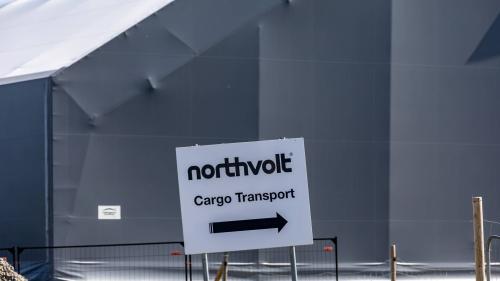
In practice, however, Northvolt has never been able to deliver on its promises. The company's flagship plant in Sweden, in the city of Skellefteå, operated only 1% of the planned capacity, resulting in no delivery of agreed orders batteries. Delays accumulated, the supply chain remained chaotic and dependence on suppliers of China, Japan and South Korea continued at an unabated pace.
The problem was not only technical but strategic. Northvolt underestimated the advantage of Chinese competitors, which control over 96% of the world lithium, cobalt and nickel. Without these critical materials, no European company could stand competitively. At the same time, slowness in wide acceptance of electric vehicles in the European market made the company's business model even more fragile.
ARTICLE CONTINUES AFTER ADVERSION
The first serious retreat came to Canada, where the planned unit was closed, despite the government's toll support and investments of 5 billion euros. In USA, losses reached EUR 6 billion, while the total loss of the group was launched. In 2024 Northvolt was faced with bankruptcy, with investors talking about «One of the biggest industrial failures in Europe's history».
Finally in March 2025 the company applied for bankruptcy and She continued her limited work until May, when she stopped her work completely.At the same time, most of its facilities had been bought out by American starttu p Lyten, leaving behind her unfulfilled the dream of creating a self-sufficient European battery supply chain.
Our continent not only did not manage to reduce its dependence on China, but είδε και δισεκατομμύρια ευρώ δημοσίων και ιδιωτικών κεφαλαίων να εξαϋλώνονται χωρίς να υπάρχουν ουσιαστικά αποτελέσματα.
ARTICLE CONTINUES AFTER ADVERSION
Read also:

