
A shipment that supposedly contained bananas from Latin America developed at the beginning of a survey extending from Spanish ports to Wall Street, his luxurious properties Dubai, offshore companies and trade with cryptocurrencies.
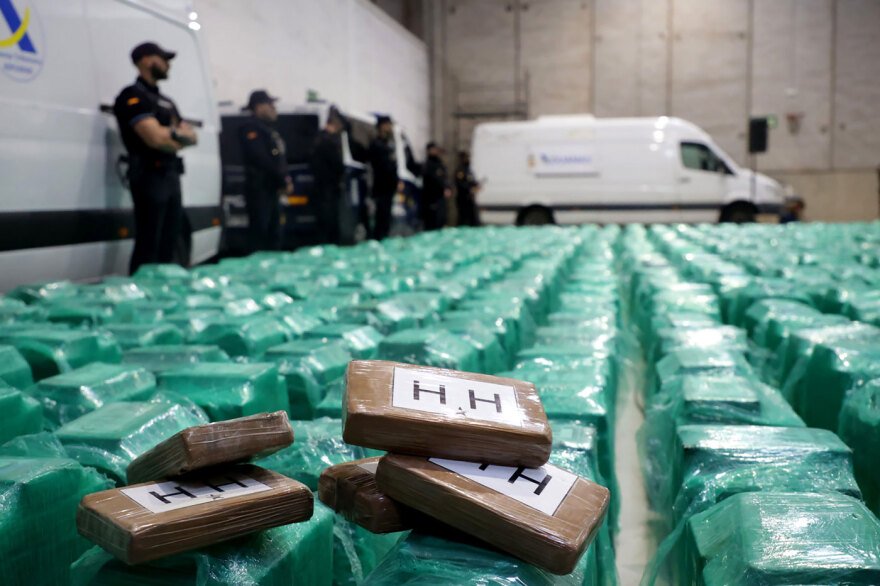
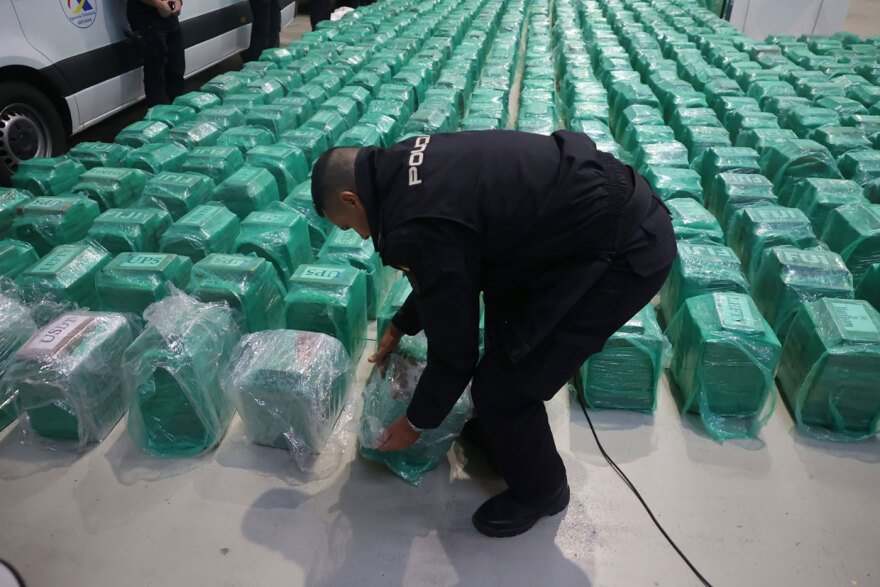
In a revealing report, Bloomberg Unwraps the thread of the case, catching it from the container that arrived in the autumn of 2024 at the port of Alhetira, in the south Spain, where the authorities detected around 13 tonnes cocaine. The quantity was then the largest seizure of the drug in the country's history and one of the largest ever recorded in Europe.
The investigation that followed revealed, according to Bloomberg, an alleged international money laundering network, which reaches the founders of a special purpose takeover company - known as SPAC - in California. The company raised about $200 million from investors through an initial public offer only in 2025.
A 13-ton haul of cocaine disabled as bananas expositions alleged links between US financiers, luxury Dubai real estate and a crypto-trading Irish fintech.
Alex Morgan explores https://t.co/Fe8IMvzRRp pic.twitter. com/JjtMBNGG3d
— Bloomberg TV (@BloombergTV) July 17, 2026
The case includes a alleged drug baron, a high-ranking police officer serving in the money laundering unit, millions of euros hidden inside the walls of a residence, a distant relative of the king of Spain, financial technology companies, bitcoin and luxury villas in Dubai.
Details arise from preliminary documents prepared by researchers in Madrid and come to Bloomberg's knowledge. Basic persons have been designated officially «Investigados»persons under judicial investigation in the Spanish legal system. So far, however, they have not been charged.
The alleged brain and police officer with 20 million euros
In the centre of the alleged network is, according to researchers, Ignacio Torran. He is described as a fan of Real Madrid, a lover of luxury watches and a man who at some point planned to invest part of his fortune in football players from Argentina.
On his behalf Oscar Sanchez was reportedly working, who, at the time of the great seizure of 2024, was head of the Spanish national police unit to combat money laundering. Sanchez is believed to have been using his position to help dealers. When police investigated his home, they found about 20m euros hidden in the walls, according to Spanish media.
Both Torran and Sanchez are in Spain and have been incarcerated. Toran's lawyer refused to comment. Sanchez's advocate did not deny that money was found in his client's house, but questioned the legality and process of collecting certain evidence. As he argued, messages used in the investigation were allegedly acquired without the required court permissions.
The king's distant relative and the investor from California
According to researchers, Torran had also worked with Francisco de Borbon, son of Duke and his distant relative King Felipe, as well as with the American investor Ketan Seth, who lived in a mansion in the exact Dover Shores district of Newport Beach in California.
Authorities argue that Seth and De Borbon were managers of Alpha Trading, a California-based company, through which Torran's money was reportedly being channelled from offshore accounts to a Panamanian bank. It's not clear how the two men met. However, they founded Alpha Trading in 2012 and presented it as one «Top consolidated supplier and commodity trading company»With offices in New York, Madrid and Miami.
Seth also maintained UPS mission stores in New York City in the 2010s. According to court documents, he was involved in disputes with property owners, which resulted in decisions on unpaid debts over $300,000.
The $200 million SPAC and the big funds
In 2025, Seth and De Borbon founded Blue Acquisition Corp., a special-purpose acquisition company, targeting investments in data centers and artificial intelligence. The company's president was taken over by Wesley Clark, a retired four-star general of the U.S. Army and former NATO supreme commander.
The company, which had registered Seth's residence in Newport Beach, he raised about $200 million via initial public offering in June 2025. He then proceeded to an agreement to acquire a data center at Niagara Falls.
The investment bank BTIG, which is in a takeover process by US Bancorp, helped organise the import. Blue's largest shareholders included large henge funds of Wall Street, such as Sona Asset Management and LMR Partners, according to Bloomberg figures.
Blue Acquisition is not named by Spanish researchers and is not charged with any illegal action. Seth resigned from the company on 9 June 2026, citing «family reasons», in accordance with a document to the supervisory authorities. Blue CEO David Bauer said Seth is no longer connected to the company in any capacity. De Borbon had been a special advisor to Blue, but this partnership was terminated in February.
The call for testimony and the international warrant
Seth has been called to testify, however through his lawyers he asked for a postponement and is now expected to appear in court in September. At the same time, he asked for an international arrest warrant issued against him to be lifted.
He did not answer Bloomberg's repeatedly emails and phone calls, nor a letter left at the address of his residence in Newport Beach. His lawyer refused to comment. De Borbon had been detained in Spain, but was then released. His counsel also made no statements.
The «grey zone» between legal and illegal economy
The importance of the case is not only due to the size of the seizure, but also to the position held by Sanchez, as well as the alleged role of investment schemes, fintech companies, cryptocurrency and international businesses.
Annette Idler, a Professor of Global Security at the University of Oxford, who has studied illegal supply networks, noted that successful criminal networks depend on legal markets, financial sector professionals, logistics companies and complex corporate structures to conceal their revenue.
«The grey zone between legal and illegal economic activity is precisely the environment in which many sophisticated criminal organizations thrive» Report.
The seizure in Alhetira followed the detection of another 1.6 tons of cocaine in May 2021. In both cases, drugs had been transported from South America, hidden in consignments of fruit. The total value of the two cargoes exceeded, according to the authorities, 350m euros.
When researchers examined Sanchez's phone records, they concluded that another 58 tons of cocaine had been smuggled into Spain from 2020 to 2024. This amount would be worth about $3.5 billion on the retail market, based on an average price of $60 per gram, according to Gabriel Feltran, professor at the Paris Sciences Po and criminal networks expert.
According to him, such incidents are no longer an exception, as an increasingly sophisticated network of intermediaries makes cocaine cheaper and easier to move, and facilitates money laundering.
Vitrine companies and mansions in Dubai
Researchers consider that Torran had created a grid of holding companies in Spain and abroad. Most appeared to belong typically to surrogates. When he was arrested, he allegedly controlled two Spanish participation groups and was preparing to activate a third.
Through these companies he was allegedly acquired real estate, mostly in Dubai. These included a mansion worth around EUR 10 million in the W Residences complex in Palm Jumeirah, as well as other properties, totaling EUR 11 million.
In his messages, according to researchers, Toran referred to them as «My homes»The organization also had two offshore corporate vehicles, including one in Panama, where a committed account had been created at Atlas Bank.
Although the authorities failed to seize cash or cryptocurrency, they estimate that during his arrest Torran held a bitcoin worth at least ten million euros.
The alleged network used both conventional coins and cryptocurrency to transfer money around the world. According to the investigation, he was trading with bitcoin, Tether and VXL Dollar. In order to complete money laundering, however, access to the traditional banking system was required.
Companies and financial structures in Ireland, Panama and São Tomé and Príncipe were reportedly joining here. One of the companies was ET Fintech Europe Ltd., based in Ireland. It belonged to De Borbon and other persons being investigated, according to court documents.
The Spanish authorities argue that ET Fintech «directly controlled by criminal organization».
Alina Bernard, shareholder and director of the company, denied that ET Fintech was involved in money laundering. As stated, the Spanish claims «substantially inaccurate the purpose and activities» the company, which was created to develop a digital banking platform.
She said she has fully cooperated with the investigation.
The alleged scheme also shows two entities in São Tomé, which were presented online as banks, but are not registered with the local financial supervisory authority.
In the field of money laundering, such structures are often called «listed banks»They make transactions for their customers, using accounts they maintain in larger financial institutions, thus concealing the identity of the real client.
These companies are considered by researchers central to the operation of the network. In a message from 2023, a close associate and principal financial administrator of Torran reportedly wrote that «Everything comes from these banks.» And that's where the money is. «go to other places».
The account in Panama and the «complex financial tool»
Another step of the alleged mechanism was the opening of a frozen account at Atlas Bank in Panama.
At least eight persons are listed in Spanish judicial documents as being involved in this structure. The account's custodian was Alpha Trading, the company managed by Seth and De Borbon.
According to researchers, Alpha Trading participated in money transfers through one «complex financial tool», without specifying in the documents exactly what form it was. The Spanish authorities argue that the information provided by the Panamanian authorities confirms money laundering operations.
According to the researchers, the entire structure was designed to conceal both the origin of the funds and the identity of the beneficiary, while giving the transactions «plea of legality».

