
The image of Greek tourism continues to be associated with impressive turnout figures. The airports they record continuous flows, Accommodation fill and the presence of foreign visitors is more than noticeable in popular destinations. However, behind the positive indicators of arrivals is reflected a completely different reality: tourists may be more, but the wallets They appear... shriveled.
An impressive increase in tourist arrivals in Greece in 2026 but also a decline in consumption per traveler
This contrast between quantitative growth and quality retreat the costs create a new landscape for the domestic market. The average cost per traveler is declining, as pressure from international inflation, increased cost of living in the countries of origin, and pinched tickets force them to travelers adapt their behavior. The result is a tourist stream that consumes less, stays fewer days and weighs carefully every euro before making it available to the local economy.
The shift in consumer behaviour
The change in logic «open wallet» It didn't happen by accident. The modern Traveller does not give up his vacation, but redefines his priorities. Protection of the available budget is achieved through specific tactics:
- Shorter duration of stay: The average duration of holidays is limited. Where guests arranged for ten days or two, they now often choose five days or four days.
- Focus and fun: Daily outing for food is partly replaced by rough solutions or supermarket purchases, while parallel spending on leisure and activities is reduced to a minimum.
- Retention in retail markets: Local shops, shopping shops and souvenir crafts see their visitability not translated into a similar turnover, as tourists avoid spontaneous purchases.
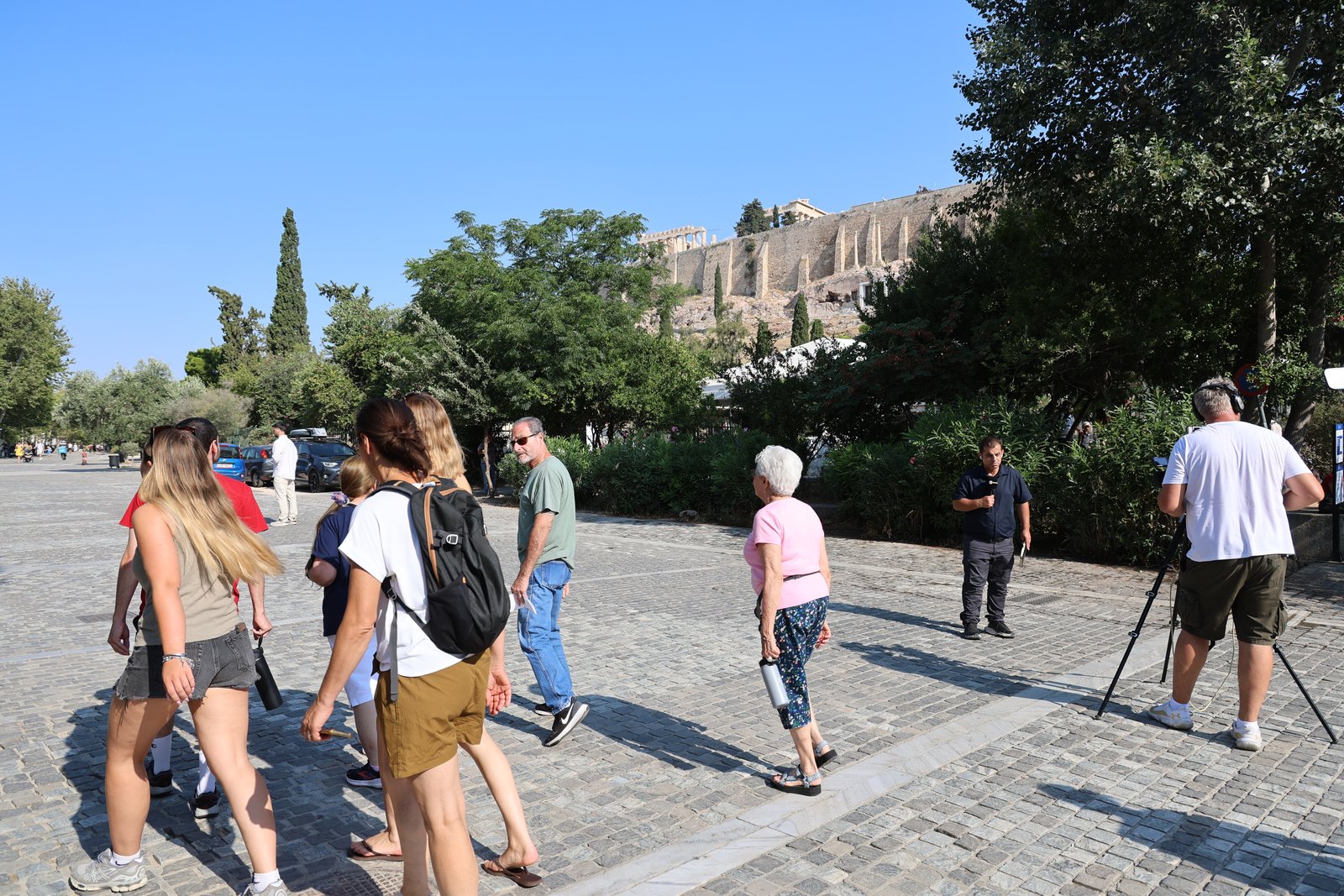
The attraction for tourists is Athens
This trend creates a rational attitude for the traveller, but extremely uncertain for local businesses, which support their survival in summer period.
With the existing data, the average cost per trip is about EUR 621.
In January-June 2026 (TTE), while incoming travel traffic rose by 15.4%, average expenditure per journey recorded a marginal drop of 0.6% (with a stronger decline of 1.4% in May). In 2025 it closed with an average cost increased by 3.8% (in ~625 euros), however, the trend since the first months of 2026 shows that travelers limit their costs per journey.
Arrivals and up and down by destination
According to the latest data from INSETE Intelligence in January–July 2026, 15,7 million international air arrivals were recorded, showing an increase of +541 thousand/+3,6% compared to the corresponding period of 2025.
The 1st quarter 2026 1.9 million international air arrivals were recorded, showing an increase of +245 thousand/+14.6% compared to the corresponding period of 2025. In particular, 584 thousand arrivals were recorded in January, showing an increase of +55 thousand/+10.5%. In February, 572 thousand international arrivals (+85 thousand/+17.5%) were recorded while in March international arrivals were formed to 767 km, showing an increase of +104 thousand/+15.7%.
The Second quarter began downhill as 1.5 million international arrivals were recorded in April, showing a marginal decline of -31 thousand/-1.9% compared to April 2025. Instead, in May 3.1 million international arrivals were recorded, showing an increase of +102 thousand/+3.4% compared to May 2025, while 4.1 million international arrivals were recorded in June, showing an increase of +70 thousand/+1.7% compared to June 2025.
The Third quarter started up, as 5.0 million international arrivals were recorded in July, showing an increase of +155 thousand/+ 3.2% compared to July 2025. During January–July 2026, the Athens International Airport recorded 4.9 million international arrivals, reduced by -42 thousand/0.8% compared to the corresponding period of 2025. The airport of Thessaloniki followed, with 1.6 million arrivals (+91 thousand/+6.0%).
The period 1 January–July 2026, at the International Airport Athens 4.9 million international arrivals were recorded, reduced by -42 thousand/0.8% compared to the corresponding period of 2025.
He followed her airport. Thessaloniki, with 1.6 million arrivals (+91 thousand/+6.0%).
The Heraklion 2.3 million international arrivals were recorded, increased by +119 thousand/+5.6% while in Chania arrivals were formed to 960 km, increased by +97 thousand/+11.3%.
The Rhodes 1.7 million international arrivals were recorded showing an increase of +61 mm/+3.7% while in Kos 729 km. presenting a decrease of -9 mm/-1.2%.
In Corfu, international arrivals amounted to 1.2 million, showing an increase of +92 thousand/+8.3%, while in Zakynthos they amounted to 618 thousand.
In Chapter 232 thousand international arrivals were recorded showing an increase of +8.0%, while in Aktium arrivals were formed to 247 mm, increased by +6.3%.
The Fungal 317 thousand international arrivals were recorded, increased by +27 thousand/+9.5% while in Santorini 351 thousand were recorded, showing an increase of +0.7%. In Kalamata 107 thousand arrivals increased by +20.8%, in Samos 86 mm increased by +19.5% and in Shadow 181 thousand increased by +12.1%.
In Horse 59 thousand arrivals were recorded with a reduction of -8.8% while in Mytilene 41 thousand showing a decrease -7.7%.
In particular, most international air arrivals were recorded in Crete, with 3.2 million arrivals and +217 thousand/+7.2% increase compared to 2025. Followed by Dodecanese, with 2.5 million arrivals and a rise of +59 thousand/+2.4%, Ionian Islands With 2.3 million arrivals, with an increase of +142 million/+6.6%, Cyclades with 668 mm arrivals (+30 mm/+4.7%) and Peloponnese with 154 thousand arrivals increased by +15.2%.

Kerkyra St. Stephen Tourists
Tourism: The challenge for the next day
The phenomenon «more tourists, smaller wallets» brings to the fore the limits of the quantitative development model. The simple counting of arrivals is no longer sufficient to reflect the health of the tourism sector.
The burden of infrastructure —from water supply and waste collection networks to road network and energy— is calculated on the basis of the volume of people charged with an area. When this volume increases but revenues per head decline, the net benefit for local communities shrinks.
The challenge for the next day focuses on the redesign of the strategy: the transition from the logic of «arrival record» attract visitors who leave a substantial footprint and also the fair spatial distribution of revenue across all regions of the country.

