
Prohibition PV installation (among others) in forests, forest areas and NATURA regions and wind in Attica, Thessaloniki and areas with an altitude of over 1,200 meters (i) the Special Spatial Framework for Renewable Energy put to public consultation today by the Ministry of Environment and Energy.
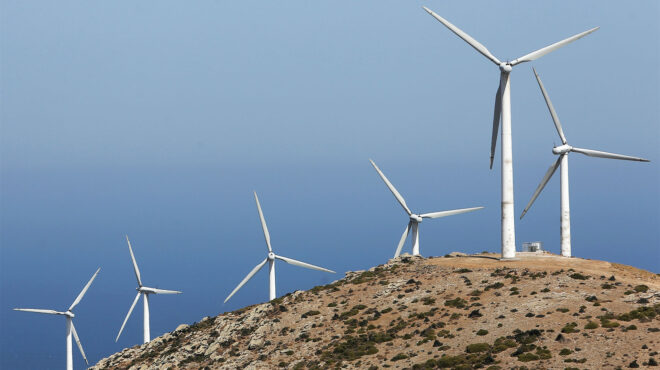
As RIS notes, for the first time, the institutionalisation of three Special Spatial Frameworks is progressing: for tourism, industry and renewable energy sources, thus ensuring that these plans do not conflict with each other, but are linked functionally and strategically. «This coordinated spatial design is a holistic development model first adopted in the country. Because only in this way can we avoid the contradictions of the past: land use conflicts, lack of plan, uncertainty», reports the ministry.
The spatial planning for RES provides, inter alia, the following:
A. Other: For photovoltaic stations
Not permitted below, horizontally:
· In all protected areas of the NATURA network 2000
· In forests and forest areas
· In Ramsar wetlands and small island wetlands
· In national parks, declared monuments of nature and aesthetic forests
· In areas designated as Special Natural Callus Landscapes
· In declared preserved monuments of world cultural heritage and other monuments of major importance, as well as delimited archaeological protection zones A
· In areas with protected and/or abandoned upgrades
· In areas without roads defined by RIS decisions
· On bathing shores
New criteria and rules for location are laid down, in particular:
· The maximum permitted percentage of territorial coverage from new photovoltaic stations (not environmentally licensed) may not exceed 1.5% per Regional Unit.
· Minimum distances are provided for the location of photovoltaic plants (e.g. from residential activities) and specific observer visual horizon coverage rates.
· A special viewing study is planned in case of installation of a PV within a zone of 1,500 m from listed World Heritage List and other major monuments, archaeological sites and historical sites, as well as within a zone of 1,000 m from a zone of absolute protection (Zone A) of other archaeological sites, declared cultural monuments, historical sites and traditional settlements.
B. Other: For wind stations
Not permitted below, horizontally:
· In Attica and the Metropolitan Area of Thessaloniki
· Within areas with an altitude of more than 1,200 m.
· In Ramsar wetlands and small island wetlands
· In areas designated as Landscapes of Special Natural Callus, as well as in the cores of national parks
· Within the areas of absolute nature protection and nature protection zones of Law 1650/1986
· On islands with an area of less than 300 sq km, unless they concern the coverage of needs of the public interest of the island (e.g. desalination facilities)
· In areas with high tourist development as defined in the new Special Spatial Framework for Tourism
· In off-plan areas where the development of tourism-recreation uses is envisaged
· In parts of the wetlands and mining and mining zones operating surface
· In areas without roads defined by RIS decisions
· On swimming shores.
In particular, within the Special Protection Zones (ZEPs), i.e. areas of protection of the hen fauna forming part of the NATURA 2000 network, wind stations are only permitted exceptionally, where 2 conditions are met at the same time:
– is explicitly provided for in the approved Special Environmental Study and
– the wind potential is greater than 7.5m/s (according to the wind map that RAAEF has on its website).

Only in «Appropriateness Areas», i.e. in Municipal Units with a wind potential greater than 4 m/s (according to the wind map that RAAEF has on its website) – and only provided that none of the above (special) restrictions apply, such as altitudes above 1,200 meters, Special Protection Zones (ZEPs), Landscapes of Special Natural Callos, wetlands Ramsar etc., as well as taking into account the residual extent of the Municipal Unity, according to RAAEF.
In the island area the maximum permitted ground cover rate (bearing capacity) from wind stations cannot exceed 4% of the area per Municipal Unit.
It is noted that the new Spatial Framework does not include:
· projects already in operation;
· persons who have completed their environmental authorisation or have been approved for the formal completeness of their dossier by the date of place of the new SPS in public consultation;
· Excluding RES stations (stations excluded from Producer Certification/Region & Operation License), other than photovoltaic plants (e.g. Biomass/biogas < 1MW, geothermal plants < 1MW, small A/C < 60kW, batteries < 1MW),
· pumping stations and large hydroelectric plants > 15MW;
· PV stations installed on roofs of buildings.
The consultation will last until 24 June 2026 at the address https://ypen.gov.gr/diavouleusi

