
When talking about the world's strongest companies, most think Apple, Amazon or Microsoft. However, real economic power is often elsewhere. It is found in companies that most consumers do not even know, but without which microchip could not be manufactured, commercial ships moved, car batteries produced or food transported.
These are the so-called bottleneck firms – companies that control critical links in global value chains. Their power does not come from the known trademarks but from the fact that, in many areas, there is no substantial alternative.
1. ASML – The only machine manufacturer producing advanced chips
ASML
Estimated value .$650 billion
Dutch ASML is perhaps considered the most important industrial company in the world. It manufactures extreme ultraviolet lithography (EUV) machines, without which the most sophisticated semiconductors cannot be produced.
Each machine costs over 350 million dollars and consists of more than 100,000 components. In fact, there is no competitor.
2. TSMC – The Digital World factory
TSMC
Estimated value $1.7 trillion
Taiwanese TSMC does not design chips· It builds them on behalf of almost all major technology companies.
Apple, Nvidia, AMD, Qualcomm and dozens more companies rely on its facilities. More than 90% of the most advanced processors are currently manufactured by TSMC.
3. Synopsys
Synopsys
Estimated value . 170 billion dollars
Even before a microchip is produced, it must be designed. Synopsys develops the electronic design software (EDA) used by almost all major manufacturers.
Along with another company, it controls almost the entire global market.
4. Cadence Design Systems

Cadence Design System s
Estimated value . 135 billion dollars
Cadence is the second pillar of semiconductor design software. Without its platforms, the development of modern processors would be almost impossible.
That is why American restrictions on exports of such software to China are considered particularly effective.
5. KLA Corporation

KLA Corporation
Estimated value . $125 billion
KLA does not manufacture any chips or production engines. It builds the systems that control whether the chips are properly built.
Without its highly accurate sensors and inspection systems, the production of advanced semiconductors would have huge failure rates.
6. Cargill – The Power Behind World Food
Cargill
Estimated value .70–80 billion dollars
American Cargill is one of the world's largest private companies and one of the most important cereal, feed, cocoa and vegetable oil distributors.
Its influence on world food markets is so great that it is often aware of crop developments before they are even reflected in international prices.
7. MSC – The queen of containers
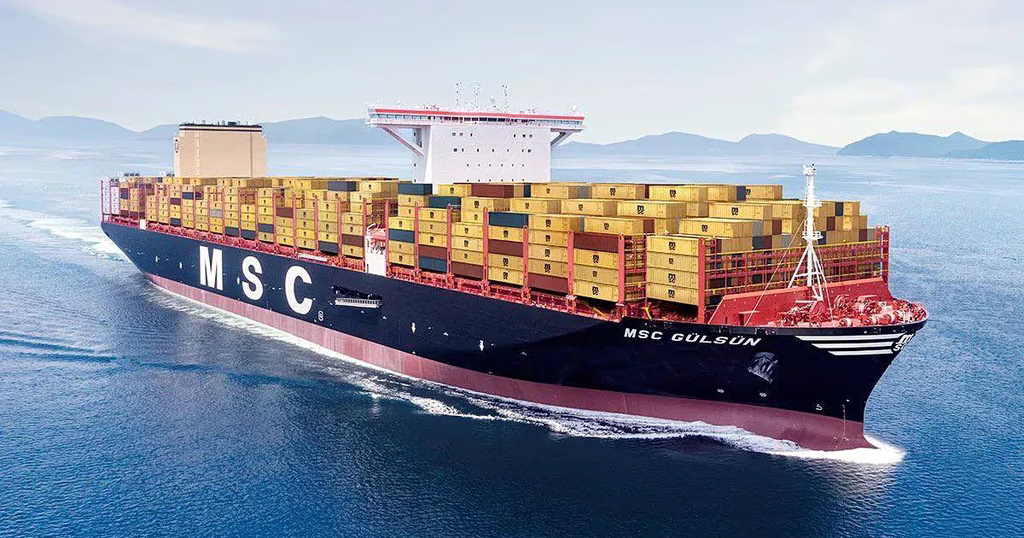
MSC
Estimated value .$110–130 billion
Mediterranean Shipping Company has evolved into the world's largest container transport company.
It controls a large part of world trade, carrying from electronic to pharmaceuticals and industrial components.
8. CATL – The battery of electric drive
CATL
Estimated value . 320 billion dollars
The Chinese CATL is the largest manufacturer of electric car batteries.
It supplies almost all major car manufacturers and plays a decisive role in the transition to electric drive.
9. Saudi Aramco – The Energy Giant
Saudi Aramco
Estimated value $1.8 trillion
Despite the shift in renewable energy sources, Saudi Aramco is still the world's largest oil producer.
Its decisions affect not only international oil prices but also global inflation.
10. Nvidia – The engine of artificial intelligence
Nvidia
Estimated value: $ 6.1 trillion
Nvidia is today the dominant power in artificial intelligence processors.
Its GPUs are used to train almost all major language models, from ChatGPT to Google and Meta systems.
The only companies and the new form of economic power
These ten companies represent a total value exceeding 11 trillion. dollars, more than GDP in almost every country in the world, except for the US and China.
What makes them particularly strong is not only their stock value but also their dominant position in critical links in the global economy:
The common component of all these companies is that they control bottlenecks in the global economy. If any of them stopped functioning, the effects would be disproportionately large: car production would slow down, food prices would increase, electronic deliveries would delay or artificial intelligence would be reduced.
That is why governments are no longer interested in the size of a business, but whether it has a critical link in the value chain. In the new geo-economic competition, power is not measured only at revenue or stock value. It is measured how difficult it is to replace a company when the whole world depends on it.
Source: ot.gr

