
The former Prime Minister left sharps on how to manage agricultural aid, Costas Karamanlis, during his speech at an event for the 75 years since the establishment of the Central Cooperative Association of Wine Products.
Speaking of the problems facing the primary sector in the country, he spoke of «Untransparent, sometimes scandalous and clientile management of Community aid».
He noted that in recent years the rural world has been experiencing a «unbearable reality» and talked about «Structural problems and pathogens that have not been successfully addressed and over the years they have been misformed and developed into serious threats to the viability of the primary sector and the prospects of the region».
In this context, he stressed that a comprehensive plan was needed «to support the rural world and the sustainable development of the Greek region».
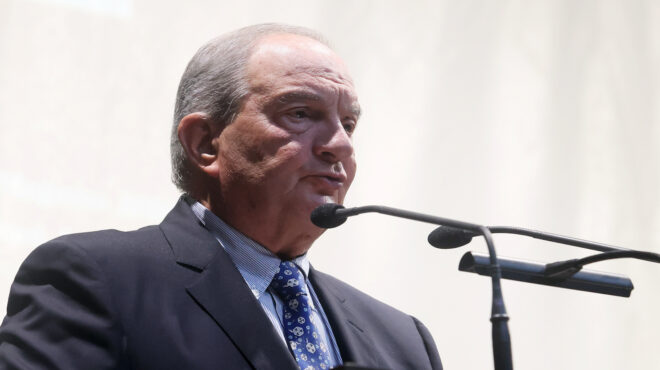
The entire speech of Kostas Karamanlis
Ladies and gentlemen,
I would like to thank Mr. Christos Markos and the members of the Board of Directors of the Central Cooperative Association of Wine Products for their honorable invitation.
I am glad that, as today, I share thoughts and concerns with people of production, creation, decentness. Especially with people serving the primary sector.
Today's event for the 75 years of KEOSE is very important. The higher cooperative organization, the only one left to operate, and continues consistently, militants and also responsible, to promote and defend the interests of cooperative wineries and Greek winegrowers. For sustainability, dignity, the fair reward for the labors of 160 thousand families currently active in the wine economy.
In its 75 years of operation, KEOSE effectively serves the objectives set out in the first place: First of all, the continuous improvement of the quality of Greek wine products. Focusing and investing in research and innovation. And of course in the promotion of their quality supremacy, their visibility and promotion in domestic and foreign markets.
Equally important is the operation of KEOSE as an institutional interlocutor and consultant for the design, formulation and implementation of the national strategy and policies for the protection and support of products on the markets. In order to promote this mission, the KEOSOE operates the only one in the country Ampelos and Wine Observatory, through which the macroeconomic, structural and statistical figures of the industry are monitored, recorded and evaluated annually. An example of productive cooperation between KEOSE and the state is that developed in 2008, with then Minister for Rural Development and Food Alekso Kondo. The aim of the Minister's frank dialogue, meeting and of course negotiating capacity was to provide, for the first time and the annual payment, under the CAP, of unbundled single payment to Greek wine growers.
Ladies and gentlemen,
In recent years, both in Europe and - with particular intensity - in our country, the rural world has been experiencing an extremely difficult, I would say intolerable reality. It is shaped by the simultaneous occurrence of exceptional conditions and the exacerbation of chronic problems. I gleam:
• The Covid 19 pandemic. The blocking of economies, the crisis in the supply chain, the slow and painful restart after lockdown, the first wave of inflationary pressures.
• The war in Ukraine. Intense turbulence in the fertilizer and feed markets. Launching energy costs. A problem that has deteriorated and is at risk of being taken out of control by the extension of the Iran-US-Israel conflict and the possible resumption of hostilities, after the end of the barren to this hour, of a truce. Beyond the geopolitical dimension, the apparent lack of fuel and the further rise in their price will worsen an already problematic situation, causing consequences.
• A great financial burden, especially for small and medium-sized farmers, from the implementation of the European Union's fast, reckless and untimely energy transition decisions.
In our country, upon these problems came to button:
• The rapid increase in production costs.
• The reduction in producer prices and the decline in agricultural income.
• Extensive damage to infrastructure, plant and livestock from natural disasters, diseases and zoonoses.
• Delays in the payment of compensation.
• Intransparent, sometimes scandalous and clientile management of Community aid.
• Short-sightedness in prioritizing needs and therefore unproductive distribution and low efficiency of European resources.
All this came to pile up on you. Structural problems and pathogens that have not been successfully addressed and over the years they have been malformed and developed into serious threats the sustainability of the primary sector and the prospects of the region.
Today we all recognize and evaluate them as major challenges. The question is what we do before it's too late to deal with them.
The major structural weaknesses which mine productivity and undermine the competitiveness of the primary sector are:
• The small and fragmented clergy. In Greece 75% of farms use up to 50 acres of land. They are so small that they cannot achieve economies of scale. Only 3% of farms exceed 300 acres when the corresponding European average is 11%. At the same time the fragmentation of the earth into many small and usually not adjacent areas requires investment in means and equipment. But investments that do not lead to productivity growth.
This reality inescapably leads us to the one way to encourage and substantially strengthen collective schemes, that is, modern new-style cooperatives, operating as business entities. Investing in research and innovation. Standardization and quality. To competitiveness and extroversion. Cooperatives with professional administrations, which adopt industrial production standards. They negotiate and conclude direct contracts with retail centres that follow modern practices that ensure high producer prices and decent income.
• The ageing and unsustainable renewal of the rural population. The agricultural sector is based, year after year, on older ages. According to a recent study of «DISTRIBUTION», from 2008 to 2020 over 55 farmers increased from 33% to 38% of the total. The primary sector loses young people, who move away from the profession, alienate themselves from their land, leave the District. It is an expression of the demographic crisis, which if it is not assessed as a national challenge and not treated in time as such will lead to the abandonment of the rural sector, to the decline of the Region. This must be prevented at all costs. In the countryside the heart of Greece beats. Powerful Greece cannot exist without economically prosperous productive thriving and life-saving District.
• The low level of training for farmers. The Greek farmers, unfortunately, let us admit it freely, are among the least trained in the EU. According to ELSTAT in 2023 only 6% had full or even basic training.
• Η αύξηση του κόστους παραγωγής. Πολλοί οι λόγοι γι’ αυτό. Καθώς οφείλεται κυρίως στην τιμή του πετρελαίου να επισημάνω ότι για την ανάπτυξη και τη βιωσιμότητα του πρωτογενούς τομέα είναι αναγκαία προϋπόθεση η δραστική μείωση του ενεργειακού κόστους. Η ενίσχυση της ενεργειακής αυτονομίας, μέσω μικρών φωτοβολταϊκών μονάδων, μπορεί να προσφέρει σταθερότητα στο κόστος παραγωγής, μηδενίζοντας ουσιαστικά το κόστος ηλεκτρικής ενέργειας. Ας δούμε τι γίνεται σε άλλες χώρες. Για παράδειγμα, στη Γερμανία όπου οι αγρότες κατέχοντας το 16% του συνόλου των φωτοβολταϊκών της χώρας μηδένισαν το κόστος ηλεκτρικής ενέργειας για την παραγωγή τους. Στην Ελλάδα, 450 χιλιάδες αγρότες, δηλαδή το 13% του εργατικού δυναμικού, κατέχει μόλις το 2% των φωτοβολταϊκών μονάδων.
Friends and friends,
Αυτή είναι η πραγματικότητα. Ας την κοιτάξουμε κατάματα, ας την αποδεχθούμε χωρίς εξωραϊσμούς και υπεκφυγές. Η σημασία του πρωτογενούς τομέα για την οικονομία, την επισιτιστική ασφάλεια, την περιφερειακή ανάπτυξη, την απασχόληση και την κοινωνική συνοχή, είναι αυταπόδεικτη.
Τώρα λοιπόν, πριν χαθεί οριστικά κάθε δυνατότητα παρέμβασης, με αίσθημα εθνικής και κοινωνικής ευθύνης, σε πνεύμα συνεννόησης και με την ευρύτερη δυνατή συναίνεση απαιτείται η εκπόνηση, η επαρκής χρηματοδότηση και η έγκαιρη υλοποίηση ενός ολοκληρωμένου σχεδίου για τη στήριξη του αγροτικού κόσμου και τη βιώσιμη ανάπτυξη της ελληνικής περιφέρειας.
Με έμφαση στη δημιουργία ενός πιο φιλικού, βιώσιμου και ασφαλούς περιβάλλοντος μέσα στο οποίο να μπορούν να ζήσουν, να εργαστούν με αξιοπρέπεια και να παραγάγουν με όρους ανταγωνιστικότητας οι νέες και οι νέοι της περιφέρειας. Με επένδυση στην εκπαίδευση, την επιμόρφωση, τη διαρκή επιστημονική στήριξη των νέων αγροτών. Με την επανένταξη στην παραγωγική διαδικασία των σχολαζουσών εκτάσεων, περίπου 6 εκατ. στρέμματα. Με χαμηλότοκα δάνεια προς νέους αγρότες, χωρίς αυστηρές εγγυήσεις.
Ladies and gentlemen,
The challenges are ahead. And we are dictated to meet our patriotic debt. With these thoughts I wish an even more creative and productive continuity in your work.

