
A crop that a few decades ago seemed almost exotic to Greek data, today has acquired a stable position on the rural map of Crete. Avocado is no longer a test option for a few producers, but a dynamic tree cultivation, with significant economic value and increasing demand.
Something that can be seen from the cultivated area, which according to the researcher of ELGO-Dimitra, at the Institute of Olives, Subtropical Plants and Vineyards, Jatzani Theresa-Teriza, stands at more than 15,000 acres on the island, which remains the main center of Greek production.
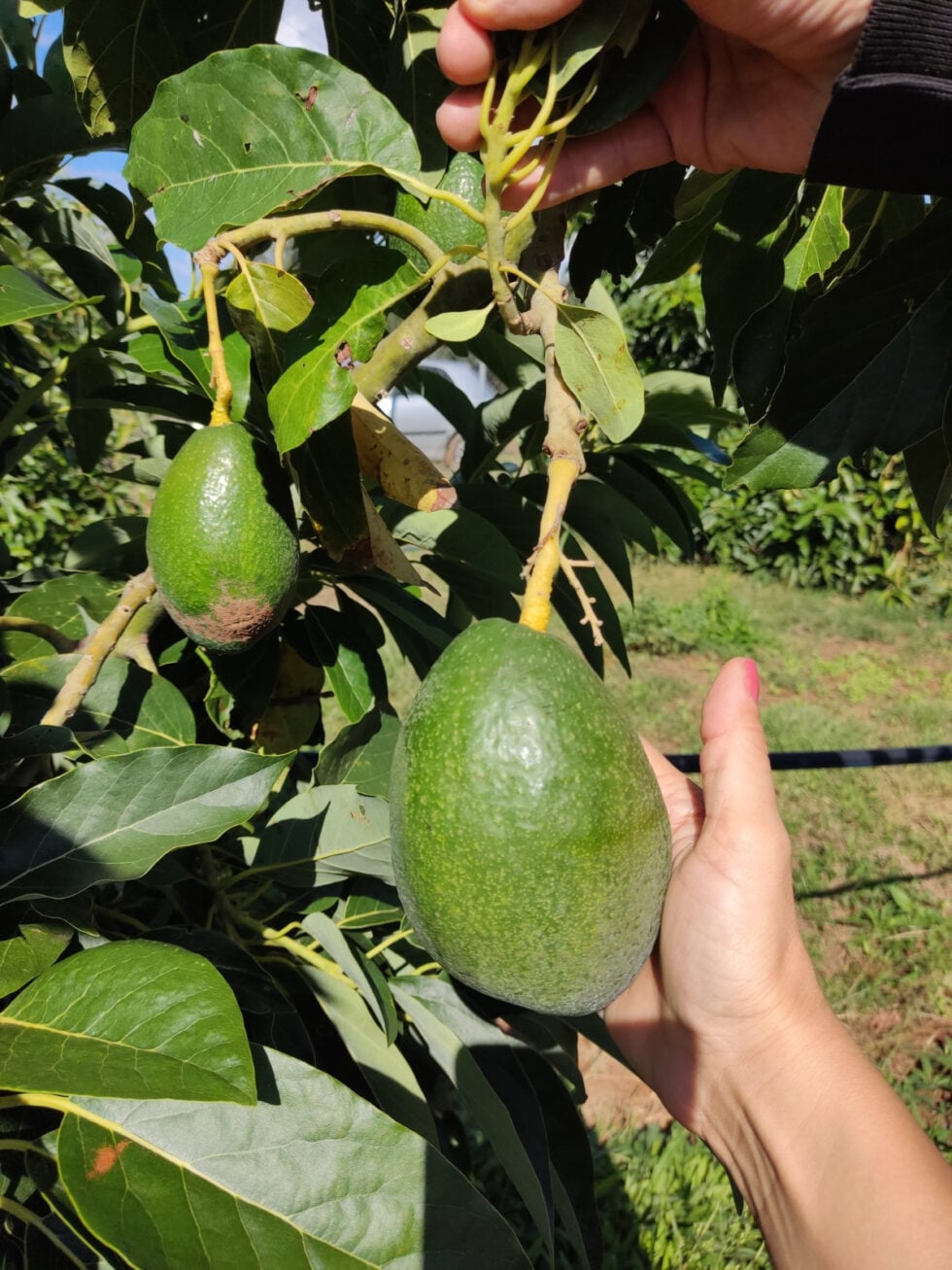 * The photographs were granted to the APE-BE by the researcher of ELGO-Dimitra, at the Institute of Olives, Subtropical Plants and Vineyards, Jatzani Theresa-Teriza
As explained in the Athens – Macedonian News Agency Mrs.Jatzani "the actual area of the crop is much larger than that shown in the official data" and as she emphasises "the latest available data of the OPEKEPE record about 5,000 declared acres, but those who are closely monitoring the cultivation on the island estimate that the actual area exceeds 15,000 acres".
The researcher notes that the exact capture of the crop is one of the issues to be addressed in the coming years.
Read more
Average production is estimated at around 1.2 tonnes per acre but yields are not the same everywhere. They are influenced by the area, variety, age of trees, the care of the producer and, above all, by the availability of water.
Crete has a long experience in the cultivation of avocado with Mrs.Jatzani, to point out that the Institute of ELGO-Dimitra has been engaged in cultivation for about 45 years. «For us, in Elgo-Dimitra, this crop is not new. We've installed it on Institute estates since the early '80s.», points out.
The Hass variety remains the most commercial in Crete, as it is in great demand abroad. At the same time, related varieties, such as Lamb Hass, and older varieties that had settled on the island, such as Zutano, Fuerte and Bacon, are cultivated.
Despite its good adaptation to the conditions of Crete, avocado is not an easy crop. Before any new planting, careful evaluation of the soil, as well as the adequacy and quality of water, is needed.
«It's not a tree with olive requirements. It apparently has more requirements in water», notes the researcher of ELGO-DIMITRA.
Water is today the most important limiting factor for further expansion of cultivation in Crete. Its lack, combined with high temperatures and changing climate conditions, creates new data for local producers.
According to the researcher of ELGO-Dimitra "the most favourable areas for cultivation are found mainly in Chania, especially in the northern part of Regional Unity, as well as in areas to Rethymno, where appropriate conditions and water is available. Instead, towards Heraklion and even more towards eastern Crete, conditions are not considered as favourable."
Despite the difficulties, the interest of producers remains strong. Avocado, as Mrs Jajani points out, is one of the few tree crops that can offer a high income, at a time when the primary sector is under heavy pressure from increased production costs.
«It is one of the few tree crops that give such a satisfactory profit and, when we talk about agricultural production that has such great economic pressure, this is an important breath», report.
The cultivation of avocado is not limited exclusively to Crete. There are areas in the rest of Greece with a similar climate, which can support plantings. The area of Kyparissia and more generally Triphylia presents a particularly positive picture, while other areas, such as Laconia and Messinia, were examined within the framework of a programme with the Peloponnese Region.
Mrs Jatzani does not rule out "under conditions, and other areas with an appropriate microscale, such as specific points in 'Arta or Dodecanese islands'. However, as he explains, "the areas outside Crete are not yet large enough to change the overall picture of Greek production."
«The 15,000 acres concern Crete. In the rest of Greece, right now, the acres are not so much to change the general sum», notes.
The rise in cultivation is also linked to a steady increase in demand. Avocado, according to Mrs. Jajani, did not prove to be a temporary food fashion. Instead, it has now become more stable in consumer eating habits.
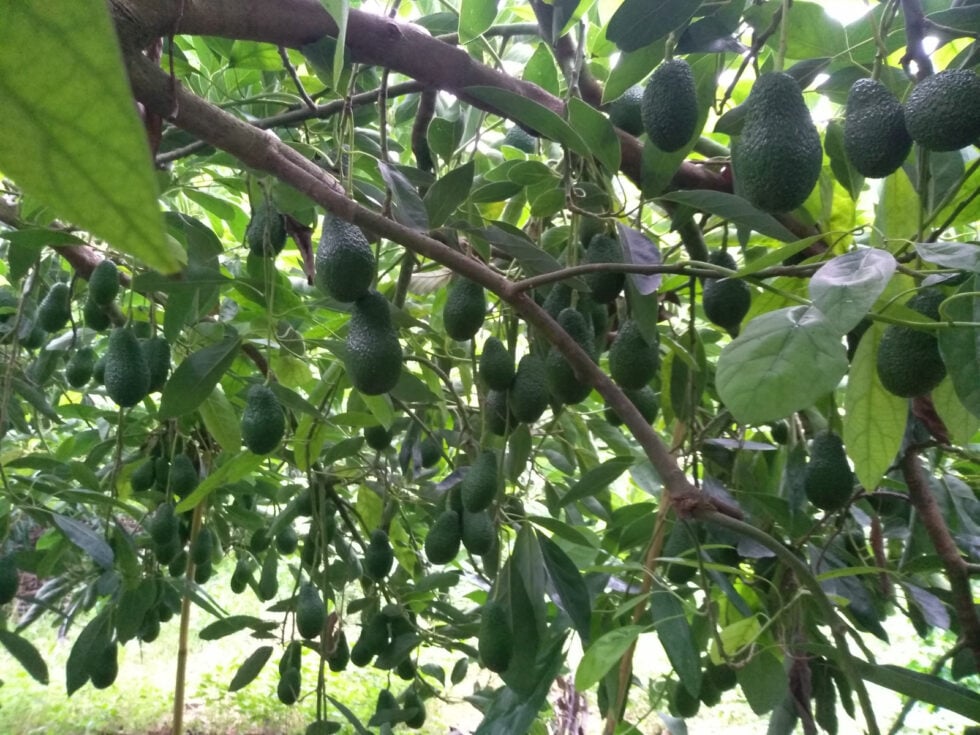 * The photographs were granted to the APE-BE by the researcher of ELGO-Dimitra, at the Institute of Olives, Subtropical Plants and Vineyards, Jatzani Theresa-Teriza
«He's here and he's staying.», says features, adding that in Crete consumption has been even more familiar with the product as it has been cultivated on the island for decades.
In the internal market consumption of production
Greek production is largely absorbed by the domestic market, not meaning that there are no exports or imports. Avocado trade is international, with large quantities coming from Latin American, South Africa and other important productive areas.
For Greece, however, the issue is not competition at volume level. As Mrs. Jajani points out in the RES-AMP, the country's advantage must be sought in quality. Production costs are higher than in large areas of production abroad, but Greek cultivation has a significant comparative advantage: the limited presence of enemies and diseases.
This allows, in several cases, even organic production. «Because we do not have so many enemies and diseases for avocado, we can cultivate biologically. This gives a huge advantage over quality»She points out.
For a small productive country like Greece, the goal is not to influence global rankings. It is to create a product with good reputation, high quality and stable demand, both in the internal market and abroad.
«What we want to gain is a quality product, a good reputation and a desire for it abroad. We have actually achieved this so far.», concludes the researcher of ELGO-Dimitra.

