
The need for careful management of the Greek economy, which, despite «solid budgetary position», faces challenges and slows down In relation to the previous estimates, the Greek Financial Board (EOC) highlights in «Spring report 2026».
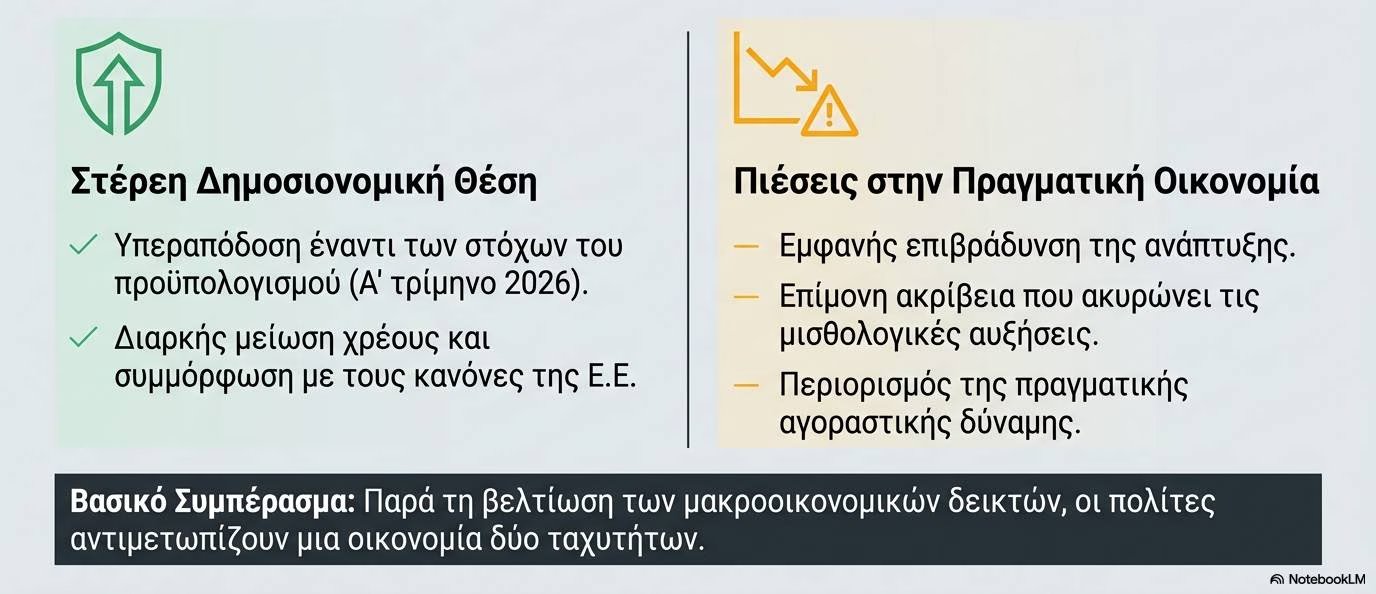
Recent reports outline an economy that, despite its stable budgetary base, faces a marked slowdown in growth. The rise in inflation and continued accuracy undermine incomes, resulting in the real purchasing power of citizens remaining stagnant despite nominal wage increases
Despite the improvement of key indicators, the slowdown of the Greek economy is now evident, while the accuracy not only does not yield but is expected to be strengthened again in 2026. This is what it creates. treaties restricting the real purchasing power of citizens, despite increases in wages and incomes.
ENTSO: Under 2% growth – Persistent inflation
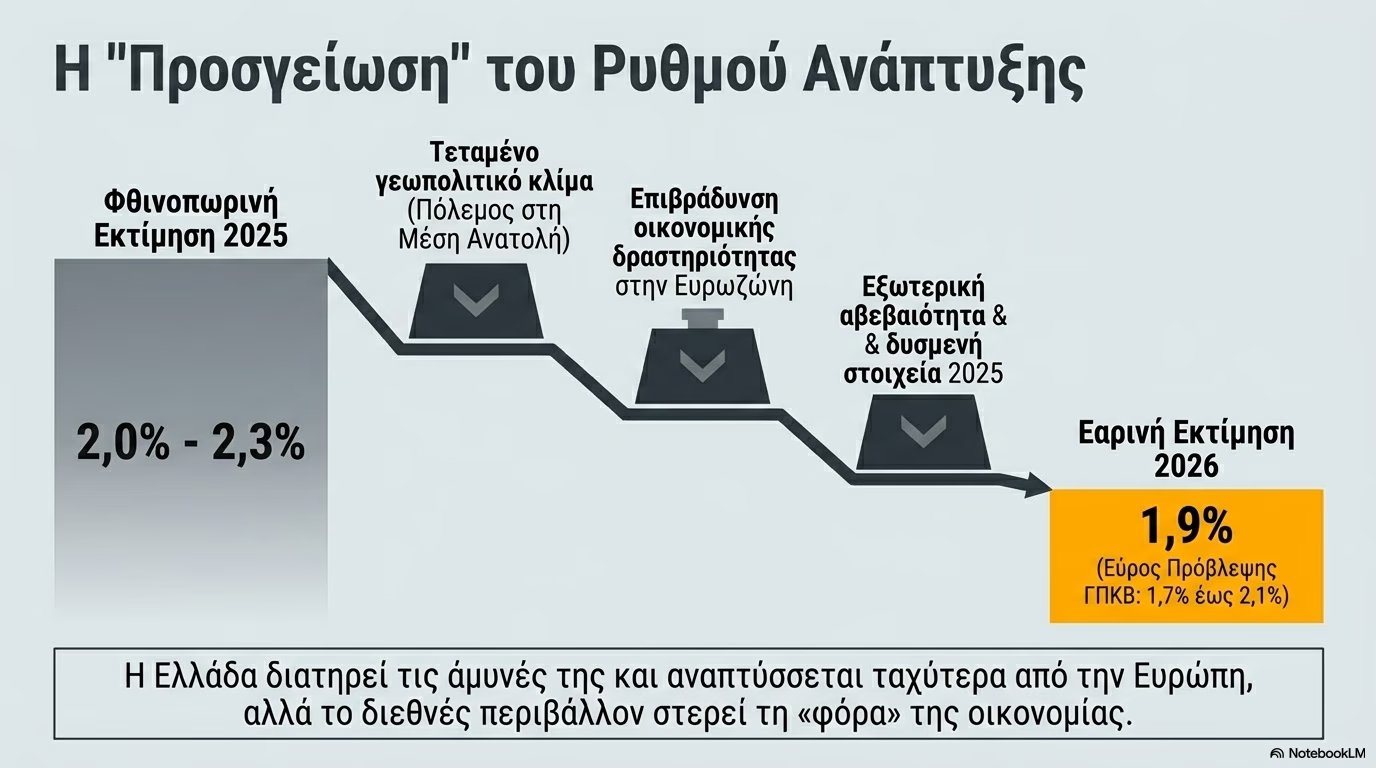
The EAC now estimates the growth rate of real GDP for 2026 to 1.9%. This forecast is revised downwards (-0.4%) relative to the autumn report (November 2025), reflecting increased caution due to external uncertainty, inflationary effects from the tense geopolitical climate (war in the Middle East), slowing down economic activity in the eurozone, as well as the most unfavourable of the expected figures of 2025.
«Landing» The recent quarterly report by the State Budget Office in the Parliament also shows the rate of GDP growth. According to the GCCB, Greece has been keeping defences and «Run» faster than the rest of Europe, but the international geopolitical environment deprives itself of the growth it had taken. Under these circumstances, the Office marginally revises its basic estimate of the growth rate of the Greek economy in 2026, at 1.9%, from 2.0% in the March 2026 Report, with a forecast range of 1.7% to 2.1%.
Inflation is expected to «Run» at a rate of 3.2% from 2.2% provided for in the state budget. The upward trend is already reflected in the ELSTAT data for the first months of 2026. Specifically, the change in the HICP, in the first four months of the year, is constantly increasing as it was 2.9% in January, 3.1% in February, 3.4% in March, while in April 2026 it was ejected to 4.6%, compared with 2.9% at the end of last year (December 2025).
Wages, but...
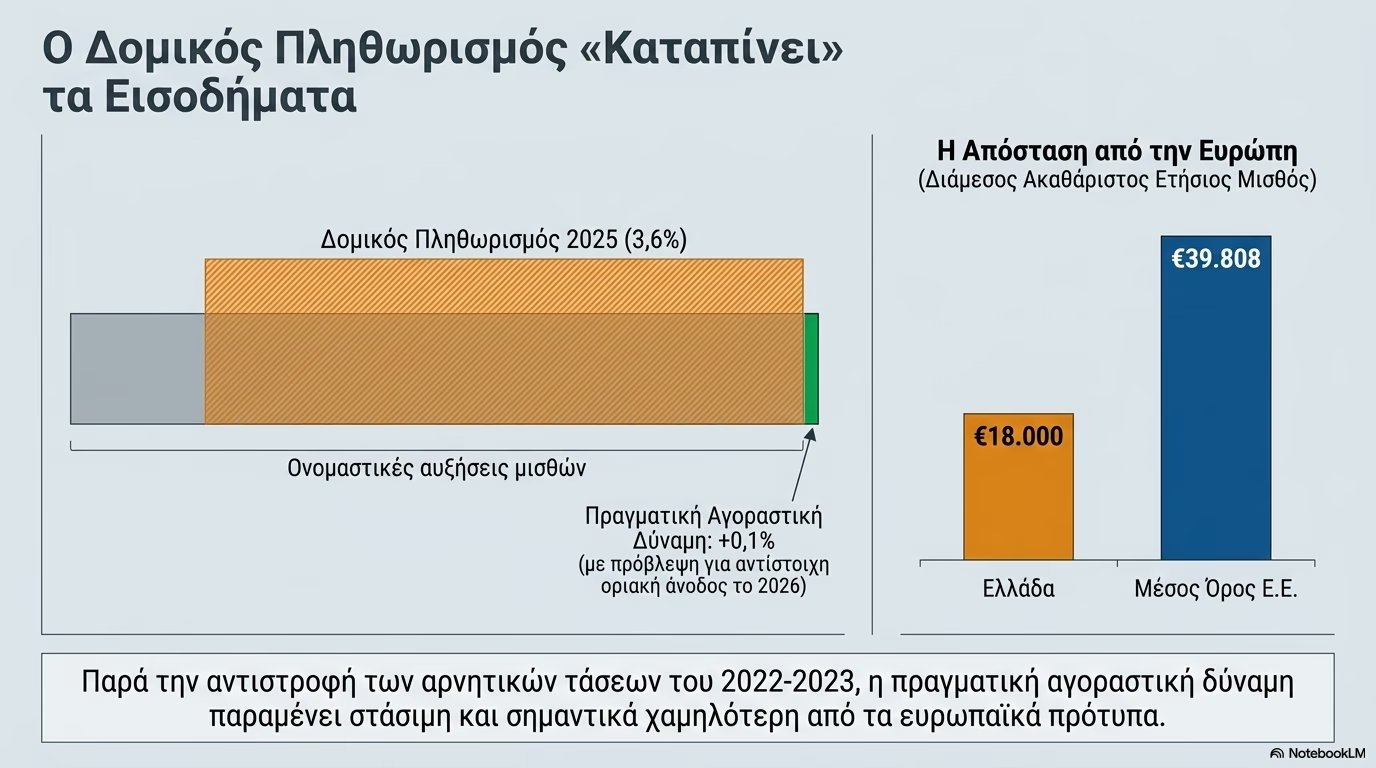
High inflation rates in 2022 and 2023 adversely affected real wages, although this trend appears to have been reversed in 2024. However, high structural inflation, which was set at 3.6% in 2025, reduced the increase in real wages. As the report says, the real purchasing power of employees increased by only 0.1% in 2025, while a corresponding marginal rise is foreseen for 2026.
Despite recent improvement, the net average monthly wage adjusted for cost of living remains significantly lower in Greece compared to most EU countries.
The median gross annual salary in our country is around EUR 18,000, when the corresponding average in the European Union is EUR 39,808.
Primary surplus and government debt
The report finds that public finances remain in good condition. The implementation of the State Budget shows remarkable performance over the objectives as early as the first quarter of 2026. For the year as a whole, primary surplus of 3.2% of GDP is forecast, combined with a further reduction in government debt by 9.3 percentage points. The Financial Council notes that further debt reduction is not a given. Maintaining the positive path requires prudent fiscal policy, strong growth dynamics and maintaining favourable interest rates.
Όσον αφορά τη συμμόρφωση με τους κανόνες του νέου ευρωπαικού δημοσιονομικού πλαισίου, η αξιολόγηση του Ελληνικού Δημοσιονομικού Συμβουλίου δείχνει ότι, παρότι ο ετήσιος ρυθμός αύξησης των καθαρών εθνικά χρηματοδοτούμενων πρωτογενών δαπανών αναμένεται να υπερβεί το όριο αναφοράς για το 2026, η αθροιστική πορεία παραμένει εντός των ορίων, ιδίως αν ληφθεί υπόψη η ευελιξία που παρέχει η εθνική ρήτρα διαφυγής για τις αμυντικές δαπάνες.
Μετά το Ταμείο Ανάκαμψης και Ανθεκτικότητας τι;
Παρά την δημοσιονομική υπεραπόδοση, το Ελληνικό Δημοσιονομικό Συμβούλιο εκπέμπει σαφές προειδοποιητικό σήμα για την πραγματική οικονομία.
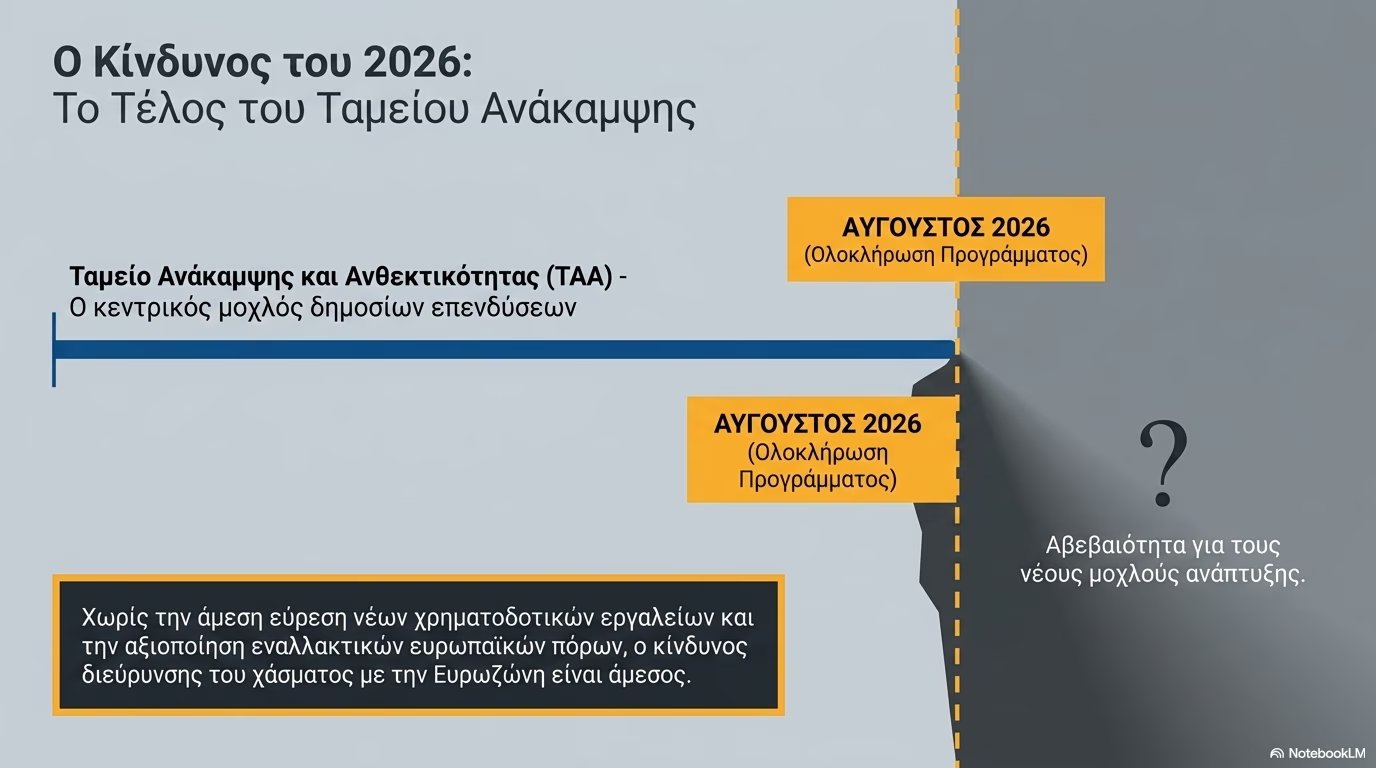
Το Ταμείο Ανάκαμψης και Ανθεκτικότητας (ΤΑΑ) αποτελεί τον κεντρικό μοχλό ενίσχυσης των δημοσίων επενδύσεων στην Ελλάδα, συμβάλλοντας καθοριστικά στην αναπτυξιακή τροχιά της χώρας. Όμως, το πρόγραμμα ολοκληρώνεται τον Αύγουστο και υπάρχει αβεβαιότητα για τους μοχλούς ανάπτυξης. Η ανάγκη για εύρεση νέων χρηματοδοτικών εργαλείων και η αξιοποίηση άλλων ευρωπαϊκών πόρων θεωρείται επιτακτική για να μην μεγαλώσει περαιτέρω το χάσμα με την ευρωζώνη.
Συνολικά, το ζητούμενο για τα επόμενα χρόνια είναι η μετάβαση από ένα υπόδειγμα οικονομίας που βασίζεται έντονα στην κατανάλωση και σε έκτακτους εξωγενείς πόρους, σε ένα πρότυπο που στηρίζεται στις επενδύσεις, την παραγωγικότητα και τις διαρθρωτικές αλλαγές.

