
American banks, starring Goldman Sachs, lend amounts-record to yuan, exploiting low interest rates and increased demand for offshore Chinese bonds. Bond issues «dim sum» in Hong Kong this year 300 billion yuan ($44 billion), more than twice as many as in 2025. Goldman Sachs draws 32.1 billion yuan, 10% of the total market, using yields of around 3%, compared to 1.75% in mainland China. Beijing strengthens the internationalisation of yuan, facilitating access to fixed income products through the Bond Connect program.
Analyticalally:
Amounts of record in yuan have been raised this year by American banks — led by Goldman Sachs — exploiting low interest rates and rapidly increasing demand for offshore Chinese bonds. This trend also strengthens the role of the Chinese currency in the global financial system.
The rise in bank lending is part of a wider «wave» issues of bonds to yuan outside mainland China, as the country's investors are looking for higher returns. Beijing has facilitated this shift, allowing easier access to fixed income products in Hong Kong, as the Financial Times notes.
Although yields in Hong Kong are higher than those in mainland China, they remain lower than other major international markets — which makes so-called bonds «dim sum» especially attractive to publishers.
As a result, issues of such bonds — expressed in yuan and published mainly in Hong Kong — have reached 300 billion yuan ($44 billion), more than twice the same period in 2025, which was already a year-record.
The activity of banks themselves in issuing bonds on their behalf is particularly intense. The so-called «self-issue» It has been launched at 47.5 billion yuan, with Goldman Sachs holding the largest share.
«The demand for assets in a yuan outside the US is enormous. It is an attractive alternative source of funding», told the Financial Times Isaac Wong, head of the distribution of fixed income, coins and goods of Goldman Sachs in Asia (except Japan).
Among the recently reported publishers include states and organisations such as Portugal, Finnish MuniFin and Korea Development Bank. Earlier in the year, dim sum bonds also issued by Nordic Investment Bank and the Swedish Export Credit Company.
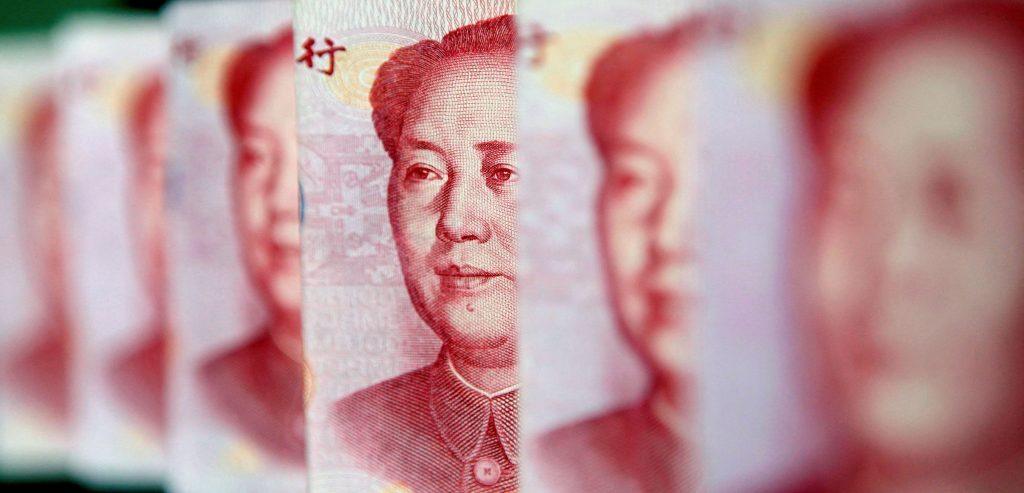
Goldman is the largest bond publisher in yuan
Goldman Sachs has evolved into the largest foreign bond publisher dim sum and the second largest overall, after the State Bank of China. This year alone it has raised 32.1 billion yuan, about 10% of the total market.
Beijing policies play a defining role, strengthening the flow of funds from mainland China to Hong Kong, as part of the Yuan's internationalisation strategy.
China Development Forum last month — known as «Chinese Davos» — the Governor of the Central Bank, Pan Gongseng, pledged to further strengthen the offshore Yuan market through wider financial cooperation.
As early as last year, Beijing expanded the Bond Connect program significantly, allowing more domestic investors — such as insurance companies and other non-banking institutions — investing in bonds in Hong Kong.
This development comes at a time when returns to mainland China are at historically low levels, prompting institutional investors to seek better returns abroad. For example, the performance of the 10-year Chinese state bond is formed around 1.75%, while the corresponding dim sum bond of Goldman Sachs offers about 3%.
Goldman Sachs, in fact, converts the funds it draws into dollars and covers exchange risk, taking advantage of the fact that offshore yuan are not subject to China's strict capital controls.
Analysts estimate that the yuan begins to take on a role that in the past had the Japanese gen as «Financing currency» — a role that has been limited due to the rise in interest rates in Japan. The yields of the 10-year Japanese bonds have exceeded 2.4%, from just 0.61% in early 2024.
«The offshore yuan has become a key financing currency, partly due to a lack of a better alternative», notes to the FT Alicia Garcia-Herero of Natixis.
It is worth noting, however, that the rise in the dim sum market is mainly due to foreign publishers. «This year, these are the main development lever», told the FT Jamieson Zuo of CSPI Ratings, pointing out that in 2025 the thrust had mainly been given by major Chinese technology companies.
Overall, increased activity reflects China's attempt to strengthen the international role of its currency, despite the restrictions it still retains on capital movements. At the same time, the creation of an asset market in Yuan outside China is a key step in this direction.
Source: OT

