
A new European Commission document sent to several Members of the European Parliament perhaps brings much closer together at stations than a new, more economical fuel was originally planned.
In recent years, continuing geopolitical turbulence has caused significant price increases in fuel internationally, but a recent development could speed up the adoption of a fuel that would drastically reduce travel costs, without even requiring the universal renewal of the existing vehicle fleet.
The most recent development is in a letter from the President of the European Commission, Ursula von der Leien, to several members of the European Parliament, which leaked to the international press.
ARTICLE CONTINUES AFTER ADVERSION
The letter states that the Commission will «consider the approval of a fuel with a higher ethanol content (E20)», while at the same time investigating compatibility issues with the engines of vehicles already on European roads, as well as the possibility of incentives for investments related to biofuels.
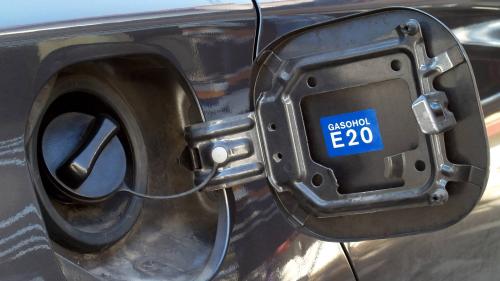
That's it. The first time the Commission officially confirms that E20 petrol could be part of official directives in the future. Shortly thereafter, the letter states that «various other political measures already support the development of a sustainable chain for renewable fuels, as these will continue to play an important role in the coalification of transport.
German CDU MEPs Peter Lise, Jens Gizeke and Norbert Lins had called for the acceleration of the use of the E20 fuel as early as June 2025. In their letter at the time they argued that the proportion of vehicles with an internal combustion engine in Europe remains high, and that the adoption of electric drive progresses relatively slowly.
ARTICLE CONTINUES AFTER ADVERSION
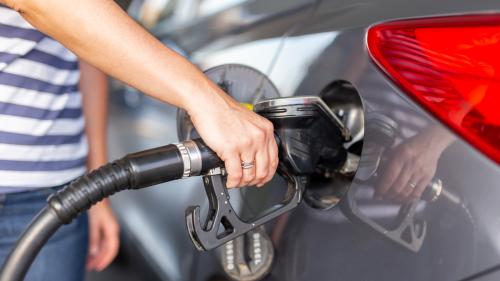
They even stressed that a faster introduction of the E20 at the stations would be «an important message» on the short-term reduction of CO2 emissions in the existing vehicle fleet.
Peter Lise (CDU), a representative of the European People's Party on environmental and climate policy issues, said that «E20 can reduce CO2 emissions of existing vehicles by almost 40%, while biofuels are also the key to lower fuel costs».
E20 is a type of gasoline containing 20% bioethanolAt the same time, fuel consumption increases slightly due to the lower energy density of ethanol, but experts estimate that the price will be lower than that of E10.
ARTICLE CONTINUES AFTER ADVERSION
The first E20 tests began in 2023 in Manheim, Germany with selected fleet vehicles. The results show that consumption increases slightly, to 3%, however the total travel costs are significantly reduced due to the lower fuel price.
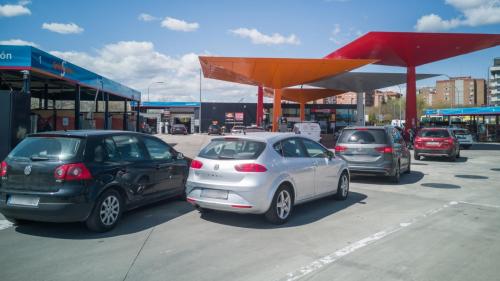
Its wide market availability is currently dependent on regulation. Until now, a time frame for introducing fuel to certain stations from 2027 or 2028 was considered more realistic, however the current initiative of the European Commission may bring forward this timetable.
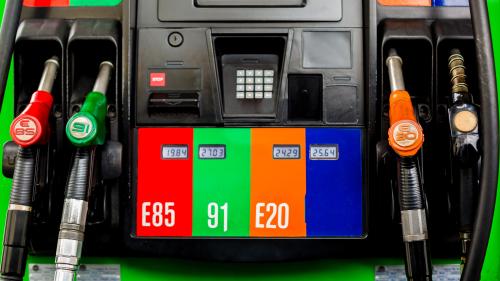
The examination of a pan-European E20 approval marks a new phase in the fuel debate. Politically, is considered a directly applicable solution to reduce emissions to existing vehicles.
Technically, the first manufacturer approvals show that part of the current fleet is already ready. Whether and when the E20 will be widely available depends on the adjustments to the legal framework of the EU. and the resolution of pending issues concerning the compatibility of vehicles.
ARTICLE CONTINUES AFTER ADVERSION

