
A major financial loss in the financial markets, the professional dead end, and a radish record radically changed his life. Thanasis Kallideris, with 100 euros in pocket, decided to start from scratch and pursue his dream.
He writes his own successful story with persistence, risk and faith, in a different and innovative crop model Production Microgreens.
ARTICLE CONTINUES AFTER ADVERSION
As Thanasis Kallideris explains, speaking to the Athenian-Macedonian News Agency, «the idea of this business came after a very large and shocking loss of money I had in the financial markets, where then I traded professionally, in order to be able to achieve my financial independence and then buy a farm and live closer to nature», reports and stresses that this awareness changed his perspective. «I realized I was trying to reach a target through a completely different route. And this, both for me and in general, I find it not working. The work one chooses in one’s life cannot be only a means of economic recovery. What we are dealing with must be filled, except in our pocket, with our mental storage. Otherwise, you'll be empty.».
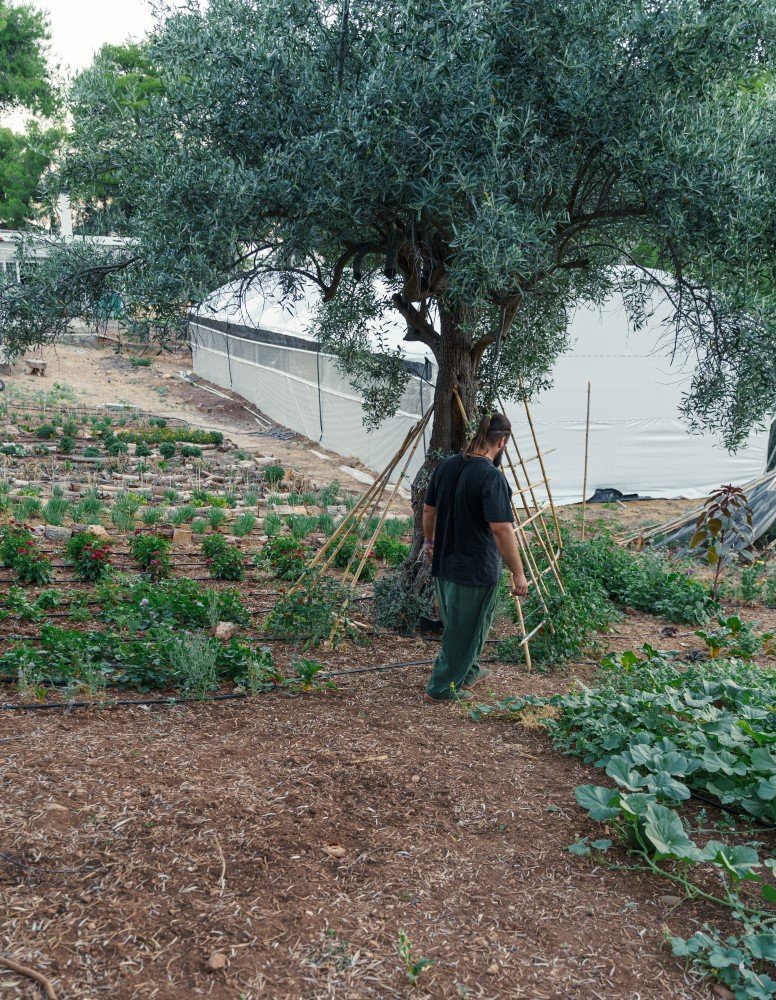
The beginning was with a radish record
It may not have been ideal, as he confides, however, «I admitted to myself something very simple, since the ultimate goal is to build a nice farm and live like this, let's start building this farm now.», notes features and explains how «At that moment I was in Dove, a guest from a friend of mine, with no money at all. I was able to collect maybe 100-150 euros from some of my days. So I started looking for how I could start growing without my own land, and I found out that there's the possibility of growing microgreens even inside your house, on light shelves, and being able to harvest them within about a week.».
«I ordered some records straight away and some seeds, tried it, and they did come out. I still remember the first harvest. It was on 20 April 2023 and was a radish album. This one album was the beginning to create the «farm» which today is one of the most well-known microgreens production companies in Greece and, in common, many of the chefs we work with, one of the best quality», report.
ARTICLE CONTINUES AFTER ADVERSION
«I did literally all in.»
The lack of capital was, as he points out, the greatest difficulty in the first months. When there is no financial reserve, every market becomes a risk and every production must almost immediately be converted into a sale. «The biggest difficulty was clearly the lack of capital. Especially at first, I ran out of money. Because I bought everything retail, so that I could sell something at a price that makes sense for the restaurateur to buy, it meant that I would hardly have any profit. Buying something, growing it, and then, if it's sold, getting money back, it's too risky when you don't have capital. I did literally all in at first. I might have had all my money, 100 euros, and I could go buy 80 euros of soil and 20 euros of seeds. Balance zero. So if I didn't get to sell enough microgreens, I'd stay in the ace.».
Daily life was a constant struggle between production and survival. As he describes in the APR-APM himself, there was no luxury in focusing exclusively on the business from day one and notes that, «I ran from morning until night and to grow and do some work, any work I could do. From real estate brokerage and rental, to business purchases, where I spent time connecting buyers to sellers, in the hope that I might be paid by some transaction. I worked as a waiter, I did oil distribution, I worked in agro-food shops. I've done too many jobs, at the same time, I had to gain the trust of people who already had stable partnerships. And there, quality became my most important weapon».
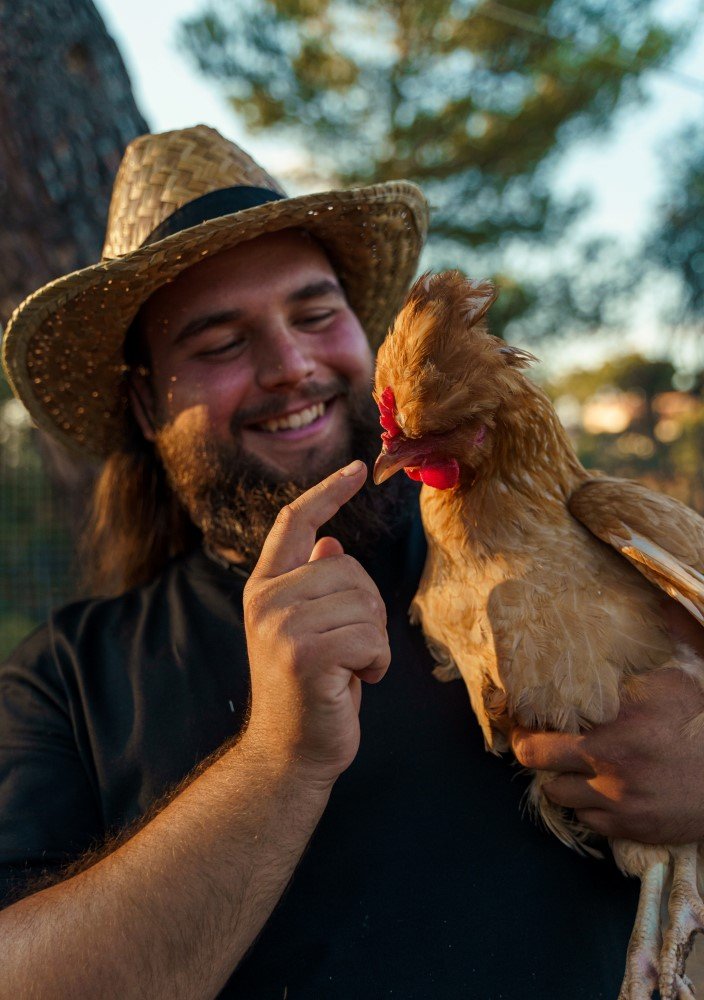
«And at the same time I had to go with a smile and a very good product in front of very strict, very well-known and very good chefs and gain their trust. These people until then worked with large companies, people who were years in the field. And it's not like they did their job badly. I just made her obsessively well and that was the key.», points out.
ARTICLE CONTINUES AFTER ADVERSION
«By doing my job obsessively well, I managed to overcome the lack of capital, because I almost always managed to sell out and even the times I didn't sell anything, I went and gave it for free as a sample to people I knew could appreciate. So even something that would otherwise be lost could become the beginning of a partnership.», notes.
Entrepreneurship in Greece
Speaking about the business environment in Greece, Kallideris does not embellish reality. On the contrary, he speaks with great precision about the difficulties and opportunities he sees. «To me it means an act that I still don't know if it's heroism or stupidity.», says features, explaining how «On the one hand there are branches in which a new professional can stand out relatively quickly. Because Greece's business environment on the one hand, is relatively easy, in the sense that in many branches there is low competition and low quality of services and often this is because professionals themselves are exhausted. They say, "If it doesn't come out, if I don't get paid well, why should I do more?" So a man who comes in and decides to do obsessively good work can stand out quite quickly».
The power of the small producer
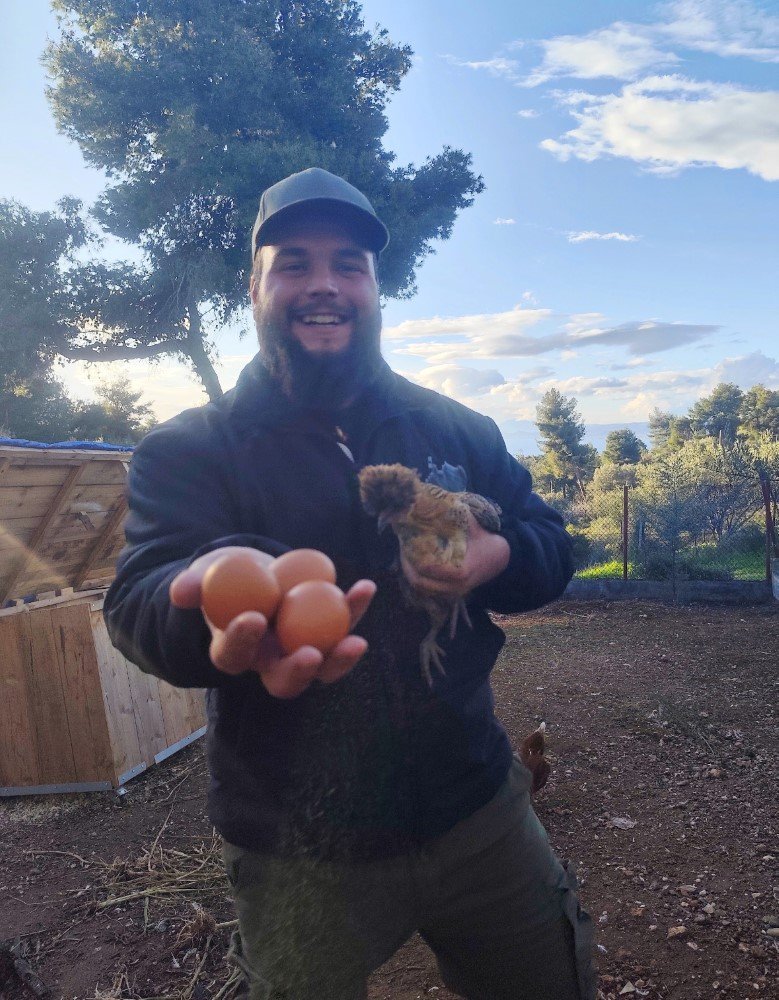
«Our main point is that we operate with protocols of large companies, but we have the flexibility of a very small local producer.», explains and adds that «the firm has specific procedures and quality controls, but without losing personal contact with the customer. We have first mated procedures, quality controls and a production logic that you would expect from a company with ten times as many dynamics as we do. But at the same time, customers can talk to me directly. And we have tremendous flexibility. We manage to combine the stability, procedures and competitive prices of a large company with the flexibility and taste of a small producer. And I think that's the whole difference.».
ARTICLE CONTINUES AFTER ADVERSION
From restaurants to urban production
Thanasis Kallideri's vision is not limited to the development of his business, it concerns a different way of producing and distributing food, with cultivation being closer to the cities and the final consumer. «Over the next few years I see the business in many more cities, both European and American, the aim is for microgreens to pass through the restaurant kitchen and at the daily table. I want to bring the quality and fresh microgreens that we grow not only to restaurants that already use them and make the best use of them to highlight their flavors and colors, but also to the everyday consumer. Through retail, through supermarket or even through our own power chain».
«Today we take just leafy vegetables and travel hundreds or even thousands of kilometers to reach the consumer. We have transportation, labor, storage, transport losses, shelf losses and in the end we often fly a large percentage of what we bought.», notes and specifies: «We want to grow within the urban centres themselves or very close to them. Instead of a salad coming from Drama to Athens, a microgreens salad comes from Athens to Athens. So we save a huge amount of transport and loss and we can have a product of superfresh, with very high nutritional value and at competitive price».
The lesson he teaches children
Thanasis Kallideris participates in actions in kindergartens and elementary schools and, as he notes, experience is among the most beautiful that he has lived. «The experience of educating young children, especially around nature, cultivation, and contact with soil, is one of the most beautiful experiences I have ever experienced in my life. I do it several times in kindergartens and elementary schools and you really see children's eyes shining. You see them bloom through these processes. Because they come into contact with what we are, in my opinion, really designed to do: play, laugh, learn, explore, put our hands on the ground and create something».
The process is simple but revealing. Children grow microgreens themselves and then eat what they created. «We do the whole thing together. We make the soils, we sow, wait, we cut the microgreens, we make the salad, we divide it into our saucers and we all sit together and eat it. And children eat their salad with incredible appetite», describes and explains, the secret is not to convince a child that something is good for him, but to make it part of the process.
ARTICLE CONTINUES AFTER ADVERSION
«Many times, teachers look at me with a question and say, "Death, I've never seen a child eat salad with such appetite. We, usually, fight with them to eat half the salad they've put in from home. How did you do it?" And the answer is very simple, I gave them an important role. I made them involved with their food. I didn't make the food a task. I didn't do a "must." I didn't say, "You should eat your salad because it's good." I didn't put pressure on them to eat. I gave them the opportunity to discover exactly how their food was created and because they invested time and energy in its creation, they were connected to it and so enjoyed.».
«You don't have to be fearless»
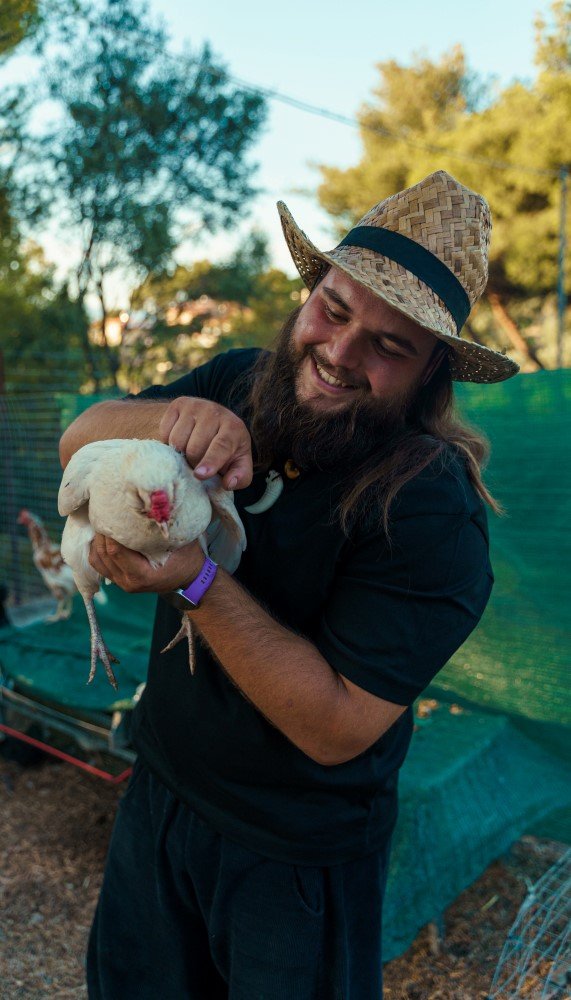
If there is a message that runs its entire course, that is the relationship with fear and risk. The young producer does not argue that entrepreneurship is an easy case or that everyone should become entrepreneurs. But he argues that fear of failure should not become a permanent excuse. «I'd have him first think about what the things he's regretted most to date in his life. And I'd ask him if it's things you did or things you didn't do. Because I think if we all sit down and think seriously, most of the things we regret are what we didn't do. The efforts we didn't make. The conversations we didn't have. The risks we didn't take. The dreams we put aside because we were afraid they wouldn't come out. And at some point you have to understand that time goes by whether it's business or not. In five years you'll be five years older anyway. The question is if then you're gonna say "I tried it and it didn't come out" or "fuck, I wanted to do it and I never dared." I prefer the first a thousand times.».
However, he is quick to clarify that risk does not mean recklessness, «I want to make it clear that entrepreneurship doesn't mean acting crazy and taking risks that can ruin your whole life. It means learning to take asymmetric risks. So risking something relatively small for the possibility of winning something huge», he says, explaining that the substance is in limiting the potential cost of a failure, without overly limiting the possibility of a great success.
ARTICLE CONTINUES AFTER ADVERSION
And it ends in a phrase that summarizes perhaps better than any other of his own philosophy, «You don't have to be fearless. You need to be scared and do it anyway when it makes sense. Because if you wait for the moment to come when you feel 100% ready, you'll never start. Believe in yourself even when circumstances don't show you any particular evidence that you should. Even when things don't work. Even when people around you, who are supposed to know better because they're older, richer, more successful or even your relatives, tell you they can't. There, sometimes you just have to close your ears.».
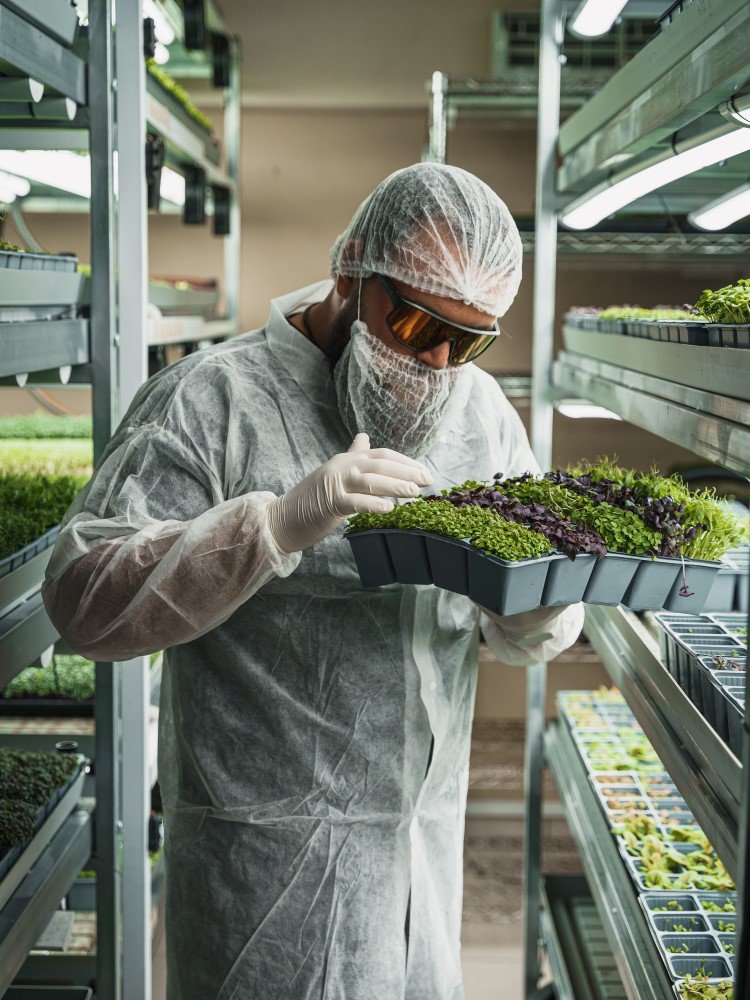
Photos: RES-AE
Follow it. on Google News and learn all the news first
See all the last News From Greece and the World,

