
One coastal Two speeds are becoming more and more clear in Greece, as the distance between large groups and smaller enterprises is not only about fleet size or transport, but above all about access to funding.
On one side are the largest companies, with a stronger capital base, the possibility of banking, capital increases and financing new ships or extended relocations. In the other there are dozens of smaller businesses, many of which serve barren and island lines and are invited to renew an old fleet without having the same financial tools.
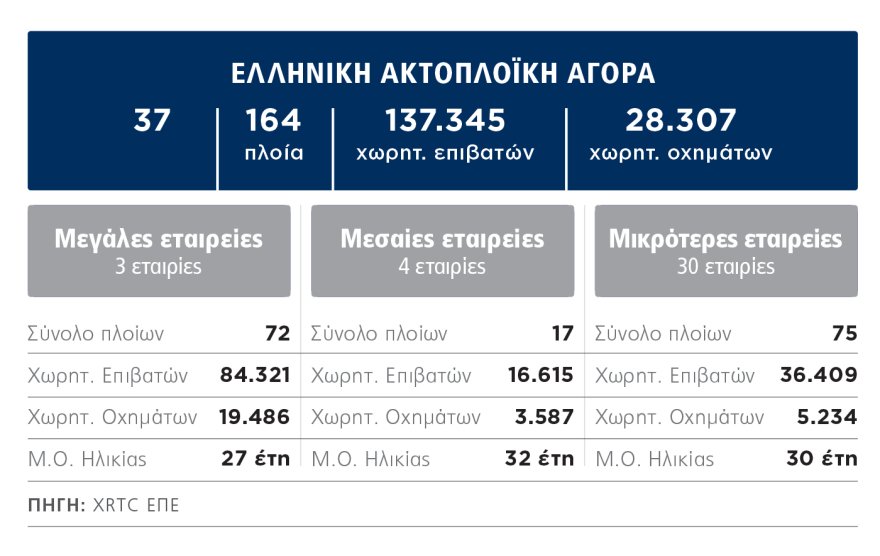
The concentration of the market is already intense. Attica Group, Minoan Lines and Seajets have a total 72 ships, i.e. about 44% of the total number of Greek vessels, but they concentrate more than 61% of the total passenger capacity and almost 69% of the vehicle capacity.
Even more characteristic is the image in medium and long distances. The XRTC, led by George Xiradakis, characterises this market as two large groups control about 60% of the fleet operating on these lines. Despite the liberalisation of the market since 2002, new entry remains limited due to the high cost of acquiring ships, strict technical requirements and the difficulty of securing capital.
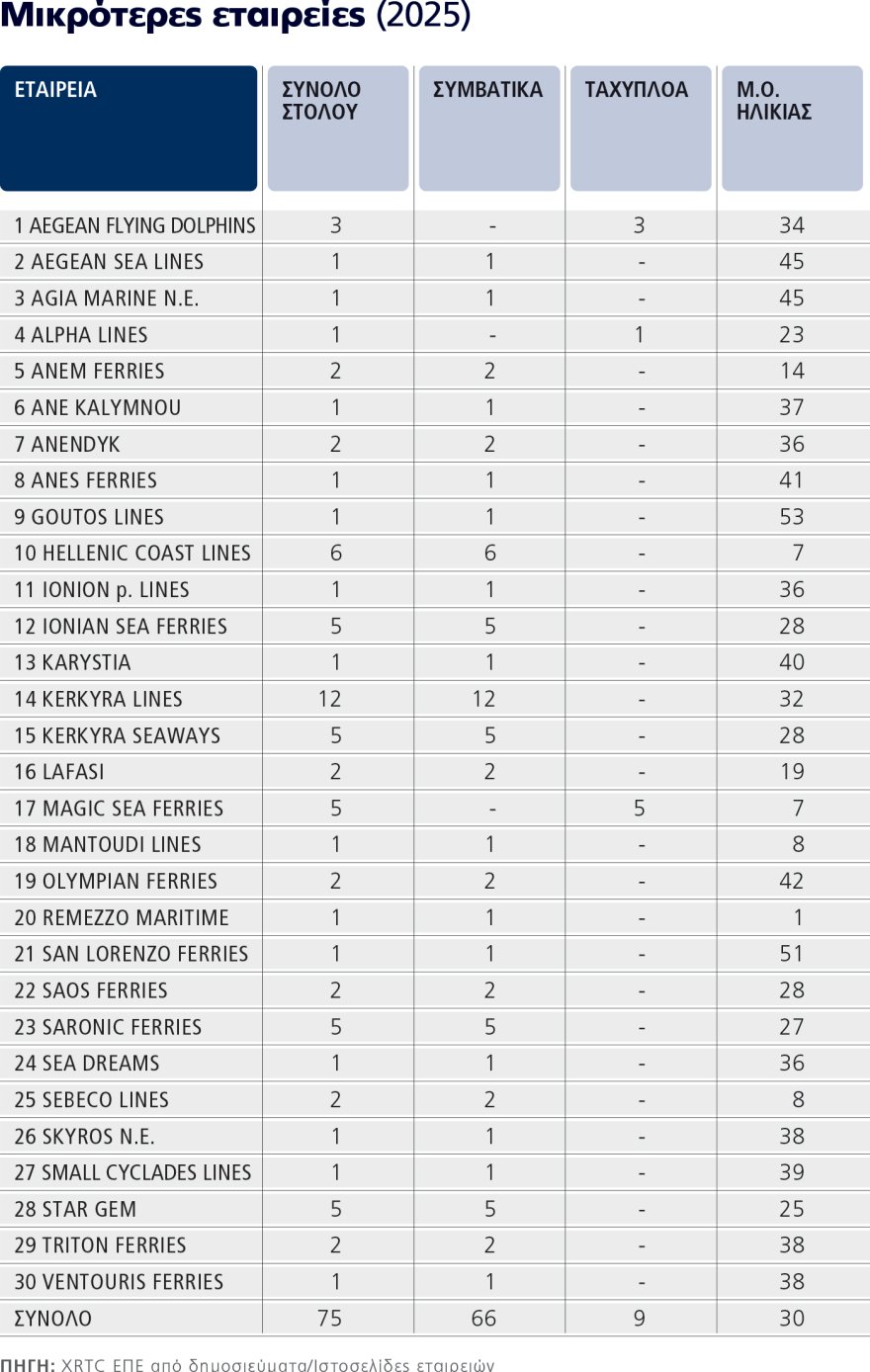
On the other hand, they are 30 smaller companies with 75 ships; of which 66 are conventional and only nine speedboats. The average age of their fleet reaches around 30 years, while their overall transport capacity is limited to 36,409 passengers and 5.234 vehicles.
The result is to create a market in which enterprises covering many of the most critical local connections are at the same time in the weakest financial position.
This image is shown in 25th Annual Study of XRTC Business Consultants for Greek Coastship, entitled «Time for Responsibility and Decisions». Head of the XRTC is CEO George Xiradakis, while the Editor and Analysis is Katerina Fitsiou.
The problem is of particular importance because shipping is a crucial infrastructure for the country. More than 115 islands depend on sea connections, while only 27 have an airport. On the islands it inhabits 14.6% of the population and through ships is served about 85% of their freight needs.
The real problem is equity
The difficulty of smaller firms is not limited to whether bank is willing to grant a loan. The main obstacle is the ability to cover the same participation. According to the XRTC, almost all small coastal vessels operating mainly on barren and island lines are unable to address the banks for the construction of new ships without strong guarantees or public service contracts. That's because bank lending never covers 100% of the cost of a new construction.
For a large group, the same contribution can be covered by available liquidity, capital increases, intragroup financing or other sources. For a small company, however, the equation is much more difficult.
The banks consider the capital base, cash flow, duration of contracts, additional guarantees and financial transparency of the company. XRTC even records limited interest from Greek banks even for companies that can offer guarantees beyond the value of the ship itself.
The problem is exacerbated by the lack of publicised financial data for much of the market. The economic analysis of the XRTC mainly covers Attica and Minoan Lines, as the financial data and traffic data of many medium and smaller companies are not made public.
The study itself directly links the difficulty of financing the 30 small companies with both limited own funds and lack of corporate transparency.
This creates a vicious circle: enterprises cannot invest in newer and more efficient ships because they do not have sufficient capital and, at the same time, have difficulty in being financed because they retain older ships, higher operating costs and limited collateral.
Grown-ups have already started the next day
On the other side of the market, the strongest groups have already begun the renewal and energy upgrading of their fleet.
The Attica has made investments for a clusterer facility on eight ships, totalling EUR 22.6 million, while with its accession «Superfast V» and two young people «E-Flexers» In 2027 the average age of its fleet in the Adriatic is projected to fall to 8.6 years from 24.8 today.
The Minoan LinesFor their part, they participate in the Grimaldi Group program for nine new ships of a total value of $1.3 billion, with two of them destined for the company. A share capital increase of EUR 26 million was made to cover the advance.
This is exactly the essence of two-speed shipping: large people have access to capital and can plan for the next decade, while smaller people often try to secure resources to remain competitive in the current environment.
Revenue of EUR 874,5 million, but costs increase faster
The fact that larger groups have better access to funding does not mean that they are not pressured. The total turnover of Attica and Minoans amounted in 2025 to 874.5m euros, increased by 2% compared to 858.2m euros in 2024. However, operating costs increased by 7% to EUR 764.4 million.
Total EBITDA It reduced by 5%, at EUR 110.3 million, while the results before tax went from a total profit of EUR 18.3 million in 2024 to losses of EUR 26.6 million in 2025. Attica recorded losses before tax of 33.7m euros, while the Minoans remained profitable, with profits of 7.05m euros.
The difference with smaller companies is that large groups have more options to absorb pressure and continue investing.
The example of bank lending is typical. Attica has a loan of EUR 611.6 million, with debt interest covered 3.2 times by EBITDA. The Minoans have no bank loan since 2018, but have long-term liabilities of 20m euros to the Grimaldi Group.
Over EUR 5 billion the transition account
The financial burden of the next day is great for the entire industry.
XRTC estimates that the total financial gap for the green transition Over EUR 5 billion over a period of 25 years. Around EUR 3 billion relate to new constructions, repairs and technology equipment, while more than EUR 2 billion relate to additional operating costs.
The challenge is even greater because companies are invited to invest before it clears which technology will prevail. Electricity, biofuels, methanol, hydrogen and ammonia are at different stages of development, while port infrastructure is not yet ready to support all these solutions on a large scale.
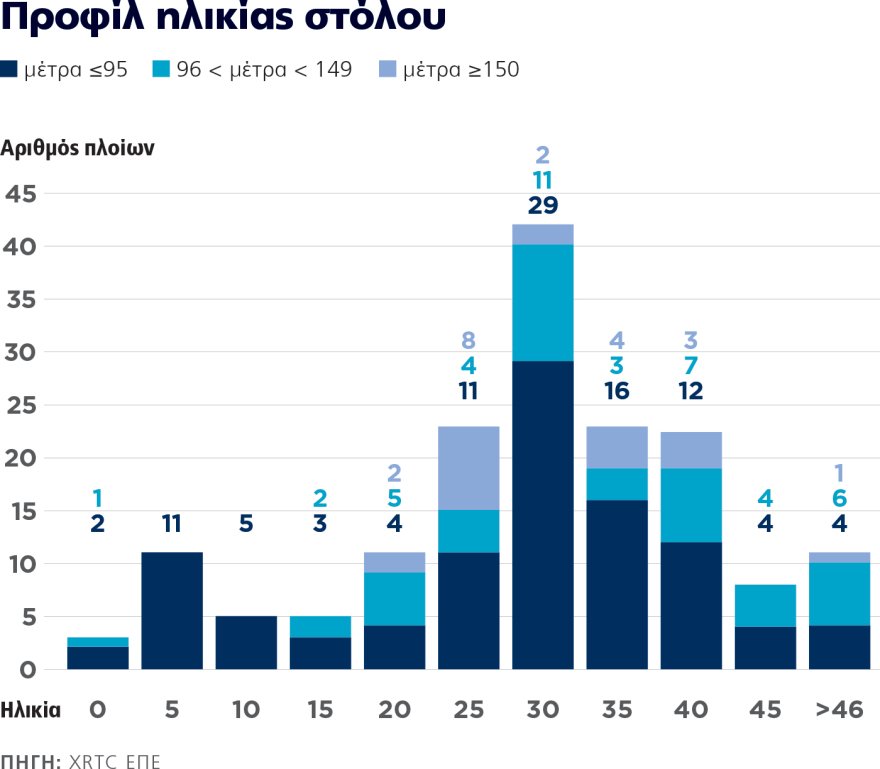
At the same time, the age of the fleet increases pressure for investment. Only 20% of Greek ferry ships are under 20 years of age. In ships up to 95 meters, 75% are over 20 years of age, in these from 96 to 149 metres the rate reaches 81% and the largest of 150 meters 90%.

EU ETS and FuelEU push margins
The new environmental rules transform the renewal of the fleet from choice to necessity.
In EU ETS, the obligation to cover verified emissions increased from 40% in 2024 to 70% in 2025 and from 2026 to 100%. At the same time, the FuelEU Maritime applies, while since May 2025 the Mediterranean has joined a Divine Emission Control Area.
Only for Attica, EU ETS costs reached EUR 2025 40 million, from EUR 18.9 million in 2024. A further EUR 6.5 million was added for biofuels and EUR 3.6 million for polling.
At the same time, in 2026 he returned and fuel pressureThe average price of VLSFO increased by 29.8% in the first half of the year, while HSFO was increased by 31.8%. The additional monthly burden of the industry due to the energy turmoil was estimated at EUR 18 million and periods of increased summer routes up to EUR 25 million per month.
Για τις μικρότερες εταιρείες, η εξίσωση γίνεται ακόμη δυσκολότερη: παλαιότερα πλοία σημαίνουν υψηλότερη κατανάλωση, μεγαλύτερο κόστος συντήρησης και αυξημένες ανάγκες για επενδύσεις, την ίδια στιγμή που η πρόσβαση σε κεφάλαια είναι περιορισμένη.
668 εκατ. ευρώ στις άγονες γραμμές
Ενα από τα βασικά εργαλεία που μπορούν να βελτιώσουν τη χρηματοδοτική εικόνα των μικρότερων εταιρειών είναι οι νέες συμβάσεις δημόσιας υπηρεσίας.
Το κράτος επιδοτεί 57 πλοία για την εξυπηρέτηση 73 άγονων γραμμών. Από τον Νοέμβριο του 2025 οι συμβάσεις έχουν τετραετή διάρκεια, με συνολικό ύψος 668 εκατ. ευρώ για την περίοδο 2025-2029. Ο ετήσιος προϋπολογισμός αυξήθηκε από 148 εκατ. σε 167 εκατ. ευρώ.
Η μεγαλύτερη διάρκεια των συμβάσεων δίνει προβλεψιμότητα εσόδων και μπορεί να βοηθήσει τις εταιρείες στις διαπραγματεύσεις με τις τράπεζες. Δεν λύνει, όμως, το πρόβλημα της ίδιας συμμετοχής.
Κι εδώ βρίσκεται η βασική αδυναμία του σημερινού συστήματος: μπορεί μια εταιρεία να διαθέτει σταθερή τετραετή σύμβαση, αλλά αν δεν έχει την απαιτούμενη κεφαλαιακή βάση ή πρόσθετες εξασφαλίσεις, η χρηματοδότηση μιας νέας ναυπήγησης εξακολουθεί να παραμένει δύσκολη.
Υπάρχουν κεφάλαια, όχι ακόμη λειτουργικός μηχανισμός
Σε θεωρητικό επίπεδο, οι διαθέσιμοι πόροι είναι σημαντικοί. Η Ελλάδα αναμένεται να αντλήσει περίπου 1,5 δισ. ευρώ έως το 2030 από το Ευρωπαϊκό Ταμείο Εκσυγχρονισμού. Τον Μάρτιο του 2025, η Ευρωπαϊκή Τράπεζα Επενδύσεων ενέκρινε τέσσερις πρώτες ελληνικές επενδύσεις ύψους 208 εκατ. ευρώ. Παράλληλα, έχει εξαγγελθεί Εθνικό Ταμείο Εκσυγχρονισμού ύψους 300 εκατ. ευρώ, το οποίο φιλοδοξεί να στηρίξει επενδύσεις άνω του 1 δισ. ευρώ.
Το πρόβλημα είναι ότι οι εξαγγελίες δεν έχουν μετατραπεί ακόμη σε ολοκληρωμένο και λειτουργικό μηχανισμό που να οδηγεί τα κεφάλαια μέχρι την επιχείρηση.
Η XRTC επισημαίνει ότι το Εθνικό Ταμείο των 300 εκατ. ευρώ παραμένει ανενεργό και δεν έχει ακόμη συσταθεί φορέας διαχείρισης.
Για τις μικρές εταιρείες αυτό είναι κομβικό. Δεν αρκεί να υπάρχουν ευρωπαϊκοί ή κρατικοί πόροι. Χρειάζεται ένα χρηματοδοτικό σχήμα που να καλύπτει μέρος του κινδύνου, να ενισχύει την ίδια συμμετοχή και να καθιστά ένα επενδυτικό σχέδιο τραπεζικά αποδεκτό.
Ο κίνδυνος περαιτέρω συμπίεσης
Η σημερινή χρηματοδοτική ανισορροπία μπορεί να οδηγήσει σε ακόμη μεγαλύτερη συγκέντρωση της αγοράς. Οι μεγαλύτεροι όμιλοι έχουν τη δυνατότητα να ανανεώνουν τον στόλο τους, να μειώνουν την κατανάλωση, να επενδύουν σε νέες τεχνολογίες και να αποκτούν πρόσβαση σε πράσινη χρηματοδότηση. Οι μικρότερες εταιρείες κινδυνεύουν να παραμείνουν με παλαιότερα πλοία, υψηλότερο λειτουργικό κόστος και χαμηλότερη χρηματοδοτική επιλεξιμότητα.
Η XRTC εκτιμά ότι το πιθανότερο σενάριο για την περίοδο 2027-2035 περιλαμβάνει σταδιακή πρόοδο των επενδύσεων, αλλά ταυτόχρονα επιλεκτική πρόσβαση στη χρηματοδότηση και περαιτέρω συγκέντρωση της αγοράς μέσω συνεργασιών, εξαγορών και συγχωνεύσεων.
Στο δυσμενές σενάριο, οι υψηλές τιμές ενέργειας και η παρατεταμένη αδυναμία άντλησης κεφαλαίων θα μπορούσαν να οδηγήσουν μικρότερες επιχειρήσεις εκτός αγοράς, επιταχύνοντας ακόμη περισσότερο τη συγκέντρωση και αυξάνοντας τον κίνδυνο υποβάθμισης της συνδεσιμότητας ορισμένων νησιωτικών περιοχών.
Η XRTC προτείνει γι’ αυτό τη δημιουργία ειδικών εγγυοδοτικών μηχανισμών, την τεχνική υποστήριξη των μικρών επιχειρήσεων για την κατάρτιση αξιόπιστων επενδυτικών σχεδίων, καθώς και την αξιοποίηση πράσινων ομολόγων, ESG δανείων και εξειδικευμένων προϊόντων Green Shipping Finance.
Το διακύβευμα ξεπερνά τα οικονομικά των εταιρειών. Η ελληνική ακτοπλοΐα δεν είναι μια συνηθισμένη εμπορική αγορά. Είναι βασικό κομμάτι της λειτουργίας της νησιωτικής χώρας.
Εάν οι μικρότερες επιχειρήσεις δεν αποκτήσουν πρόσβαση στον νέο επενδυτικό κύκλο, υπάρχει ο κίνδυνος να δημιουργηθεί ένα σύστημα με σύγχρονα, ενεργειακά αποδοτικά πλοία στις ισχυρές εμπορικές γραμμές και παλαιότερες μονάδες στις μικρότερες και πιο απομακρυσμένες συνδέσεις.

