
The Danish Food Authority announced the recall of Lidl's private label Freshona foods, following norovirus detection. All information on the product, risks, symptoms and protective measures.
The presence Norovirus in food, it is the main cause of acute viral gastroenteritis in all age groups, responsible for a large number of food-borne epidemics worldwide and is often associated with frozen berries and especially frozen berries. strawberries. For this reason, withdrawal of products where the virus is detected is a critical measure to protect public health, as even a small amount of contaminated food can cause infection. Today 29 June 2026, the Danish Veterinary and Food Administration (Fødevarestyrelsen) announced the withdrawal of frozen biological strawberries private label of the Lidl supermarket chainAfter laboratory detection of norovirus during sampling.
SEE ALSO | Listeria cases of contaminated cheese were increased to 12 – 10 hospitals and one death
The product withdrawn is frozen organic strawberries Freshona (Freshona Frozen Organic Strawberries), in a pack of 300 grams (see photo below). The minimum conservation dates are 18 August 2027 and 19 August 2027. The product was available through all Lidl stores in Denmark. Lidl Danmark K/S, based at 89, 8000 Aarhus C. Consumers were asked to reject the product or return it to the store from where they supplied it, while those who develop symptoms after consumption should contact their physician.
Norovirus is the most common causative causation of acute viral gastroenteritis worldwide. It belongs to the family Caliciviridae and is transmitted mainly through a fecal tract, either from person to person or through contaminated food, water or surfaces. Extremely small number of viral particles are sufficient to cause infection, which explains why epidemics spread easily. Frozen berries are one of the most important food categories associated with foodborne norovirus infections. According to the FAO/WHO Joint Report of 2024 on the assessment of microbiological risks, frozen berries infected with norovirus and hepatitis virus A are the most important virus-food couple in terms of burdening public health worldwide.
Scientific knowledge shows that strawberry contamination can occur already from the primary production stage. The use of contaminated irrigation water, the presence of contaminated harvest workers, inadequate sanitation facilities, and cross contamination during screening, treatment or packaging are the most important mechanisms for introducing the virus into the production chain. Norovirus does not multiply in food, but can remain infectious for a long time, even after freezing, as low temperatures do not destroy it.
The European Food Safety Authority (EFSA) has pointed out that each berries farming environment presents different risk factors and that the implementation of Good Agricultural Practices (GAP), Good Practice Health (GHP) and Good Practice Production (GMP) is the most important measure to prevent contamination. At the same time, EFSA reports that cases of norovirus associated with frozen strawberries and raspberries are an emerging public health problem in Europe. Although the microbiological criteria for norovirus can be used to verify food safety systems and HACCP procedures, the available scientific data are not yet sufficient to establish uniform European limits.
The scientific literature includes several major epidemics related to frozen strawberries. Particularly typical is the multistate epidemic in Germany in 2012, published in Eurosurveillance magazine. More than 10,900 persons, mainly students and school and nursery staff, were ill after eating meals containing frozen strawberries. Epidemiological studies in different areas have consistently shown that strawberries desserts were the transmission vehicle, while laboratory testing confirmed the presence of norovirus in unused packaging of the same load of frozen strawberries. The rapid withdrawal prevented the disposal of more than 11 tonnes of product and it was estimated that it prevented thousands of additional cases. Researchers pointed out that contamination probably came from contaminated water used during production and that the incident highlighted the risk posed by the global trafficking of large quantities of food.
In the United States, there have also been repeated epidemics of intestinal viruses associated with imported fresh or frozen berries from 1997 to recent cases of hepatitis A of the years 2022 and 2023. The U.S. Food and Drug Organisation (FDA) has set as a priority the development of new laboratory methods for the detection of intestinal viruses, the investigation of their survival in the agricultural and industrial environment and the better understanding of the pathways for the contamination of berries.
Norovirus infection usually occurs 12 to 48 hours after the consumption of contaminated food. The most common symptoms are sudden nausea, severe vomiting, water diarrhoea, abdominal pain, low-intensity fever, headache, myalgia and severe weakness. In most patients the disease disappears within one to three days, but may cause significant dehydration. A greater risk of serious complications is faced by infants, young children, elderly people, pregnant people, immunosuppressed people and people with chronic diseases. Direct medical evaluation is required when signs of severe dehydration, persistent vomiting do not allow fluids to be taken, high fever, bloody diarrhoea, confusion, severe somnolence or significant reduction in diuresis.
Safe management of frozen strawberries is important prevention measure. Οι φρέσκες φράουλες πρέπει να πλένονται σχολαστικά κάτω από άφθονο τρεχούμενο νερό λίγο πριν από την κατανάλωση, χωρίς τη χρήση σαπουνιών ή απορρυπαντικών. Τα χαλασμένα ή χτυπημένα φρούτα πρέπει να απομακρύνονται. Οι κατεψυγμένες φράουλες πρέπει να διατηρούνται συνεχώς στους -18°C ή χαμηλότερα μέχρι τη χρήση τους και να μην επανακαταψύχονται μετά την απόψυξη. Όταν προορίζονται για κατανάλωση από μικρά παιδιά, ηλικιωμένους ή ανοσοκατεσταλμένα άτομα, συνιστάται η επαρκής θερμική επεξεργασία πριν από την κατανάλωση, καθώς η κατάψυξη δεν αδρανοποιεί τον νοροϊό. Είναι επίσης σημαντικό να αποφεύγεται η διασταυρούμενη επιμόλυνση μεταξύ ωμών και έτοιμων προς κατανάλωση τροφίμων, να πλένονται σχολαστικά τα χέρια με σαπούνι πριν και μετά τον χειρισμό τροφίμων, να καθαρίζονται τακτικά οι επιφάνειες εργασίας και τα σκεύη κουζίνας και να τηρούνται οι βασικοί κανόνες υγιεινής σε όλα τα στάδια προετοιμασίας των τροφίμων.
Η συγκεκριμένη ανάκληση δεν αποτελεί το πρώτο περιστατικό που αφορά προϊόντα της ιδιωτικής ετικέτας Freshona. Τον Φεβρουάριο του 2024, η Lidl Ιταλίας απέσυρε κατεψυγμένα αμερικανικά μύρτιλα Freshona (Freshona Mirtilli) συσκευασίας 550 γραμμαρίων, έπειτα από ανίχνευση νοροϊού, ενώ η ανάκληση ανακοινώθηκε τόσο από την εταιρεία όσο και από τις ιταλικές αρχές ασφάλειας τροφίμων. Τον Αύγουστο του 2024 ακολούθησε ανάκληση σαλάτας κόκκινου λάχανου Freshona λόγω αυξημένων επιπέδων μολύβδου, ενώ στις 29 Σεπτεμβρίου 2024 η Lidl France και οι γαλλικές αρχές απέσυραν συσκευασμένα αποφλοιωμένα κόκκινα παντζάρια Freshona, καθώς οι αναλύσεις έδειξαν συγκεντρώσεις υπερχλωρικών αλάτων πάνω από τα επιτρεπόμενα ευρωπαϊκά όρια. Επιπλέον, τον Οκτώβριο του 2025 η Lidl Suisse ανακοίνωσε την ανάκληση κατεψυγμένων σμέουρων Freshona (Freshona Framboises surgelées) με ημερομηνία ανάλωσης 11 Ιουλίου 2027, μετά από ανίχνευση καδμίου σε συγκέντρωση υψηλότερη από το νόμιμο όριο. Σε όλες τις περιπτώσεις οι καταναλωτές κλήθηκαν να μην καταναλώσουν τα προϊόντα και να τα επιστρέψουν στα καταστήματα για πλήρη επιστροφή χρημάτων. Η Freshona αποτελεί μία από τις βασικές ιδιωτικές ετικέτες του ομίλου Lidl για κατεψυγμένα φρούτα, λαχανικά και προϊόντα κονσέρβας.
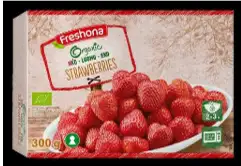 Οι κατεψυγμένες φράουλες ιδιωτικής ετικέτας lidl που ανακλήθηκαν
Cibum is a specialized food safety information site. The information in the article is informative. For more details Press HERE.
ΔΕΙΤΕ ΕΠΙΣΗΣ

