
The European hotel industry's dispute with Booking is a complex legal and economic battle I would like to thank the President-in-Office of the Council and the Commission for their work.
Judicial dispute between the European hotel industry and the Booking platform. Thousands of hoteliers now claim compensation for lost profits
The deeper causes, legal bases and latest developments in this case are summarised in the following points:
The hotel's court counterattack did not begin in the vacuum. It is based on a historical decision of the Court of Justice of the European Union (TEU) adopted on 19 September 2024 (Case C-264/23). The court officially held that the parity Clauses imposed by Booking on hotels violated EU competition law.
The nodal date
The clauses «best price» They effectively banned hotels from offering lower prices or better availability on their own channels (such as their official website) than those appearing on the platform. The WEU considered that this limited competition and artificially kept supplies high.
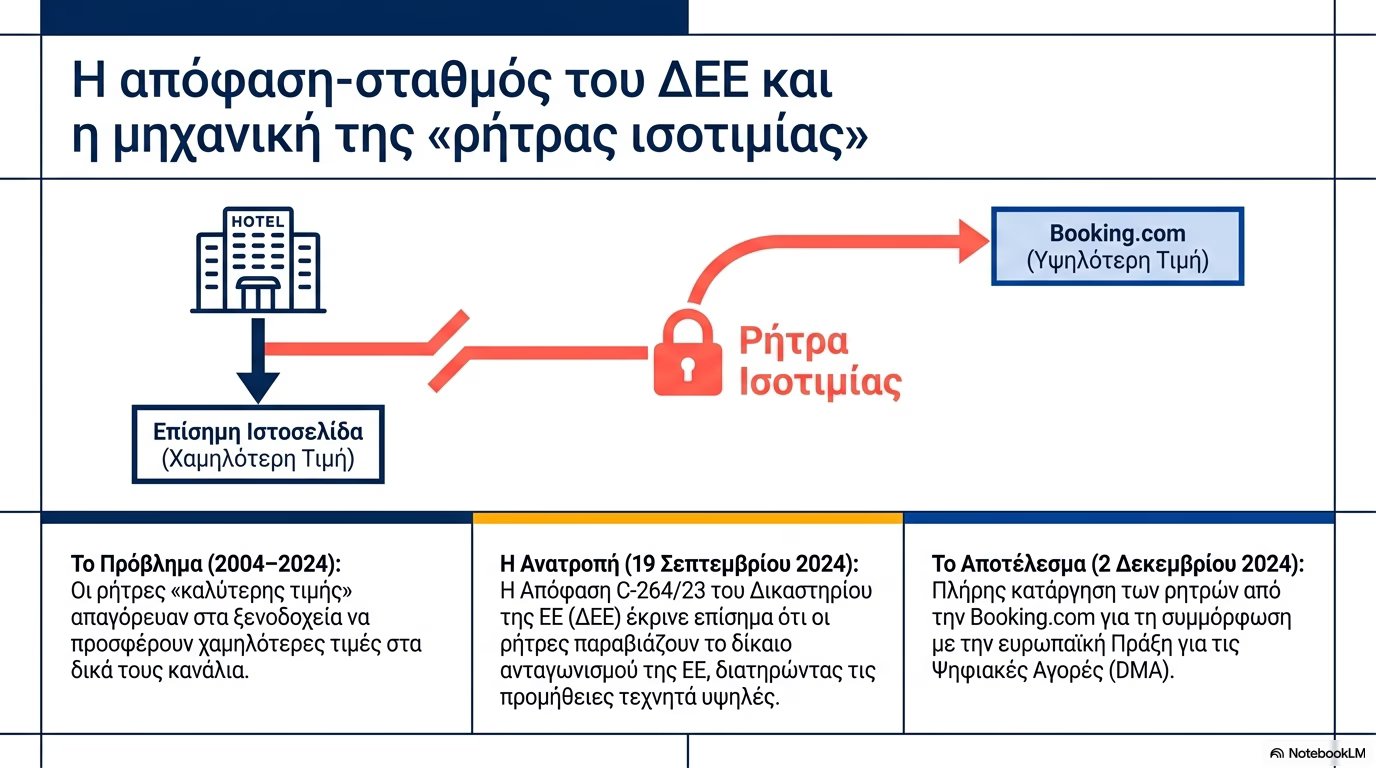
In practice, hoteliers were forced to pay the Booking commission (from 15% to 22%) on the original, more expensive price rather than the final discount. In addition, it charged the commission on the total price of the room including VAT.
Booking was finally forced to completely abolish these clauses from its general terms on 2 December 2024 in order to comply with the European Digital Markets Act.
Europe's collective education
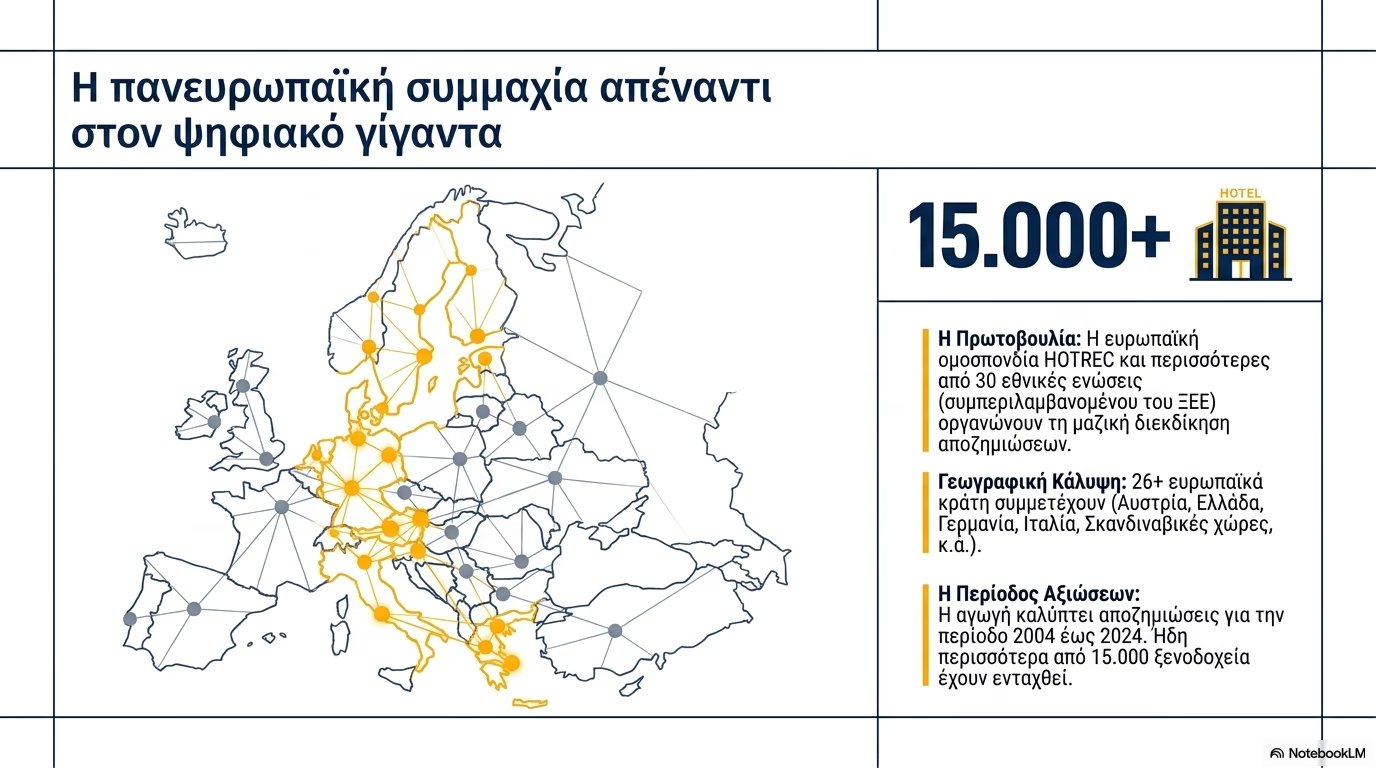
Following the decision of the WEU, the European Hotel Federation HOTREC, in collaboration with more than 30 national associations (including the Hellenic Hotel Chamber), initiated the process of claiming compensation for damage in previous years.
The hotel associations supporting this action are located in Austria, Belgium, Croatia, Cyprus, the Czech Republic, Denmark, Estonia, Finland, Germany, Greece, Hungary, Iceland, Ireland, Italy, Latvia, Liechtenstein, Lithuania, Luxembourg, the Netherlands, Norway, Poland, Portugal, Romania, Slovakia, Slovenia and Switzerland.
The lawsuit, which according to experts will be a difficult battle, calls for compensation for the period from 2004 to 2024, when Booking.com abolished its clause «best price» to comply with the EU Digital Markets Act.
The path to vindication
The hoteliers assigned their claims to an independent Dutch institution, the Stichting Hotel Claims Alliance (SHCA), which has filed the collective suit at the Amsterdam Court of First Instance (where the Booking seat is located).
Participants do not pay court fees or take financial risks. The process is funded by a specialised investment fund. In case of victory or compromise, the fund retains a percentage of 30%, while if the lawsuit is lost, hoteliers are not burdened with anything.
Already more than 15,000 hotels from all over Europe have joined the process.
Recent critical developments
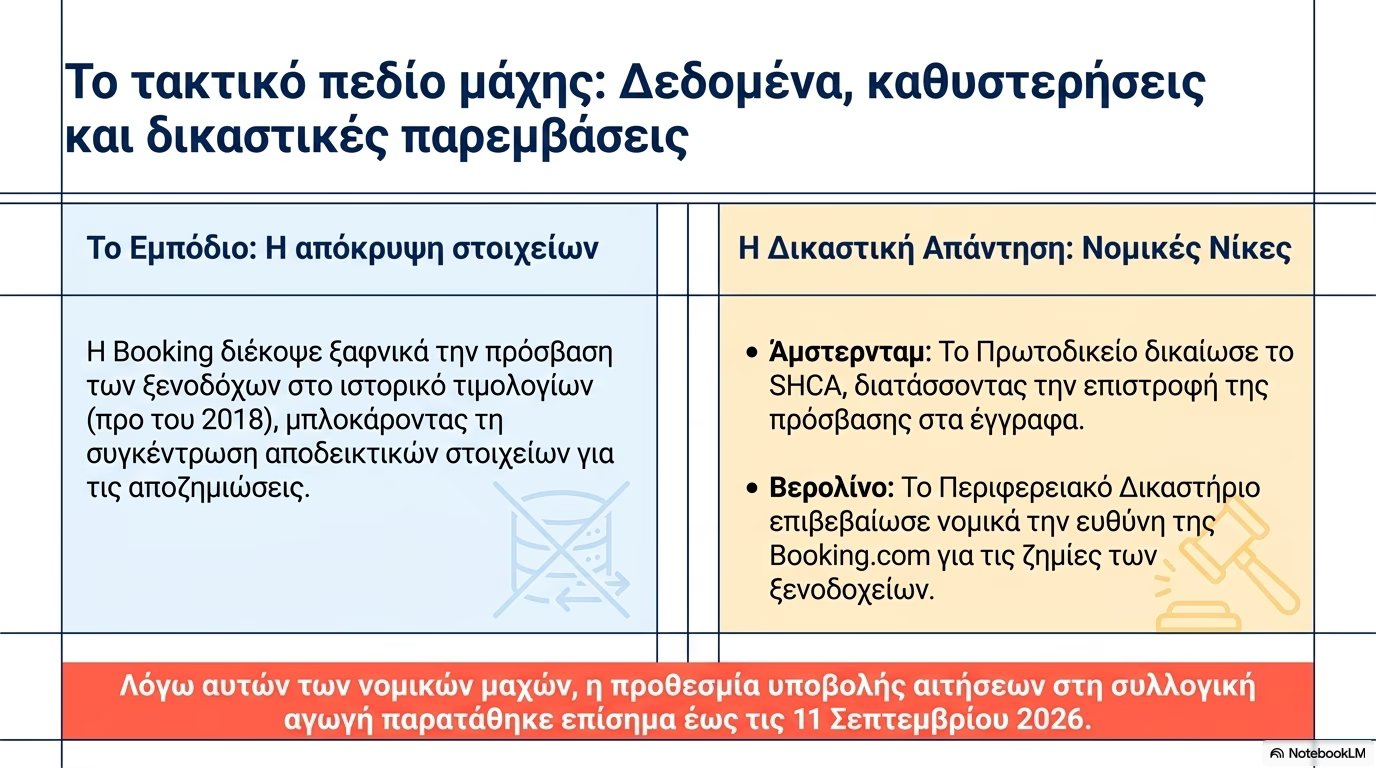
The extension of the time limit for submitting applications in the proceedings until 11 September 2026 was decided due to recent judicial battles and tactics on both sides:
According to SHCA complaints, Booking suddenly discontinued hotel access to historical invoices (before 2018) through the internal platform, making it difficult to gather evidence to establish compensation. The SHCA appealed to the Amsterdam Court of First Instance, which justified the hoteliers and ordered measures to ensure these crucial documents.
Almost at the same time, the Berlin District Court issued a decision confirming the responsibility of Booking.com for the damage caused to hotels due to price equalisation clauses.
What hoteliers claim
Claims are divided into two main categories:
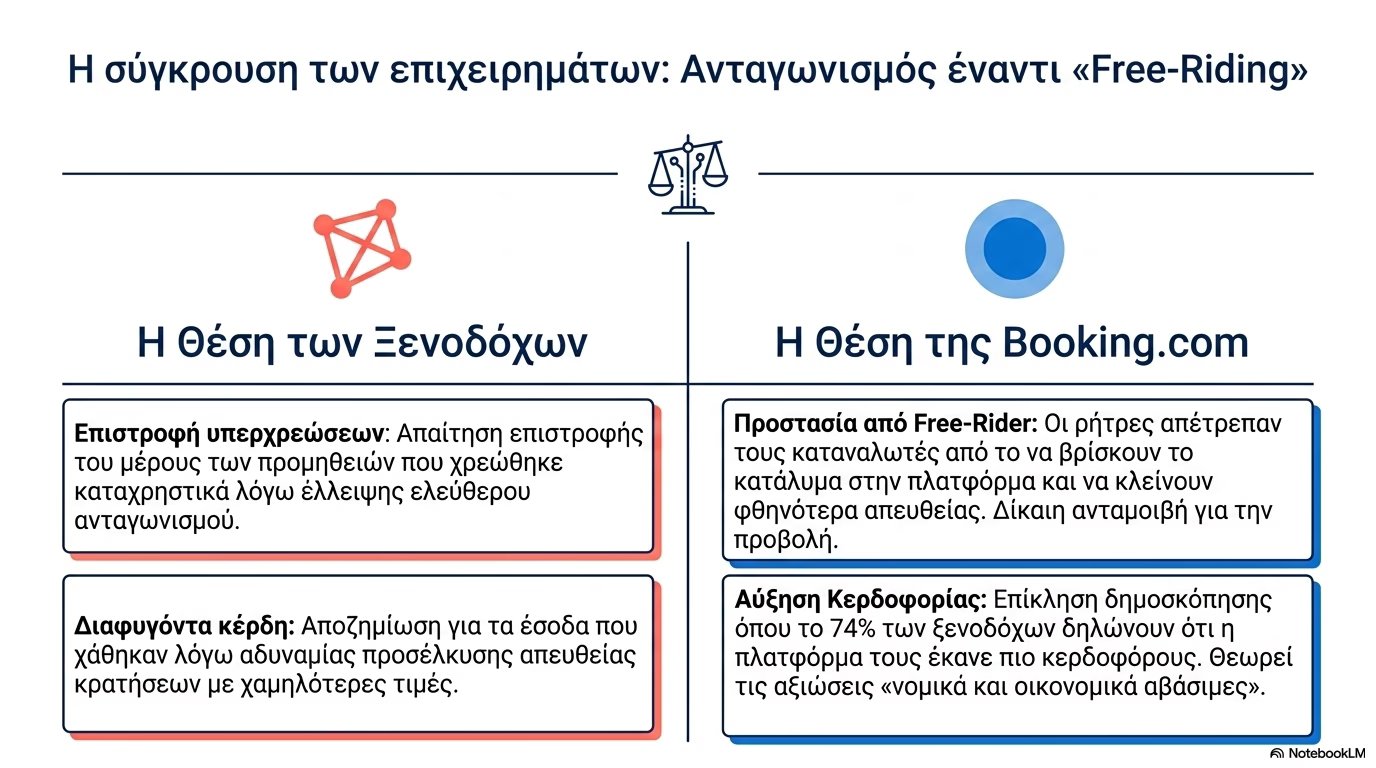
- Reimbursement of part of supplies deemed to have been unduly and abusively charged due to the lack of free competition.
- The revenues lost by the hotels because they could not attract direct bookings at lower prices.
This case is considered one of the biggest collective claims in the digital economy in Europe and is expected to fully reform the balance between accommodation and major booking platforms.
What Booking claims
Booking claims the use of the clauses it used in the past was to prevent the phenomenon «free-rider»: If there were no clauses, a consumer could find the hotel through Booking.com and then book directly from the hotel website at a lower price. Booking considers that these clauses ensured a fair reward for the viewing services it offered.
It recalls that the controversy concerns past practices. She presents herself as a vital partner of European tourism and argues that hoteliers' claims for compensation are legally and economically unfounded, as they ignore the functioning of the free market and the fair nature of business contracts.
It calls for a poll in which 74% of hotel owners stated that Booking.com made their business more profitable, with many reporting higher completeness rates and lower customer acquisition costs.
Strong profitability
The total annual revenue of the parent company Booking Holdings Inc. (to which Booking.com, Agoda, Priceline, KAYAK, OpenTable etc. belong) were formed as follows:
For the year 2025: Revenue amounted to $22.9 billion, showing an increase of 13% compared to 2024. For the year 2024: Revenue was $23.7 billion. For the year 2023: The proceeds were $21.3 billion.
The first quarter of 2026 (Q1 2026) also started with a positive sign, with the company's revenue reaching $5.53 billion (from $4.76 billion in the corresponding quarter of 2025), with an increase of around 16%.

