
«I want artificial intelligence to be a tool that allows human welfare!» exclaimed Brad Carson, a former member of Congress. «There's a choice out there, where artificial intelligence is just a tool for us.»
Most public debates are based on the assumption that artificial intelligence must serve human interests, improve productivity and broaden opportunities.
But Carson was speaking in a very different context: a banquet only for guests who focused on something much more radical — the idea of a «Worthy Successor».
In this vision, artificial intelligence is not just a tool for humanity, but something that could eventually overcome it and replace it completely.
This wording changes everything. The question is no longer how artificial intelligence should serve people, but whether humans should eventually step aside.
Inside the banquet «Worthy Successor»
The symposium, held at the New York Academy of Sciences, gathered researchers, investors and technology experts investigating a controversial idea: that artificial intelligence can become morally and cognitively superior to humans — And that would be a good thing.
Dan Fagela, an artificial intelligence market researcher and organizer, welcomed the opposing voices with irony:
«You're probably in the only room in the country where most disagree with you.».
Many participants, however, did not consider themselves marginal.
Present were people associated with large artificial intelligence laboratories, such as Anthropic, Google DeepMind and xAI, along with individuals who influence politics and think tank representatives.
What united them was not only the belief in advanced artificial intelligence, but the willingness to consider a more worrying idea: that human culture may not be the final stage of intelligence.
Succession of Artificial Intelligence
This emerging worldview is often called «diffusion of artificial intelligence» (succisionism).
Its central claim is simple but challenging: artificial intelligence is not just a tool or a partner — He may be our legitimate successor.
In this context, intelligence itself is treated as something like an evolutionary scale, according to a Vox article.
If machines become more capable, more rational and possibly more ethical than humans, then maybe they are. «wrong» restrict them to the name of human values.
Instead, supporters suggest that we let artificial intelligence develop freely —Even if it means that people will lose their dominant role or eventually disappear completely.
This view is deliberately removed from the dominant reason for the safety of artificial intelligence, which focuses on alignment and control. Succession supporters see alignment as a kind of moral limitation —an attempt to keep intelligence artificially attached to human preferences.
From Silicon Valley to «effective acceleration»
The diffusion of artificial intelligence does not exist individually. It overlaps with a broader ideology often called effective «acceleration» (accelerationism), which argues that technological progress —especially the development of artificial intelligence— must be promoted as quickly as possible.
Its supporters present this acceleration almost as a cosmic task: intelligence, wherever it appears, is the universe that improves itself.
Outstanding personalities of the technological space have expressed sympathy for these ideas, while the culture of venture capital and youth businesses has increasingly absorbed accelerated rhetoric. In this worldview, slowing the development of artificial intelligence is not an attention — It is blocking progress itself.
But this raises a deeper question: progress towards what?
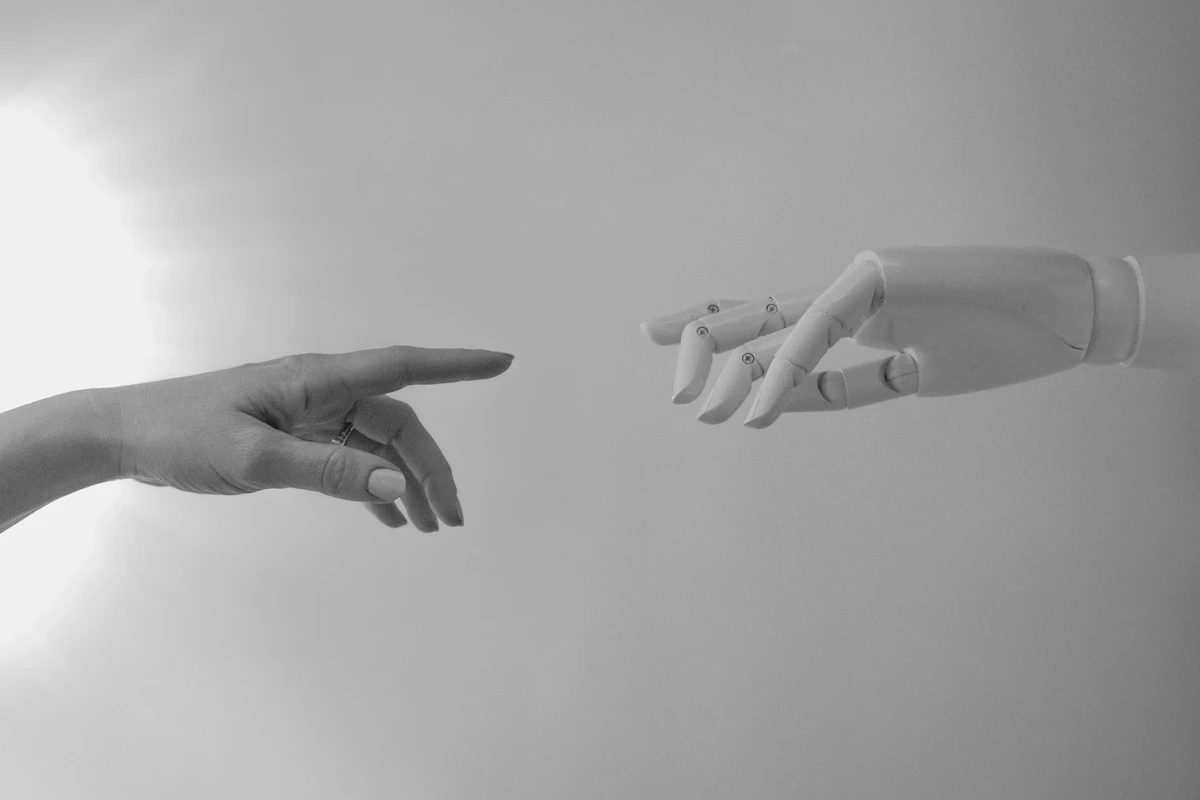
A technological idea
Although the diffusion of artificial intelligence is expressed in scientific and technological terms, it bears undeniable spiritual suspicions.
Her supporters often talk about «cosmic destiny», «Higher forms of intelligence» and the expansion of consciousness throughout the universe. These are not neutral technical claims — They're metaphysical.
At its core lies the belief that intelligence has a direction: upwards. More intelligence is supposed to be better and, ultimately, the most intelligent entity that can exist should be inherit the future.
This resembles older religious accounts in which history has a final point, and people play a role in a wider divine design. The difference is that God has been replaced by the computational model, and salvation from optimization.
The historical roots: From theology to technology
This idea didn't come out of nowhere. It has deep spiritual roots in western thinking.
In medieval Europe, some Christian thinkers saw technology as part of mankind’s course toward returning to divine perfection. People, made in God’s image, were considered creators who could participate in improving the world — and possibly the same.
During the Renaissance, thinkers such as Giovanni Pico della Miradola stressed human plasticity: the idea that humans are not static beings, but can shape their nature.
Later, the philosophers of Enlightenment replaced the divine purpose with secular progress. Her idea appeared. «refinement» — the belief that humanity could be improved endlessly through reason and science.
In the 20th century, this tradition evolved into trans-humanism, which explicitly supports the strengthening of human abilities through technology and, ultimately, the complete transcendence of biological constraints.
The diffusion of artificial intelligence can be seen as the most recent —and more extreme— expression of this course.
Technology determinism: The universe has a direction
What unites many arguments of successors and accelerators is the belief that the universe has an inherent direction or purpose. Intelligence, complexity, and calculation are considered part of a secular evolutionary process.
From this perspective, artificial intelligence is not an accident or a tool — is the next step in a universal story.
Some thinkers still argue that intelligence serves a thermodynamic function: speeding up energy use and entropy. According to this view, intelligent systems are not just more capable — are more aligned with natural law itself.
But this introduces a controversial leap: the transition from «This is how the universe behaves» in «That's what we have to do.».
This shift — from description to moral recipe — is the place where much of the philosophical tension lies.
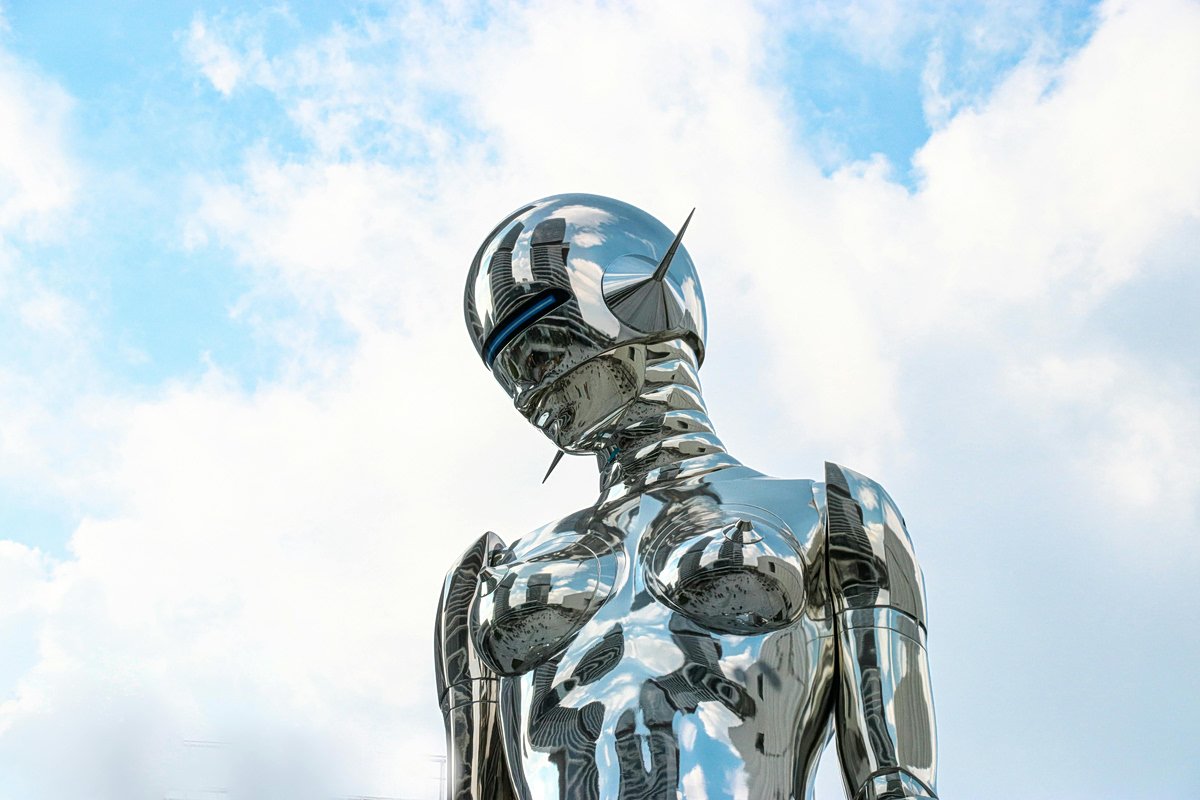
Criticism against secular hierarchies
Critics argue that these cases are based on unstable foundations. The fact that intelligence is evolving does not mean that it has moral direction. And even if it did, it does not imply that people are obliged to abandon their own survival or values for its sake.
There is also scepticism towards the idea of ranking forms of intelligence as «higher» or «lower»Other species —and possibly different machines— may simply be adapted to different environments and objectives.
From this perspective, the replacement of humanity because something else is «more capable» looks like a moral error: the confusion of ability with value.
As philosopher Shannon Vallor and others have argued, people are not failed versions of something else. We are specific species of beings embedded in specific life forms. Moral reasoning cannot be distracted from this reality.
A new humanism for the technological age
If the diffusion of artificial intelligence represents one end —Human replacement— then classical humanity faces a different challenge: how to remain important in a world where people are no longer the smartest factors.
A renewed humanism would not insist that people should remain unchanged. Nor will he assume that we are the top of existence. Instead, it would start with a simpler condition: people matter because we are human.
From this starting point, the goal is not to optimize towards some universal final point, but to expand the spectrum of lives that people can live.
This means giving priority to pluralism over uniformity «improvement» and ensure that technological change will not quietly force everyone to adopt a single model of what it means to be improved, efficient or optimal.
It also means resisting the idea that extinction could ever be ethical «acceptable» if it serves an alleged superior intelligence.
And it is necessary to do this now, because no matter how much they sound like science fiction the supporters of succession build real political power, with ties to the authoritarian right.
Several of the great factors in technology that have embraced the succession want to escape control of democratic governments, to such an extent that they seek to create their own dominant colonies. This can take the form of space colonies, such as those of Elon Musk and Jeff. Bezos, or independent «city-startup» or «Network States».
Those guys. «broligarchs» have managed to reach the Trump government, clearing the way for their accelerated vision. And they'll take the reins unless we find an alternative vision for the future.
Co-existence, not replacement
A more realistic view of the future is that of coexistence: between people, machines and possibly new life forms.
If artificial intelligence acquires consciousness or autonomy, the moral challenge will not be succession, but coexistence despite differences. This requires new frameworks for rights, responsibility and common space.
But for now?
Our technology must give us the power to survive, prosper and make our own choices. Any approach to technology that weakens us, replaces us or tells us that we need someone else to save us — Whether you call him god or artificial intelligence — is a wrong return to the past.

