
Wars, persistent inflation, rising public debts and geopolitical uncertainty. Everything that traditionally sends investors into the arms of gold is in the foreground today.
Yet, precious metal has lost nearly 31% of its value to the historical highs of January. The absolute safe haven He seems to have lost his protective force.
The explanation is in the Federal Reserve, the strong dollar and the yields of American bonds. The Big question, However, it is what follows: Another deeper dive or an opportunity to place before the next rise?
From $5,600 to $3,900
The fall is impressive. From around $5,595 per ounce in January, gold found at $3,879,70 at Friday 13 November closeOnly last week lost 4.55%, the silver retreated against 5.35%, at 49.03.
The two metals have recorded losses on Nine out of the last 12 weeks. It is therefore not a temporary unrest, it is a substantial reversal of the investment trend.
Because inflation doesn't save gold
The paradox has a simple explanation: It does not matter just how high inflation is, but also What central banks are doing to deal with him.
Recent data on the American labour market and consumer and producer prices enhance the possibility of new interest rate increases by Fed, Even within 2027.
The performance of the American ten-year bond has exceeded 5%, while the two-year-old moves near 4.8%. Why should anyone keep gold that does not pay interest when it can secure high returns from American government bonds?
At the same time, the strong dollar makes gold more expensive for buyers outside the US, limiting demand.
Even the Middle East war operates in reverse than one would expect. The most expensive oil feeds inflation, boosts expectations of stricter monetary policy and eventually pushes the precious metal.
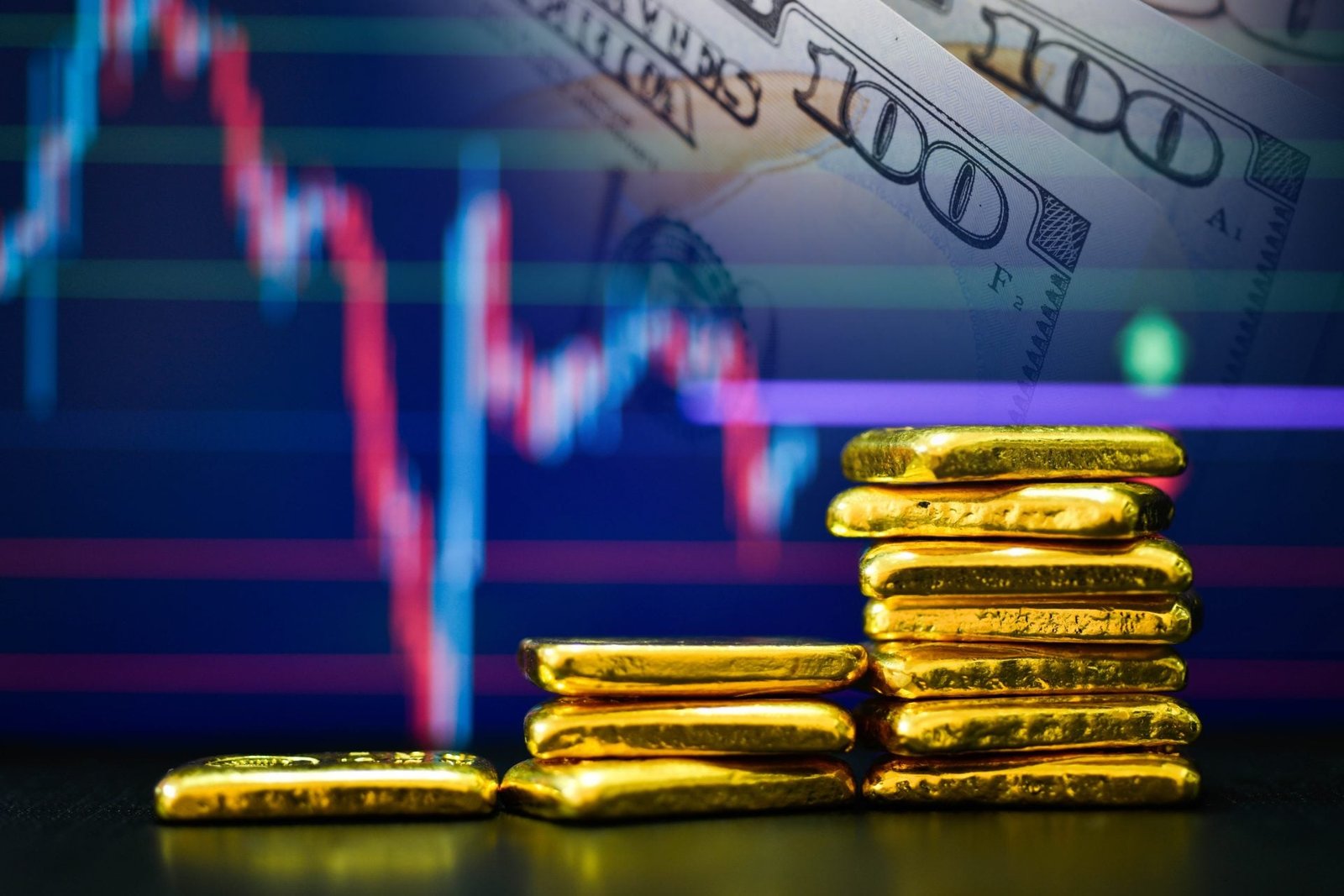
Goldman Sachs, UBS and JPMorgan: Where do they see the price
Despite violent correction, large investment houses have not abandoned the upward scenario. But they disagree as to when and how dynamicly gold will return.
The Goldman Sachs has significantly reduced her expectations. On November 14, she reduced her December 2027 target to $4,650, integrating the possibility of additional interest rate increases from Fed. However, it remains positive for the gold markets from central banks, which are a structural support for demand.
It is also important that the European Parliament be given the opportunity to express its views on this matter. UBS, which maintains a target of $5,400 by September 2027. The Swiss group considers that concerns about public debt, geopolitical uncertainty and the attempt to diversify exchange reserves will continue to favour gold.
The JPMorgan, which in June even predicted $6,300 for the last quarter of 2027, now acknowledges that strict monetary policy has overshadowed long-term upward factors. The bank still sees recovery prospects, but the return to previous dynamics requires a change of attitude from the Fed.
The common element of the analyses is clear: The demand for central banks remains a strong argument in favour of gold. However, it is not enough in itself to counteract the pressures from high interest rates.
The risk of being found at $3,600
In the short term, the technical image causes concern.
Analyst Michael Kramer points out at MarketWatch that the $3.900–4,000 area is a critical support zone. If gold fails to recover it, the next major support is located at $3,600, which is about 7% lower than today's levels.
For the silver, the $50 loss It opens the way to $46.50 and, in case of further retreat, to $40.
The crucial element is the relationship of precious metals with the dollar and bond yields. As long as the markets discount new interest rate increases, the pressure will hardly be released.
What will he judge the next day?
Three factors will determine the course of gold in 2027: the duration of monetary consolidation in the United States, the evolution of energy prices and the continuation of markets by central banks.
One deescalation of war and energy costs It could, paradoxically, help gold, limiting inflation and the need for new interest rate increases. Instead, an extended period of high American yields could significantly delay recovery.
The Reuters poll among 30 analysts and traders at the end of October placed the median forecast for the average price of $2027 at $4,650, reflecting the prospect of recovery, but not necessarily return to the historically high.
THE gold has not permanently lost its glow. But he has acquired a strong opponent: American money itself. As long as the dollar is strengthened and bonds offer high yields, the safe haven will remain under pressure.
The big twist will come when markets begin to fear more the long-term value of the dollar than the Fed's next interest rate increase.
preferred source on Google
To show more articles by Maritime in your searches easily and quickly, you must add the site to your preferred sources. You can do it by going Here..

