
In another difficult winter Europe seems to be entering, as the new rise in energy and fuel prices is pushing both households and industry. Increased gas and oil prices burden the family budgets, with more and more Europeans reducing basic costs, including access to medical care, in order to meet the bills.
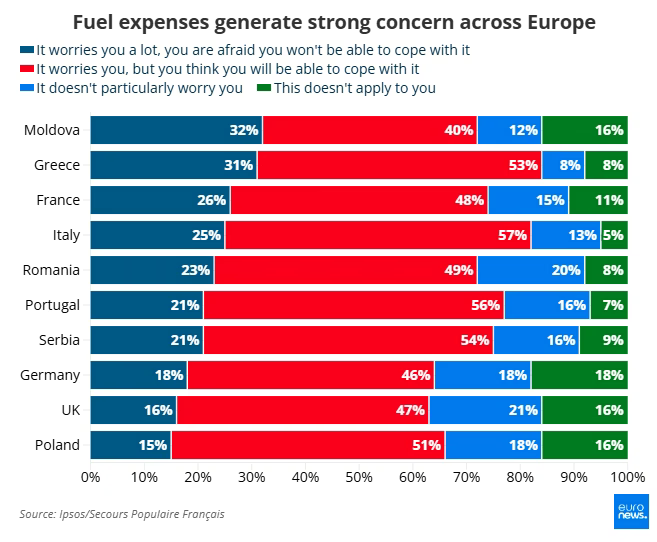
Concern about fuel costs is particularly intense in Greece. 31% of Greeks say they are very concerned about fuel costs, while an additional 53% is concerned, although they estimate they will be able to meet the costs. Overall, that is, more than eight out of every ten Greeks feel financial pressure from rising fuel prices, according to data from Euronews.
Ejecting gas prices and shortages
The conflict has disrupted global energy supplies, as Iran began attacking ships in the Persian Gulf and restricted access through the Straits of Hormuz, the narrow sea passage from which one fifth of global oil and gas passes, according to Guardian.
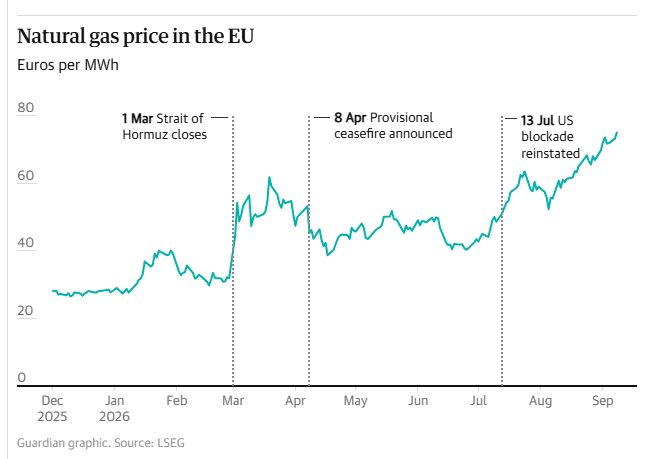
Wholesale gas prices in Britain rose this week to 205 pence per thermal unit, the highest level since Russia's invasion of Ukraine in 2022 and increased by 101% of 102 pence in June. At the end of February they were 78 pence per thermal unit.
Britain imports about 70% of its natural gas, which makes it particularly vulnerable to price fluctuations.
The problem is exacerbated by low gas reserves. Europe has been heading towards winter with its reserves at lower levels for over a decade, as the turmoil caused by the crisis in the Straits of Hormuz prevented countries from filling in their reserves during the summer, when prices are usually lower.
Storage facilities are currently full of about 67%, compared with an seasonal average of 80%.
Germany, which has the largest storage capacity in Europe, is only about 50% and is expected not to achieve the official 70% target for this year. And the Netherlands is expected not to reach its own target of 80%.
As one of the largest gas consumers in Europe, Britain may be particularly exposed as it has one of the lowest levels of domestic storage capacity and is instead based on imports via pipelines from Europe and tankers from the US and the Middle East.
From where? «cut» Europeans
Increasing the cost of fuel and energy bills exerts suffocating pressure on Europeans, with some resorting to extreme measures to address higher prices, even by restricting or abandoning access to medical care. However, the effects are not the same for everyone.
Throughout Europe, economic insecurity develops into a long-term feature of living conditions, while energy poverty even worsens the vulnerable situation of many citizens.
About 29% of Europeans say they live in precarious economic conditions, while 73% fear they will not be able to meet fuel costs, according to an annual survey by Ipsos and Secours populaire Français.
The survey involved 10,000 people aged 18 or over from France, Germany, Greece, Italy, Moldova, Poland, Portugal, Romania, the United Kingdom and Serbia.
Russia's war in Ukraine, as well as the Middle East conflict, have exacerbated the already rising trend of energy and fuel prices in Europe.
Amid new attacks on ships in the Straits of Hormuz, Brent oil price exceeded on Wednesday 9 September the $100 barrel and remained at high levels on Thursday morning.
Among the 10 European countries involved in the survey, Greeks, Italians and Portuguese are the ones most concerned about fuel costs.
In Portugal, petrol and diesel prices reached historically high levels on September 7. This is the biggest rise in fuel prices for four years and the highest diesel price ever recorded.
The way to deal with the crisis
Over the past year, more than one in three Europeans have cut significant costs, such as food and healthcare costs, in order to be able to meet energy and fuel bills, according to the survey.
The inhabitants of Moldova and Greece proceed to such cuts up to three times more frequently than the citizens of Germany and the United Kingdom.
When faced with increased fuel costs, the first sacrifices concern vacations, while following trips to visit relatives living away.
They quit car use
At the same time, three out of ten Europeans abandon the use of the car to go to work, even if it means that it takes much longer to reach their destination.
Particularly worrying is the fact that 23% of respondents have failed medical appointments due to the increase in costs.
In addition, Europeans adopt a number of other practices to limit the burden from energy bills, from reducing or fully closing heating to even choosing to take a cold shower.
Nearly seven out of ten respondents have implemented at least one measure to reduce energy bills, while just over five out of ten say they have taken more than one measure.
For example, French and Greek are the most likely to turn off heating in some rooms in the house, while Moldovans choose not to use certain electrical appliances.

