
Loading Text-to-Speech...
The behaviour of the European travellers changes, directly affecting both preferred periods holiday as well as the selected destinations. The trend towards travel in locations with less tourist congestion, in periods other than summer peaks, and the increase in short escapes (city breaks) in the metropolises of the Old Continent, it is now evident. This phenomenon is clearly reflected in the Greece, which attracts increasing tourist flows, not only in Athens, but now also in Thessaloniki throughout the year and not exclusively during the two months of July – August.
For Greek tourism These findings sound like a wake-up call, but at the same time also as a necessary cause for strategic redesign. In iconic and internationally recognised destinations in the country, such as Mykonos and Santorini, the picture of suffocating shocks, long waits and the exhaustion of local infrastructure – from water to transport – at the peak of the summer now causes apparent dissatisfaction in a significant portion of high-level travelers. These destinations are at risk of losing their attractiveness to the eyes of an audience who now refuses to suffer during the holidays and puts the quality of the overall experience in the first place.
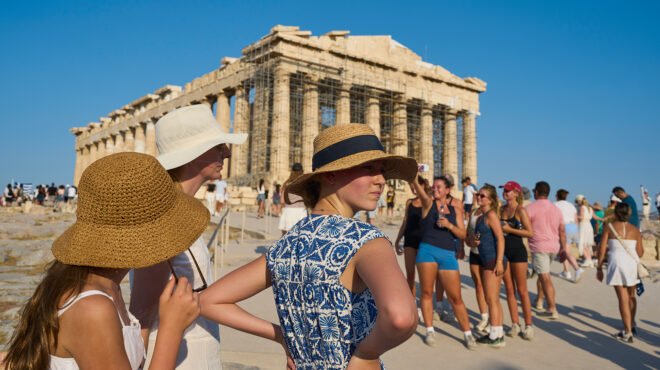
64% of Europeans record a strong travel intention, accompanied by the mood for significant consumer spending. In particular, eight out of ten are planning travel within Europe, while four out of ten budget over EUR 1,500. These are travellers who turn to alternative destinations, choose longer stays and make more frequent trips out of peak periods, according to its findings. new European Travel Commission (ETC) study. Indicatively, 51% heads to less popular destinations and 10% of travelers choose more remote areas.
At the same time, travel planning becomes more targeted, with 50% choosing over seven nights' stay and 67% traveling during the mid-term season or low season, thus contributing to the optimal distribution of tourist flows.
They turn to alternative destinations, choose longer stays and travel more often outside peak periods.
This differentiation is also reflected in individual types of tourism: 22% qualify for traditional model «sun and sea», 15% chooses City travel, cultural experiences and activities in nature, while 10% is directed towards well-being tourism.
By contrasting these data with Greek reality, a strong contradiction emerges. The dominant, even today, model of domestic tourism product remains completely interwoven and one-dimensionally attached to the diptych «sun and sea». It is typical that the vast majority of new large investment funds are directed almost exclusively at the construction of luxury five-star seaside resort. However, this strategy, although it provides revenue in the short term, is no longer sufficient by itself to meet the rapidly increasing demand for the other types of travel described in the survey. Although the Greece has a literally inexhaustible reservoir of alternatives – from its pristine forests and historical paths Pindu and Peloponnese, until the unexplored villages of the mainland, authentic agrotourism and healing sources of well-being – it does not seem so far to have incorporated these treasures into the forefront of its tourist arsenal. The country has the destinations, but is lagging significantly behind in developing them, noting deficiencies at the level of targeted infrastructure, specialised services and coordinated international visibility.
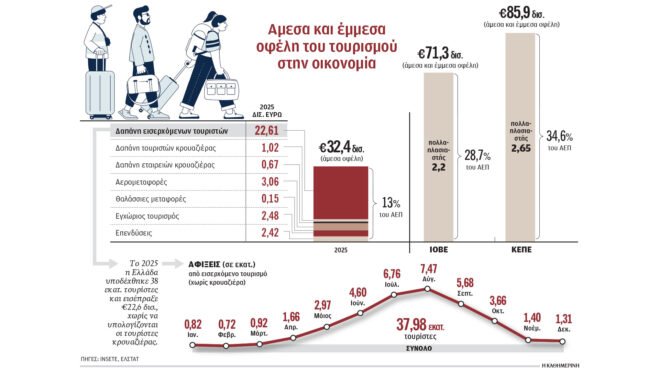
The analysis is based on a sample of 24,000 Europeans, participating in ETC's rolling survey «Monitoring Sentition for Intra – European Travel (MSIET)» for the period October 2024 – March 2026. The research was carried out in cooperation with the Mindhaus, strategic tourism marketing company.
At the same time, the basic selection criteria for destination remain stable, with first safety (45%), favourable weather (35%), competitive offers (30%) and hospitality of local communities (28%). At the same time, concern about the phenomenon of overtourism is intensified. In particular, 25% of respondents are concerned about the high volume of visitors, while 26% are consciously choosing low tourist density destinations. These figures are a clear message: simply quoting beds and over-exploring saturated island brands are no longer a guarantee of success. Modern travelers demand vital space and calm. Notable, however, is the fact that only 15% states that it takes seriously the personal environmental footprint of its travels.
Evaluating the above data, the Director-General of Mindhaus, Konstantinos Triantafyllis, notes that «European tourism is not only evolving at the level of trends, but also at the level of values, reflecting a clear transition towards more conscious travel choices. This translates into a new demand framework, where experience and quality take a decisive role in shaping tourist value. In this environment it is crucial that destinations can effectively respond to changing travellers' expectations and enhance their long-term competitiveness through more sustainable development strategies».

