
Water roads unite communities and move passengers. And with much cleaner current, electric ferries restrict the pollution of diesel engines.
ARTICLE SUMMARY
- Hydrowing technology makes it possible to electrify vessels as it lifts the hull from the water. This drastically reduces resistance and energy required, making the use of batteries sustainable to promote them.
- Vessev, already operating in New Zealand, envisions electric vessels as a means of public transport. The aim is to decongest roads and reduce pollution from conventional diesel ferries.
- San Francisco invests half a billion dollars in powering its fleet, adding four ferries with batteries and charging stations. He will become the first carrier in the US to launch purely electric speedboats.
- Despite the initial investment, electric engines offer long-term savings in fuel and maintenance. The transition is an opportunity to create domestic jobs in the shipbuilding industry and to build batteries.
In the port of New York City, just below the Statue of Liberty, a small white boat cuts the waters and draws the sights of passengers of a nearby tourist ship. It's not his appearance that impresses, it's the way he moves. «For now it's kind of... odd.», admits Eric Laakman, CEO and co-founder of Vessev, a company he manufactures exclusively electric hydrowing vessels.
ARTICLE CONTINUES AFTER ADVERSION
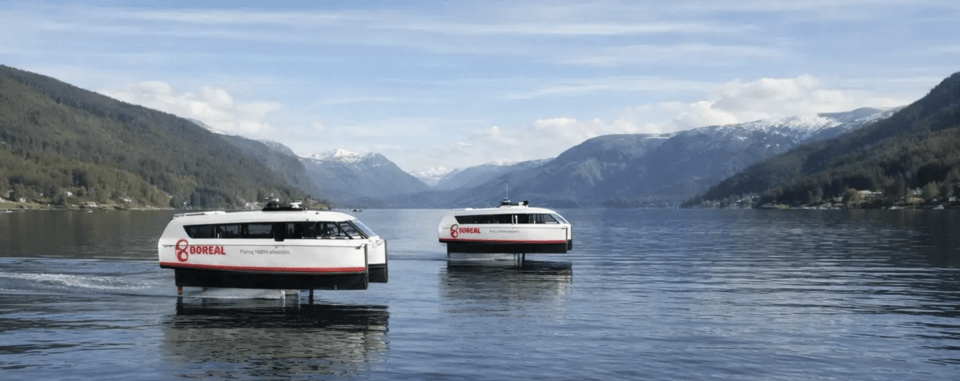
Technology is based on submarines «feathers» which, as the ship develops speed, lift the hull above the surface. «Speed up. Prepare to take off», says Laakman the moment the ship rapidly accelerates. The hydrowings lift the hull about 45 cm above water and the feeling changes almost immediately: the familiar beat on the waves gives its place to a smooth slip reminiscent of a flight.
Sliding in the air
This is not an impressive trick. The water promotes great resistance and its overpowering requires energy. That is where the power of the vessels stumbles: the batteries are heavy and the additional weight increases the power needed to move the ship.
Lifting much of the hull out of the water, hydrowings reduce resistance and make movement more efficient. «We are significantly reducing the resistance you feel and that is what makes electricity sustainable», explains Laakman. According to the company, its design limits resistance by about 66%, which allows smaller battery arrays and thus less weight and lower cost.
ARTICLE CONTINUES AFTER ADVERSION
Performance, however, is only a piece of the puzzle. The conversion of a vessel into electric does not simply mean that the diesel engine is replaced by an engine and battery. Operators must calculate how far the vessel will travel, how many passengers it will carry, how quickly it must charge and how much weight it can withstand.
Vessev already runs routes in New Zealand and extends to Australia, while its first line in the United States is planned for Lake Tahoe. Laakman envisions a future where electric vessels will no longer be sighted but part of daily transportation. «More like a subway, like buses, like a taxi, but on the water», describes.
Water roads can unite communities and move passengers without loading even more vehicles the already saturated roads. And when powered by ever cleaner current, electric ferries limit the pollution of diesel engines.
According to federal environmental data from the US, transport remains the largest source of greenhouse gas emissions in the country. The lion's portion has street vehicles, but ships also burn fossil fuels, so replacing diesel ferries could improve air quality on busy waterfronts.
ARTICLE CONTINUES AFTER ADVERSION
CANDELA
«I believe that in a more sustainable future»
Vessev is not alone. In Stockholm, passengers are already travelling with an electric hydrowing of Swedish Candela, which claims to reduce energy consumption up to 80% compared to conventional vessels, and Norway has ordered 20 of them for its ferry lines. «I believe that in a more sustainable future we will see more and more such vessels around the world», notes Laakman.
Across the coast, San Francisco is preparing to plug its ferries. The city's largest ferry carrier carries about 3.5 million passengers a year, according to its head, Seamus Murphy, to an area that has been formed by water and where many workers cross the bay by ship to reach the city.
«We have a lot of coastline.», says features. Yet all 18 ships in the fleet are powered by diesel. This is to change, as the carrier will add four battery ferries within the next two years, as part of an electrical modernisation of about half a billion dollars, including charging stations at the docks.
ARTICLE CONTINUES AFTER ADVERSION
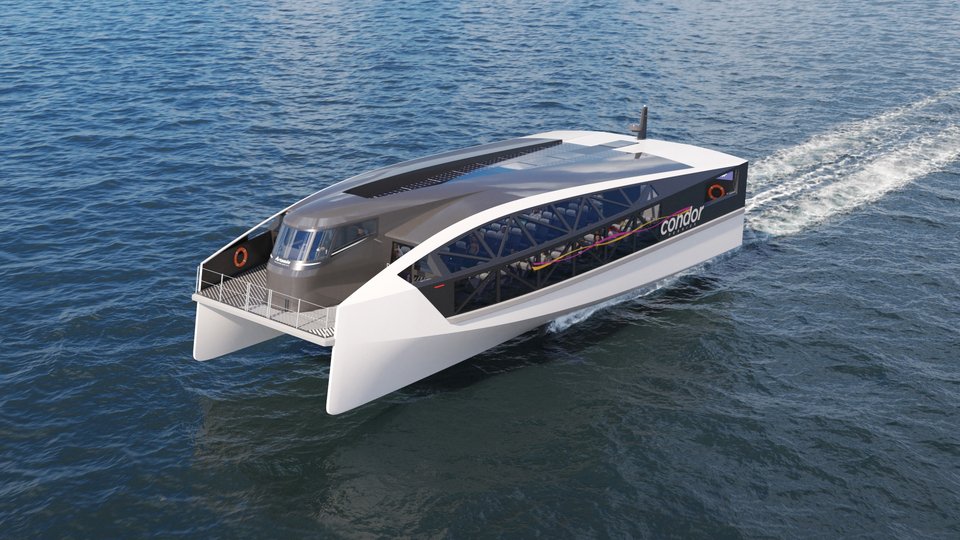
A ferry isn't a car that stays in the plug all night. It performs repeated schedules with strict hours, so its batteries must be sufficient for the route and the land chargers give enough energy to the short period of stay at the station. San Francisco will not initially use hydrowing, but the carrier argues that with the new vessels it will become the first in the U.S. to launch speedboats of purely electric ferries.
CONDOR
For transport, climate targets are rarely enough on their own. Electric ferries require greater initial investment in vessels and charging equipment, but electric motors can be more efficient than diesel and bring savings in fuel and maintenance.
Murphy says the most expensive diesel and improvement of batteries boosted the argument for change. «You make the investment at first and then save it in time. Finally, you will have lower costs in the long term.», explains. Much depends, of course, on the route, as long distances and tight hours complicate the transition.
ARTICLE CONTINUES AFTER ADVERSION
San Francisco boats and batteries are manufactured in the United States, which can create jobs in the domestic industry. For Murphy, the transition is an opportunity to reduce pollution and at the same time open new jobs for shipyards and battery manufacturers. «These jobs will be created in other countries and we can create them here if we handle this properly», points out. «We don't want to stay behind.».
Follow it. on Google News and learn all the news first
See all the last News From Greece and the World,

