
For decades data centers were almost invisible part of the United States digital infrastructure. They were built near fibre optic networks and electricity sources, hosting from cloud services to streaming platforms that use millions of people daily. But ChatGPT's appearance and the race for dominance in artificial intelligence radically changed the scale of the phenomenon.
Large technology companies began to look at vast areas of land, cheap electricity and adequate water resources for the creation of giant facilities. And along with the expansion of data centers a wave of reaction that today transcends traditional political dividing lines appeared in local societies.
Wired Report Georgia attempts to map one of the most unusual political phenomena caused by the explosion of AI in the United States: environmentalists, Democratic local activists, conservative voters and MAGA officials may disagree in almost everything, but in several areas they are on the same side against the construction of new data centers.
From ChatGPT to data centers explosion
The turning point came with the acceleration of the race for artificial intelligence. Education and operation of new models requires enormous computing power, with technology companies arguing that it needs rapid and massive construction of new facilities.
The Trump government advocated this acceleration, limiting environmental barriers in order to facilitate investment. At the same time, however, concerns began in local communities about electricity and water consumption, environmental impact and possible increases in electricity bills.
The reaction quickly took political dimensions. According to a Gallup poll citing the report, 70% of Americans say they would be to some or a large extent opposed to making data center in its area.
At the same time, proposals for temporary «freeze» new facilities have appeared in at least twelve States, while cities and counties have imposed their own restrictions. Reactions are recorded even in deeply conservative areas, such as Texas, while protesters have been removed or arrested during public meetings in States such as New Jersey, California, Wisconsin, and Indiana.
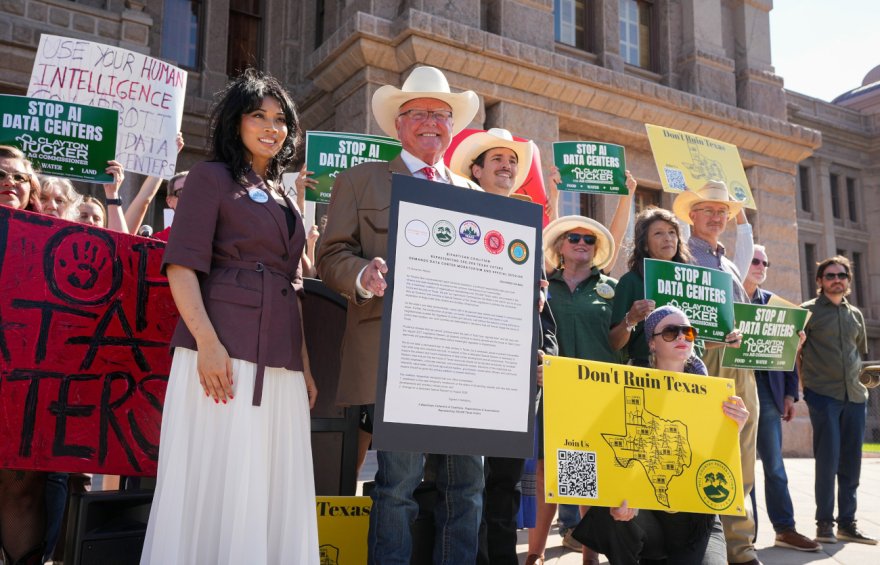
Screenshot of a protest against creating data centers in Texas – Photo: Getty Images
MAGA discovers a new enemy
One of the most interesting elements is that the political right found relatively early dissatisfaction.
Marjorie Taylor Green and Thomas Massie were among the first politicians at national level to openly voice concerns about the development of data centers, particularly in relation to the possibility of expropriations of private property to build the necessary energy infrastructure.
Steve Bannon took an even bigger step. Through the War Room show he began systematically linking data centers to the more general confrontation around artificial intelligence, while in late 2025 an alliance of MAGA executives, in which he starred, helped prevent a new attempt to limit state regulations for AI.
A central figure in this effort was Joe Allen, who became known through the War Room as one of the most extreme voices against technological evolution and artificial intelligence.
Allen, a former technician in the tours of bands and artists, with graduate studies in theology, entered the Bannon cycle after the pandemic and evolved into a specialist «prophet» of the anti-technological right. In its public appearances it combines political populism with dystopian predictions for a world in which AI and robots will gradually replace man.

«Humans First» and fear that man will become redundant
In 2025 the Center for AI Safety recruited Allen as an advisor to a cross-party initiative on the safety of artificial intelligence, with the slogan «Humans First».
The logic of the initiative was to transfer the debate on the risks of AI out of the narrow circle of researchers and technologists and to mobilise ordinary citizens to demand political restrictions and safety diclaves.
In his speeches Allen uses highly charged language, presenting artificial intelligence as a potential threat to human existence itself. «Even if they created machines smarter than you, even if they created machines stronger than you, you should keep fighting.», he said at an event in Georgia, concluding that in «machine age» People have to go first.
His rhetoric often reaches the limits of conspiracy. He has likened data centers to «Antichrist neurons», while in Dark Aeon's book: Transhumanism and the War Against Humanity describes technology as part of a much wider threat to human autonomy.
When environmentalists meet right
Despite the extreme rhetoric of some persons, much of the reaction to data centers begins with much more specific concerns.
In Troop County, Georgia, for example, environmental activist Gage Bailey began investigating a planned data center when he found that there was little public information about how much electricity or water he would consume. He collected evidence, submitted requests for access to public documents and eventually created a Facebook team with thousands of members.
The special feature of these movements is that political identity often passes to a second degree. Democrats, Republicans, environmentalists, and conservative residents appear together in local mobilisations, with a joint request to have greater say in the decisions on the facilities.
The extent of mobilisation is impressive. According to the data quoted by Wired, members of American Facebook teams opposed to data centers increased from less than 100,000 in December to more than 500,000 by July.
Το κοινό σημείο δεν είναι πάντοτε μόνο το περιβάλλον. Πολλοί από όσους αντιτίθενται στις εγκαταστάσεις εμφανίζονται ταυτόχρονα δύσπιστοι απέναντι στην ίδια την τεχνητή νοημοσύνη. Έτσι, ο φόβος για αυξημένους λογαριασμούς ηλεκτρικού, την κατανάλωση νερού ή την αλλαγή του τοπίου συναντά τον φόβο για απώλεια θέσεων εργασίας, μαζική επιτήρηση και υπερβολική ισχύ των μεγάλων εταιρειών τεχνολογίας.
Η σκιά του Unabomber στη σύγχρονη αντιτεχνολογική συζήτηση
Το δημοσίευμα καταγράφει και μια πολύ πιο σκοτεινή πτυχή της αντιτεχνολογικής κουλτούρας: την επανεμφάνιση αναφορών στον Τεντ Καζίνσκι, τον Unabomber.
Ο Άλεν έχει αναφέρει ότι η γνωριμία του με το μανιφέστο του Καζίνσκι στα τέλη της δεκαετίας του 1990 αποτέλεσε καθοριστική στιγμή στη διαμόρφωση της σκέψης του. Το Wired επισημαίνει ωστόσο ρητά ότι ο Καζίνσκι, ο οποίος πραγματοποίησε βομβιστικές επιθέσεις με θύματα, δεν αποτελεί πρόσωπο προς μίμηση. Το ενδιαφέρον βρίσκεται στο γεγονός ότι ορισμένες από τις επικρίσεις του για τη σχέση τεχνολογίας και ανθρώπινης αυτονομίας έχουν επανέλθει στη δημόσια συζήτηση, ακόμη και έξω από τους ακραίους πολιτικούς χώρους.
Η αντίθεση στην ανεξέλεγκτη τεχνολογική ανάπτυξη δεν αποτελεί, άλλωστε, αποκλειστικά δεξιό φαινόμενο. Ερευνητές όπως η Τίμνιτ Γκέμπρου και ο Εμίλ Τόρες προσεγγίζουν την AI από την αριστερά, υποστηρίζοντας ότι η ανάπτυξή της μπορεί να ενισχύσει υφιστάμενες ανισότητες και την εξουσία των ήδη ισχυρών. Παράλληλα, η κριτική αποκτά και θρησκευτικές διαστάσεις, με τη δημόσια συζήτηση να περιστρέφεται ολοένα περισσότερο γύρω από την ανάγκη η τεχνολογία να παραμένει στην υπηρεσία του ανθρώπου.
Η αντίδραση περνά πλέον στην κεντρική πολιτική
Η υπόθεση των data centers δεν περιορίζεται πια σε τοπικές διαμαρτυρίες. Το τελευταίο διάστημα προσωπικότητες της αμερικανικής δεξιάς, όπως ο Τάκερ Κάρλσον και ο Ματ Γουόλς, έχουν δημοσιεύσει βίντεο αμφισβητώντας συγκεκριμένα projects.
Η Νάνσι Μέις, υποψήφια για κυβερνήτης της Νότιας Καρολίνας, έχει ταχθεί υπέρ μορατόριουμ ενός έτους, ενώ ο κυβερνήτης της Φλόριντα Ρον ΝτεΣάντις υπέγραψε νομοθεσία που, μεταξύ άλλων, διασφαλίζει τη δυνατότητα των τοπικών αρχών να απορρίπτουν την ανάπτυξη data centers στις περιοχές τους.
Ακόμη και το ίδιο το κίνημα «Humans First» δεν έμεινε ανεπηρέαστο από την πολιτική πόλωση. Μετά από δημόσια σύγκρουση με πρόσωπα της φιλο-AI πτέρυγας που βρίσκονται κοντά στον Λευκό Οίκο, η οργάνωση διασπάστηκε σε κομματικές γραμμές. Το συντηρητικό τμήμα κράτησε το όνομα, ενώ ο Τζο Άλεν αποχώρησε.
Το «Data Center Alley» δείχνει την κλίμακα της αλλαγής
Το πιο χαρακτηριστικό ίσως παράδειγμα βρίσκεται στη Βόρεια Βιρτζίνια, στο αποκαλούμενο «Data Center Alley», τη μεγαλύτερη συγκέντρωση data centers στον κόσμο.
Το Wired περιγράφει μια περιοχή όπου τα τεράστια κτίρια διαδέχονται το ένα το άλλο, νέα εργοτάξια εμφανίζονται παντού και ο συνεχής θόρυβος από τις εγκαταστάσεις γίνεται αισθητός ακόμη και στις γύρω κατοικημένες περιοχές. Η κλίμακα της κατασκευής δείχνει πόσο γρήγορα η ψηφιακή οικονομία μετατρέπεται σε πραγματική, φυσική υποδομή μέσα στις πόλεις και τα προάστια.
Μήνες αργότερα, η «Humans First» σχεδίαζε εθνική ημέρα κινητοποιήσεων κατά των data centers με δράσεις σε σχεδόν 150 κομητείες και 42 Πολιτείες, μια ένδειξη ότι η αντίδραση έχει πλέον ξεπεράσει κατά πολύ τις μεμονωμένες τοπικές διαμαρτυρίες.
Το ερώτημα που αναδύεται πλέον στις ΗΠΑ δεν είναι απλώς πόσα data centers χρειάζεται η επανάσταση της AI. Είναι ποιος θα αποφασίζει πού θα κατασκευάζονται, ποιος θα πληρώνει το ενεργειακό και περιβαλλοντικό κόστος τους και μέχρι ποιο σημείο οι κοινωνίες είναι διατεθειμένες να παραχωρήσουν χώρο και πόρους σε μια τεχνολογία την οποία πολλοί πολίτες εξακολουθούν να αντιμετωπίζουν με βαθιά καχυποψία.
Σε μια χώρα όπου σχεδόν κάθε μεγάλο πολιτικό ζήτημα καταλήγει να χωρίζει Δημοκρατικούς και Ρεπουμπλικανούς, τα data centers φαίνεται προς το παρόν να πετυχαίνουν κάτι ασυνήθιστο: να δημιουργούν αντιπάλους της ίδιας επένδυσης στις δύο άκρες του πολιτικού φάσματος.

