Greek households continue to be faced with a match of valuations. The everyday life of citizens is tested by a persistent wave of accuracy, which shows no signs of retreat. In this environment, inflation is highlighted as the central protagonist of economic current, directly affecting purchasing power, living costs and family planning.
The Greek economy is faced with a persistent wave of accuracy, which is mainly powered by rapid increases in the prices of imported goods. Greece's significant deviation of inflation relative to the Eurozone average underlines the criticalness of the situation for the citizens' purchasing power
Worried increases As pressure is no longer only domestic. Recent evidence shows that our country is taking strong blows from abroad, with prices of imported goods and raw materials recording a vertical rise.
Worried increases
As the tourist season peaks and demand increases, the need for a deep understanding of market mechanisms becomes imperative. Radiography of official indicators is not just a statistical quote, but the key to predict trends in the coming months.
Based on the recent ELSTAT data on the Index of Import Prices to Industry (June 2026) , the possibility of continuing —and possibly intensify— Inflationary pressures in the summer are extremely high.
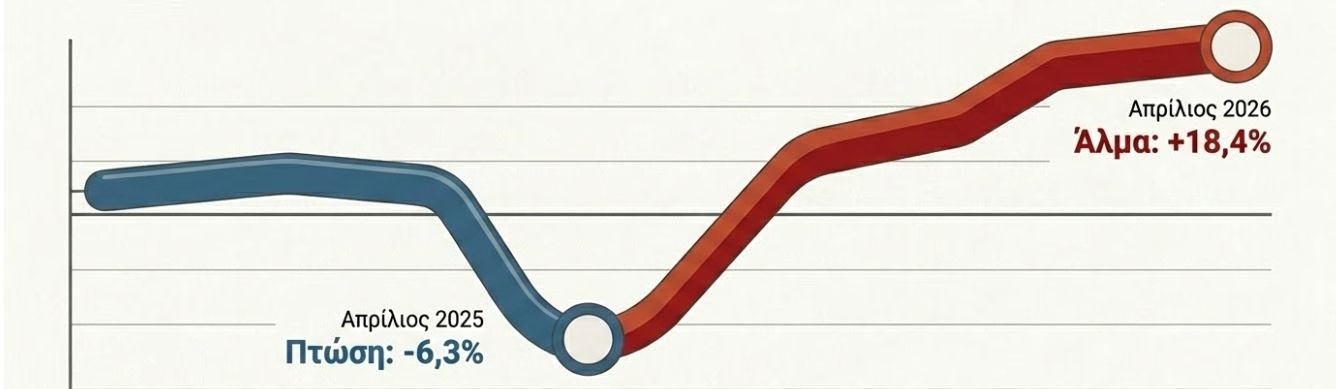
This indicator is considered «harbinger» that inflation will not only remain high but may intensify during the summer period.
The General Index of Import Prices recorded a huge leap, scoring an annual 18.4% increase in April 2026 compared to April 2025. Considering that last year the index was in decline (-6.3%), the current reversal shows that the market receives a violent wave of accuracy from abroad.
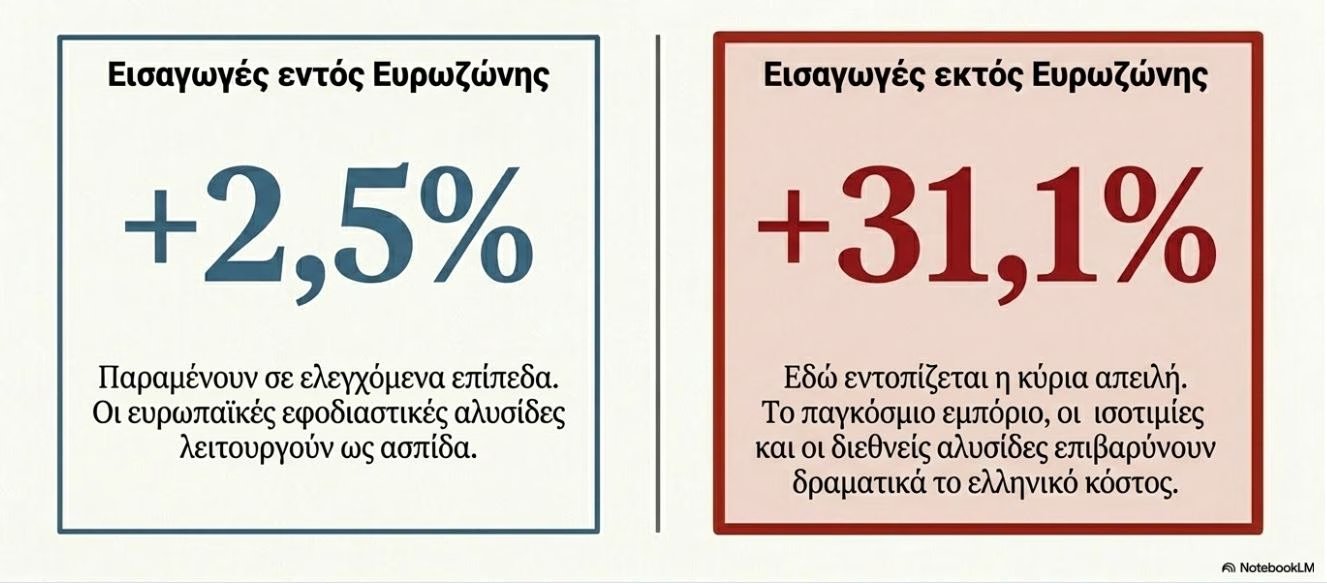
The main threat is found in imports from non-euro area countries, where prices were ejected by 31.1% on an annual basis. On the contrary, imports from countries within the Eurozone remained at relatively controlled levels (+2.5%). This means that international trade, exchange rates and global supply chains have a dramatic burden on import costs for Greece.
If we analyse the main industrial sectors, energy shows a tremendous annual increase of 65.3%.
- Production of petroleum refining products (fuels) increased by 80.4%.
- The extraction of crude oil and natural gas increased by 66.4%.
- Electricity and gas supply recorded an annual growth of 7.7%, but also 3.5% in just one month (April 2026 compared to March 2026).
This energy cost, coming from imports, will be directly reflected in household accounts.
Imported inflation
The only small «breathing» It is located in the Food Industry, where import prices showed an annual decrease of -1.3% (and -0.9% on a monthly basis). This shows that international prices of raw materials in food are stabilising. However, because the transport costs and energy needed by Greek companies to process and maintain them are high, this reduction will hardly reach the supermarket shelf.
However, the fact that imported inflation runs with 18.4% means that Greek companies now buy raw materials and fuels much more expensive. As it is impossible to absorb all this cost, this summer, as it all shows, consumers will be faced with shifting these increases to final prices of products and services.
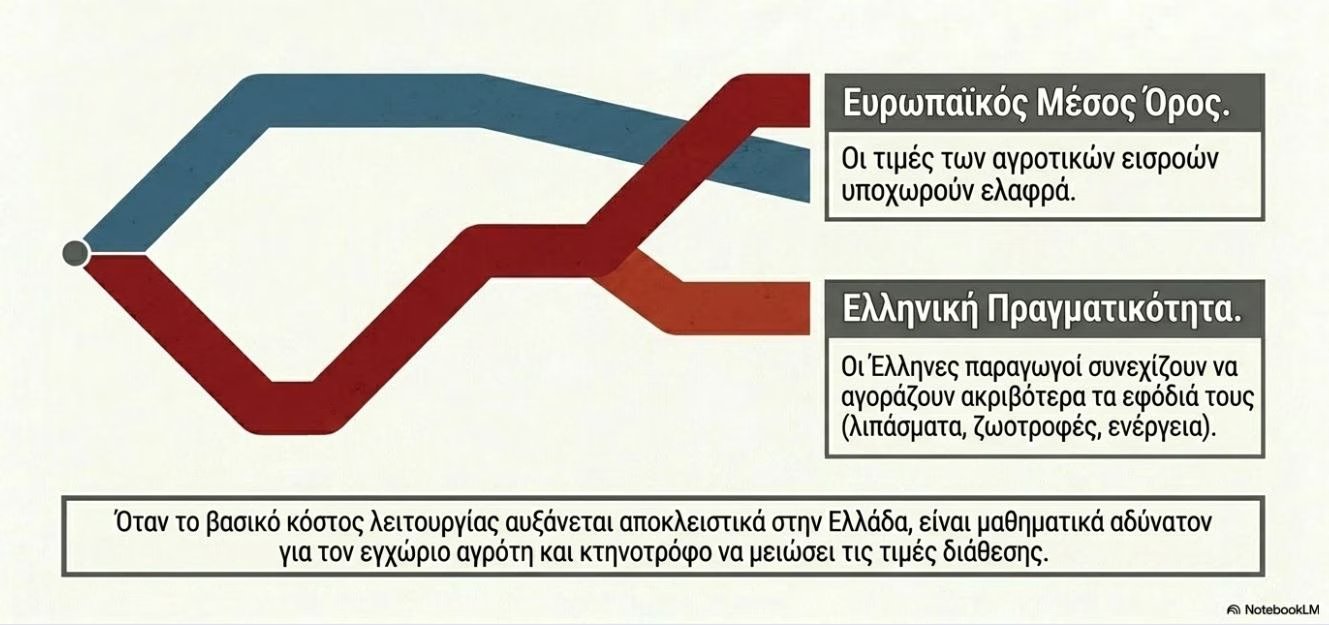
A further worrying indicator should be noted here. While at European level the prices of agricultural inputs (fertiles, feed, energy) slightly declined on average the Greek producers were faced with increases. When the farmer and farmer in Greece continue to buy their supplies more expensive, it is impossible to reduce the prices of disposal.
Concerning the fact that the 4.8% observed in the field translates into a double digit increase in the supermarket shelf. Prices of fresh food in Greece ejected by 11% on average in the first quarter of 2026, with the upward trajectory continuing undamaged in both April (+9.2%) and May (+7.9%).
«Tsunami» revisions in May
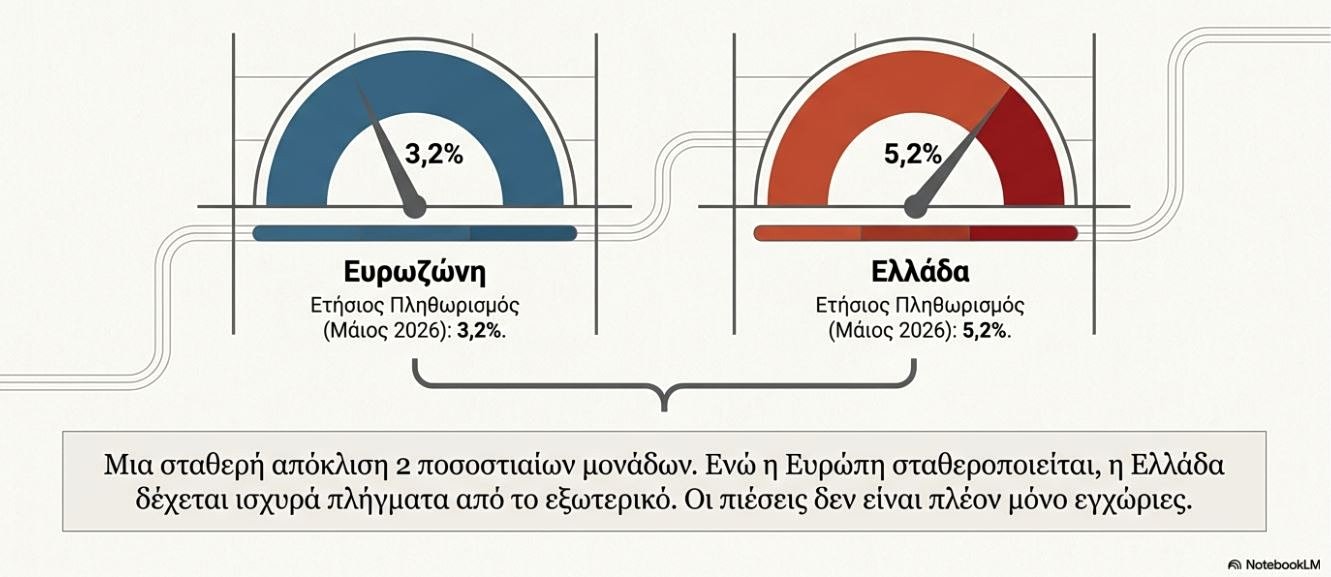
Annual inflation in Greece formed in May 5.2% compared to 3.2% in the Eurozone, with the deviation of 2 percentage points. Fuels, energy, rents and travel costs make up an environment of constant revaluations, limiting purchasing power and strengthening cost restraint. Recent euro area data forced the European Central Bank to increase interest rates.