
Can a court thriller that has held for decades to judge the future of one of the country's best-known food industries? In the case of Elbisco, behind Elite toasts, Chris Chris bread and Allatine products, the question is accompanied by a requirement of more than 37.5 million euros, plus interest from 2006. The company estimates that the legal pending can be extended until the end of 2028.
Faces are found two well-known business families. On the one hand, the Philippi family, one of the largest in the country, with FAGE at the core of its activities. Elbisco currently has its president Helen Filippu-Kumandaru and her husband, shipowner Giannis Koumantaros, first vice president of the company.
After his death Kyriakou Philipou, his heirs have come to the court: his wife Demeter and their children Helen and Athanasios-Kyros. On the other hand are the heirs of the co-founder of Elite John Remundous: the widow of Eugenia and their sons Stamatis and John-King. Eugenia Remundou is currently president and CEO of the Athens Family Art, the company operating under the Ferro brand.
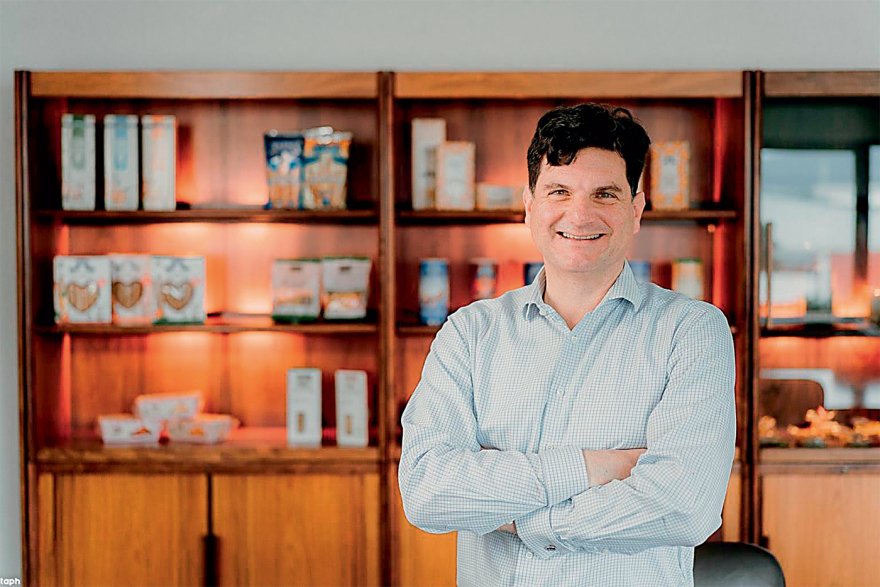
Stamatis Remundos is heir to the co-founder of Elite John Remundos. He has created his own success story with the Athenian Family Bakery (Ferro)
The Remundos accuse the Filippu side of that with successive splits, mergers, and capital increases limited 29.17% who had inherited to Elite to just 0.1391%. In 2023 the Athens Trimel Court of Appeal accepted their basic claims, considering that the acts at issue were stages of a «complex organised project». The Supreme Court's plenary rejected by majority an appeal of Elbisco. The rest will be discussed by the A3 Department on 8 February 2027.
The stake
The Court of Appeal awarded 36.75m euros, an additional 750,000 euros for moral harm and judicial expenditure of 202,500 euros, plus interest from 2006. Elbisco has already paid around EUR 4.5 million for capital, interest and expenses, which it claims back if it is finally justified. With economic figures far below the level of the requirement, a definitive vindication of the Remundas would directly test the strengths of the group, which employed 1,061 workers in 2025.
The outcome of the case is thus linked to historical signals and hundreds of jobs. The company argues that the remaining grounds for appeal can lead to the annulment of the appeal decision and has not formed an additional provision for the entire requirement.
The KPMG delivered an opinion without prejudice to the situations of 2025, with special emphasis on judicial dispute, claims and the choice of administration not to recognise additional burden. On 29 May 2026 the Remundos imposed a new conservative seizure on banks. Elbisco temporarily achieved the bank account exemption, while the main request for recall will be discussed on 19 November. It also remains a conservative commitment of Elbisco's marks and other rights.
In 2018 a favourable decision had been taken for the company, which the Supreme Court He postponed two years later due to flooding in the composition of the court. The case returned to the Court of Appeal and was discussed by a different composition.
The 2023 ruling partially justified the Remunds and Elbisco appealed again to the Areopagos. The plenary rejected the reason for taking account of the 1993 discharge for two transactions. The remaining part of the appeal remains open.
The story of Elite
The starting point is at the founding of Elite and to a widow who refused to sell the corporate share her minor children had inherited. The Remundos started from the local bakeries of Athens, reaching nine ovens in Attica.
In 1968 three cousins joined forces and created Elite, the first company to produce standard toast on the Greek market. One of the founders was John Remundos, who was killed in 1974 in a car accident during conscription. His son Stamatis was three years old and his younger brother three months old.
Eugenia's widow and children inherited 29.17% of Elite. In 1987 Kyriakos Philipou, from her family EARTH, buy the Greek S.A. Cookie Company. The company had come from the breakup of the consumer goods industry of Allatine SA and formed the basis of the later Elbisco. In 1988 the Greek Cookie Company acquired 66.66% of Elite from the families of the two cousins Remundus. Eugenia denied Kyriakos Philip's proposal for their own percentage, considering that the decision had to be made by her children when they were adults. Elite was then robust, profitable and with significant dividend performance.
In the hands of Philip
Elite who passed under the control of Kyriakos Philip was, according to the Court of Appeal, without loans, with a fund of 586 million drachmas and a margin of net profits over 23%. A few months later he acquired 80.83% of another company for $1.72 billion, financing the loan transaction. The Remundos argue that it was the EBGA and that a cooperation agreement was followed with the American Plastic Company. Names do not appear in the published anonymous decision of the Supreme Court.
From 1989 to 1991 Elite's sales fell short of the industry and interest reached a cumulative amount of DR 1,052 billion. The gross margin declined from 24.71% in 1992 to 18.50% in 1994. At the same time, the industrial shape was growing. In 1991 the Art Industry Chris S.A. was acquired and merged with Elite, while in 1995 the Art Industry N. Vosinakis S.A. followed. Between the two acquisitions, in 1994, the first decisive change occurred for the participation of the Remunds. Elite's productive and commercial branch split apart and contributed to a new company, the Art Industry Elite SA.
The old Elite was converted into a holding company, the later Pickermi SA Enterprises. At the discretion of the Court of Appeal, the separation did not assess the commercial value of the mark or the goodwill of the reputation and clientele of the company. 29.17% of Remundas no longer corresponded directly to the productive Elite, but to the old company that held shares in the new bread industry. In the same year the Greek Cookie Company introduced its shares in the Athens Stock Exchange to finance its investment plans.
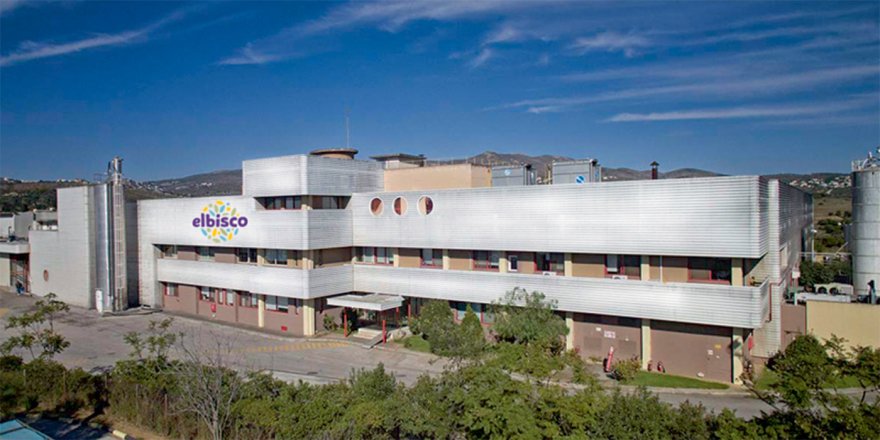
Elbisco's facilities in Pickermi
Capital increases
In 1996 the new Elite Art Industry merged with a company indirectly controlled by Kyriakos Philippus. The shareholders of the absorbed received 9.71% and the participation of the old Elite decreased to 90.28%.
With the capital increases of 1996-1999, the capital reached 2.39 billion to 8 billion drachmas. The old Elite, through which the Remundos participated, did not exercise or sell the rights of preference and its percentage retreated to 28.78%, restricting the family's indirect participation from 26.33% to 8.40%.
In 2000 a capital increase also followed the old holding company, in which the Remundos did not participate. Thus their direct participation in this was reduced from 29.17% to 12.96%.
The Court of Appeal held that the increases were carried out in a manner contrary to operational ethics and morals, that the minority was excluded and that the issuance of new shares at their nominal value allowed further impairment of its participation. The same year the Greek Cookie Company was renamed Elbisco S.A. Shareholders. In 2001 the group acquired the majority of Zitoluks Skopje and participated in the plastic industry Mornos S.A.
The decisive episode came in 2003. The Remundos had 12.96% of Pickermi S.A., a key asset of which was 27.69% of the Elite Art Industry. So Pickermi sold the entire package to Elbisco instead of 7m euros. Thus, the Remundos remained shareholders of a company without its core asset, which, according to them, represented more than 90% of its assets. They argued that the sale was equivalent to absorption without a merger process and questioned the price.
After the sale only 1,08% of the bread industry remained in Pickermi. Another capital increase in 2004 further reduced the rate. As the Remundos owned 12.96% of Pickermi, their indirect participation in Elite had now shrunk to 0.1391%, without having sold their own shares.
The Court of Appeal held that the 2003 sale was its penultimate stage «an organised project», completed with the 2004 capital increase.
In 2005 Elbisco absorbed three of its subsidiaries and in August 2006 Eugenia Remundus and her sons filed a lawsuit for the loss of property and profits associated with Elite.
Today's Elbisco was formed while the court battle had already begun. The stock ceased trading at A.A. in November 2012. In 2013 Elbisco S.A. Shareholders absorbed operational Elbisco SA and received the current name Elbisco SA. A year later she also absorbed her motherboard, Daphne. In today's company are now brands with a different starting point, such as Elite, Allatine, Chris and Bosinakis.
The decision of the Court of Appeal
In 2023 the Athens Trimel Court of Appeal partially accepted the claims of the Remundas and calculated the property loss at 41,35m euros, including loss of profits of 35,42m euros at 2004 prices and loss of 3,82m euros from the impairment of participation. Elbisco, however, had stopped publishing financial statements in time, with last available use in 2021. Thus, the decision and the requirement over EUR 37.5 million remained outside public financial information.
In June 2025 Dimitris Misios, a small shareholder of Elbisco and also a non-executive member of the Board of the Athens Family Artefactury of Remundas, asked for court settlement and liquidation of the company due to the failure to publish the situations. Elbisco described the application «Foreground and without legal foundation» and then published the pending situations, revealing its financial strengths towards the requirement.
The weak endurance
Το 2025 ο κύκλος εργασιών του ομίλου αυξήθηκε κατά 1,4%, στα 131,38 εκατ. ευρώ. Τα EBITDA διαμορφώθηκαν σε 11,02 εκατ. ευρώ και τα καθαρά αποτελέσματα επέστρεψαν σε κέρδη 1,04 εκατ. ευρώ, από ζημίες 231.000 ευρώ το 2024. Τα διαθέσιμα ανήλθαν σε 9,59 εκατ. ευρώ. Ο τραπεζικός δανεισμός μειώθηκε, αυξήθηκαν όμως τα εταιρικά δάνεια, στα οποία περιλαμβάνεται χρηματοδότηση από την κυπριακή μητρική Lekeren Holdings.
Ο λοιπός δανεισμός έφτασε τα 20,40 εκατ. ευρώ το 2025, από 6,13 εκατ. ευρώ το 2023, χωρίς οι οικονομικές καταστάσεις να επιμερίζουν πόσο προέρχεται από τη Lekeren και πόσο από άλλους εταιρικούς δανειστές.Οι συνολικές δανειακές υποχρεώσεις, μαζί με τις μισθώσεις, διαμορφώθηκαν σε 52,76 εκατ. ευρώ, ενώ οι βραχυπρόθεσμες υποχρεώσεις υπερέβαιναν το κυκλοφορούν ενεργητικό κατά 20,3 εκατ. ευρώ. Μετά το τέλος της χρήσης η Elbisco συμφώνησε με τις τράπεζες ρύθμιση των δανείων της έως τον Ιούνιο του 2028.
Την εικόνα συμπληρώνουν οι εξασφαλίσεις για ομολογιακό δάνειο 32,944 εκατ. ευρώ, που υπέγραψε η Elbisco το 2019 με Alpha Bank και Τράπεζα Πειραιώς: ενέχυρο στα σήματα και στη συμμετοχή στη Μόρνος και προσημείωση 42 εκατ. ευρώ στα ακίνητα. Το δάνειο εμφανίζεται εξοφλημένο στις καταστάσεις του 2023, όμως έως το 2025 δεν είχε ολοκληρωθεί η άρση του ενεχύρου στα σήματα Κρις Κρις και καταγραφόταν ακόμη η προσημείωση. Οι καταστάσεις δεν εξηγούν γιατί οι εξασφαλίσεις παραμένουν.
Η διαδοχή
Η ενδοομιλική χρηματοδότηση φέρνει στο προσκήνιο και τη μετοχική σύνθεση της Lekeren Holdings, μητρικής της Elbisco κι ενός από τους χρηματοδότες της. Η κυπριακή ιδιωτική εταιρεία συστάθηκε το 2010. Η δημόσια καταχώρισή της δεν αποκαλύπτει τη μετοχική σύνθεση και επομένως δεν επιτρέπει να προσδιοριστούν οι συμμετοχές της οικογένειας Φιλίππου και του Γιάννη Κουμάνταρου.

Το ζεύγος Ελένης Φιλίππου – Γιάννη Κουμάνταρου έχει κεντρικό ρόλο σήμερα στην Elbisco
Η επιχειρηματική διαδοχή είχε αρχίσει πριν από τον θάνατο του Κυριάκου Φιλίππου, τον Απρίλιο του 2021. Ηδη από το 2008 η σύζυγός του Δήμητρα είχε μεταβιβάσει με γονική παροχή στην κόρη τους Ελένη το 9,91% που κατείχε στην Elbisco, αυξάνοντας τη συμμετοχή της τελευταίας από 15,16% σε 25,07%. Την καθημερινή εκτελεστική ευθύνη της Elbisco έχει ο διευθύνων σύμβουλος Νίκος Βουδούρης, ενώ ο Αθανάσιος-Κύρος Φιλίππου έχει κεντρικό ρόλο στη FAGE International και στη Menne, την πρώην ΕΒΓΑ.
Στην άλλη πλευρά, οι Ρεμούνδοι είχαν επιστρέψει επιχειρηματικά στην αρτοποιία ήδη από το 1992. Τότε δημιούργησαν την Αθηναϊκή Οικογενειακή Αρτοποιία, με εμπορικό σήμα Ferro και παραγωγική μονάδα στη Lamia. Σχεδόν έξι δεκαετίες μετά τη δημιουργία της Elite, οι δύο οικογένειες παραμένουν στον ίδιο επιχειρηματικό χώρο και εξακολουθούν να βρίσκονται αντιμέτωπες στις δικαστικές αίθουσες. Το επόμενο επεισόδιο έχει οριστεί για τις 8 Φεβρουαρίου 2027, στο Α3 Πολιτικό Τμήμα του Αρείου Πάγου.
ΦΩΤΟΓΡΑΦΙΑ: Getty images / Ideal image

