
The countries of Euro area, including Greece, are preparing for the time of the digital euro. The countdown for its entry into the everyday life of Europeans has begun. After a ten-year preparation, the European institutions (European Council, Commission, European Parliament) complete legislative consolidation of its operational framework.
The digital euro will be a digital form of the common European currency. It is not a cryptocurrency nor a private payment instrument, but a digital public money of European Central Bank (ECB). The aim is to give citizens and businesses access to transactions directly, secure, universally acceptable, for payments to shops or persons to person. With privacy protection, operation on and offline, ensuring that it will always be available, even when there are connection problems or blackouts.
In a word, using in digital form the advantages of cash and drastically reducing disadvantages in electronic transactions, such as delays, operating charges to businesses, special charges in managing private individuals' bank accounts etc.
The aim is to use the digital euro to be fully adopted in transactions in 2029. A pilot project will be implemented in the second half of 2027. 36 banks from 19 Eurozone countries will participate in this, including three Greek (National Bank, Piraeus Bank and Cooperative Bank of Chania), following a selection between 50 nominations.
The big bet
The implementation of the digital euro is considered to be the biggest financial project in the history of the Eurozone after the «birth» of the common currency, 2002. Twenty-five years later, the ECB issues first digital currency central bank for retail use (Retail Central Bank Digital Currency – Retail CBDC) and will invest large amounts. Growth costs by the first edition are estimated at EUR 1.3 billion and the annual operating costs at 320 million from 2029, to be borne by the Eurosystem, as well as by the production of notes.
Europe - within the changing financial environment - is strategically seeking to acquire its own payment infrastructure, reducing dependence on the invasion of cryptocurrency on transactions and on the dominant influence of American colossae (Mastercard, Visa, Google Pay, Apple Pay) on electronic payments.

The digital payments They are established worldwide and the use of cash is retreating. The digital euro is intended to be a new tool to provide access to central bank money for retail use. This is the first substantial difference between the digital euro and the money in the bank accounts and being traded through them. Digital money, that is, what citizens use for transactions through e-banking, credit, debt and other cards, is money from commercial banks rather than the ECB. Citizens and businesses have access to ECB money only in the form of cash, notes and coins.
This deficit comes to the ECB with the direct issuance of the digital euro. For the first time, households and businesses in the Eurozone will be able to maintain the central bank's digital money. The ECB has clarified that the new payment instrument is not designed to replace the cash, but to function complementaryly, ensuring that citizens have alternative forms of transactions available to them.
How it'll work
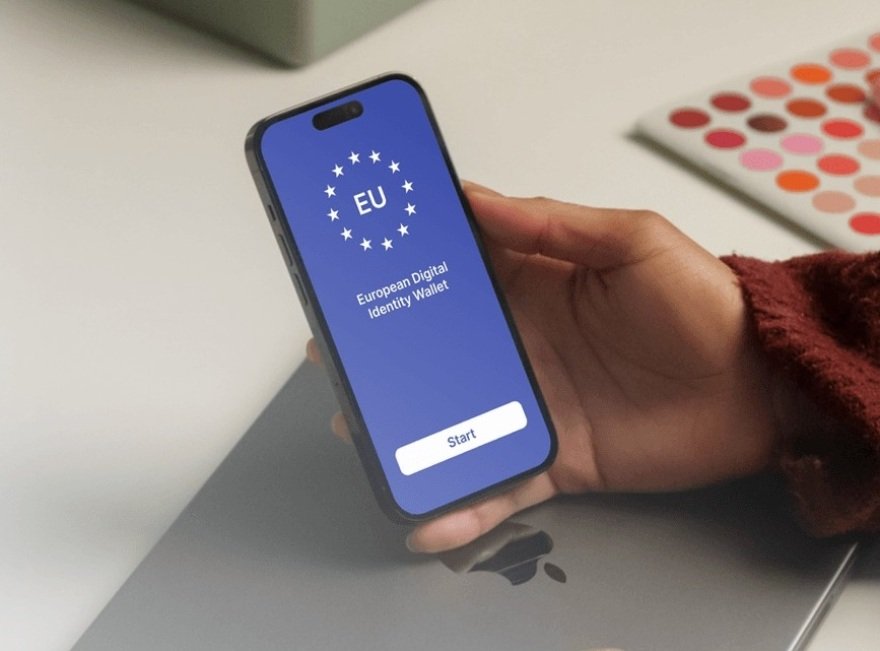
To start using the digital euro, the user should create an account, a digital wallet, through his bank or the EU payment service provider. Users will be able to make payments directly, through the digital wallet (Wallet) that can be connected to their bank account either using their mobile phone at a terminal in the stores or selecting the digital euro as a way of payment during electronic payment completion, immediately authorising payment through their banking application.
These transactions will appear immediately.
Many confuse digital euro with IRIS. The answer has been given by the head of the Bank of Greece Giannis Stournaras, pointing out that these are two different tools: «IRIS is not cash, it is a good, cheap form of payment, transfer of money from consumer to businessman and vice versa».
The use of the digital euro will be optional for individuals and households, but mandatory for enterprises receiving electronic payments. Digital euro accounts will be like current ones, with a strict zero interest rate. They will have no savings target, as the reason for creating the new system is to facilitate payments rather than to create deposit products.
This would be casus belli for commercial banks, which - especially Greek ones - have experienced the nightmare of mass outflow of deposits in crisis situations. To prevent this, the ECB will set a reserve limit - probably at EUR 3,000 - per natural person.
Advantages
Despite the existence of a limit, users will also be able to make transactions of greater value. The connection of Wallet to a bank account will allow automatic coverage of the difference if the balance in digital euro is insufficient. For example, if a user has 1,500 euros in his digital wallet and wishes to make a payment of 2,000 euros, the remaining 500 will be automatically drawn from the connected bank account. Thus, no prior requirement will be required «charging» The wallet before any transaction. This is also a key convenience of the digital euro user in relation to the current credit card system, where if a transaction exceeds the balance in the account, then it cannot be carried out.
A major advantage that differentiates digital-euro transactions from current electronic transactions is to provide for the possibility of making them possible within an active connection between InternetAs well as offline. The possibility of unconnected payments is considered crucial for the accessibility of the system, but also for the continuation of transactions in the event of technical problems or Internet interruption.
Privacy
The ECB assures that the digital euro will not be a tool for monitoring citizens' transactions and that offline small-value payments will approach the degree of privacy that cash currently offers. Nevertheless, personal data protection organisations and several MEPs call for more stringent guarantees, considering that any new digital infrastructure raises reasonable questions about access to the data, transparency and limits of state intervention. This debate accompanies the entire legislative process until the project is finally approved.
According to the design, the ECB will not be able to identify citizens on the basis of their transactions. Especially in offline payments, transaction details will be known only to the user and the beneficiary. But also in online payments, financial activities will remain personal. The Eurosystem will not be able to connect persons with their payments.
The ECB assures that it will never use data relating to digital euro users for commercial purposes.
On the contrary, with regard to the risks of laundering, banks will have access to personal data necessary to comply with EU law. , such as anti-money laundering and terrorist financing regulations.
The DEAN number
The data available to the ECB will be pseudonymised. It will not be able to see personal data with which it could identify users. In particular, the ECB introduces Digital Euro Account Number (DEAN), operating as an IBAN-like digital account identifier, will allow identification of the accounts of the digital euro, ensuring that payments are made seamlessly. At the same time, as DEAN is based on central or pseudo-nymised identifiers, it ensures that no one - nor infrastructure providers - can connect the code to the real person behind the account.
The structure of DEAN differs from IBAN. It consists of 18 alphanumeric characters, starting with the letters «EU». It will be able to distinguish private and professional accounts. Private users will receive only one DEAN, while businesses more. Their publication will be made centrally through Digital Euro Service Platform after the customer has been identified by the payment service provider.
In practice, users will not need to memorize the 18-digit DEAN code. They can use aliases or even connect their account to their cell phone number.
The benefits
The digital euro will be supported by the same cash support organisation, the ECB. The transactions will be done without additional charges, directly and everywhere. From any point and in strict terms of privacy. The same as cash.
Traders will benefit from a new standardized direct payment method, without additional costs, even without Internet connection, that will apply throughout the Eurozone, as well as lower transaction commissions. This is a pan-European tool that will enable traders to have their products and services throughout Europe with seamless and consistent payment experience. It will reduce dependence on non-European payment solutions, so traders will be in a stronger position to negotiate terms with payment solution providers, reducing costs.

Battle with dollar, crypto
The digital euro aspires to be the European response to Europe's dependence on third parties, such as the US giant payment systems through which over 2/3 of transactions are made in Europe and the developing crypto-currency market, as well as the need to reduce its exposure to major economies such as the US and China. At the same time, it is part of the euro's attempt to improve its position as a credible international reserve currency, in a market where the dollar continues to dominate.
At the same time, the U.S. rejected the model of the digital dollar issue from Fed until 2030. They promote stablecoins, i.e. cryptocurrency whose value is linked to another lower volatility asset, to offer price stability, in this case the US dollar. That's why the law was passed last year. «Genius Act», concerning token (digital assets issued on an already existing blockchain network) linked to the dollar, which aims to create the framework for this new form of money.
Stablecoins offer a dollar-based digital banking service, operated 24/7, with low cost and direct service, for anyone, anywhere in the world. As they expand beyond cryptocurrency markets and enter the world of real payments, Trump views them as a means of expanding the influence of the dollar. Indeed, of the 322 billion dollars of stablecoins circulating, 99% is tied to the dollar.
China follows the purely state model: e-CNY has been piloted since 2019, has been expanding continuously and in 2025 acquired an international operational centre in Shanghai with a clear targeting of cross-border payments.
Europe follows a hybrid model: public digital money as infrastructure, with private distribution, strong privacy guarantees and democratic legislative control. Many central bankers have warned that without public digital money there is a risk that part of monetary policy will go into private trading systems: «If monetary policy is to continue to serve the public interest and be a public good, the central bank can only have a digital euro»John Stournaras has stated. And the Christine Lagarde complete that the digital euro «strengthen Europe's strategic autonomy», showing the urgency of the issue, as 146 countries (98% of world GDP) consider the development of a digital currency, but without a given timetable.

