
Powerful artificial intelligence processors H200 The Nvidia managed to buy a Chinese university with close ties to People’s Liberation Army of the country, although it is on the American black list of exports, according to procurement documents that he studied and revealed Reuters.
This case highlights the gaps in its controls. Washington restricting China's access to advanced American technology while revelations arise at a time when Nvidia and its CEO, Jensen Huang, They are facing increasing scrutiny due to reports that Huang allegedly targeted a Chinese spy operation.
It is noted that the Huang It has argued that the continuation of American sales to China will maintain US technological supremacy and ensure that Chinese customers continue to depend on American technology. However, some American MPs estimate that access to Nvidia's strongest artificial intelligence processors can accelerate the development of Chinese AI systems for weapons design, intelligence analysis and modernisation of armed forces.
Both Democrats and Republicans in Congress have called for stricter controls on China's access to advanced chips AI, such as compulsory monitoring of the processors' path and strengthening export surveillance by Congress. Three Republican parliamentary committees chairmen asked to meet and be informed by Huang on November 18, about his reported contacts with a person allegedly associated with Chinese intelligence services.
Buying two H200 for $13,000
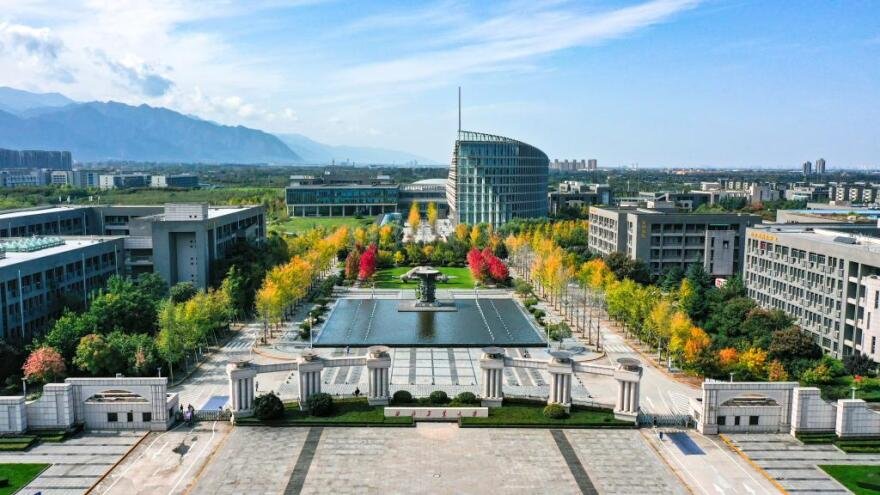
The Polytechnic University of the Northwest China bought last month two H200 chips against 874,700 Wan, i.e. around 123,000 dollars, according to a procurement document dated 21 October, which was posted on its website.
The university belongs to the group of «Seven Sons of National Defence» (Seven Sons of National Defense), a group of Chinese universities with a history of research into the Beijing defence industry, which are subject to American restrictions.
According to the document, processors were purchased for the university's School of Management by the Chinese company Shaanxi Bosuan Network Technology and not directly from Nvidia.
H200 is among Nvidia's strongest processors for the education and operation of advanced artificial intelligence systems. Its export is subject to American licensing, with applications being generally rejected when it comes to institutions located in black lists, such as this university.
The documents also show that Polytechnic University secured within 2026 access to H200 processors and other powerful Nvidia AI processors through five computing lease contracts from Chinese companies.
U.S. blacklist since 2001
This University is based in the city Sian, in northwestern China, and conducting investigations into military aircraft, missiles and satellites.
The American Trade Ministry incorporated the university into the so-called Entire List in 2001, due to its alleged involvement in activities related to the proliferation of missile technology and military research.
In 2019 restrictions became stricter, with export licences of controlled American technology to the university now subject to rejection policy in most cases.
University markets reveal how Chinese institutions with military connections continue to gain access to American artificial intelligence computing power through domestic suppliers, either directly purchasing processors or renting access to servers that include them.
Research Reuters In 26 Chinese supply documents and his corporate records 2026 showed that universities and research institutions buy processors Nvidia which are subject to American restrictions or renting computing services using such processors through Chinese suppliers.
Several of these institutions maintain close links with the Chinese defence industry or conduct military investigations.
Trump restrictions and access to processors for militaryly linked research
The Government of Donald Trump began in January to allow certain H200 processor exports to China, examining each case separately.
However, this policy did not remove the separate restrictions applicable to organizations of the Entire List, such as the Polytechnic University of Northwest China.
The January licensing rules also provide for protection measures to prevent remote access to exported processors from blacklist entities and military end users. The settings cover both H200 and less advanced models.
In addition to the direct purchase of the two H200s for the School of Administration, procurement documents show that the University's Cybersecurity School commissioned in January two seven-month contracts for access to servers involving eight H200 processors each.
The contracts, worth 441,700 and 441,000 Wan respectively, concerned the detailed adaptation of artificial intelligence models and their education through strengthening learning. The university also rented access to servers with eight Nvidia A100 processors and eight A800. Export of A100 and A800 is prohibited to all Chinese entities, while H200 is the most advanced of the processors listed in the university's procurement documents.
In April, another institute of the same university purchased computing services requiring at least 24 A100 processors, under a 375,000 wan contract, for simulations of structural engineering and dynamic fluids.
The contracts were awarded to various, relatively unknown Chinese technology suppliers.
The available documents contain little information on the origin of the processors or the locations where the rented servers operated.
In accordance with the Chinese legislation, public procurement entities must verify that suppliers can meet orders before announcing contractors and signing contracts.
Other Chinese universities acquired banned chips
The supply documents examined by the Reuters reveal a wider market of advanced Nvidia processors and computing services using chips under American export restrictions at Chinese universities.
The University of Senzen purchased in September three H100 processors, another advanced model of Nvidia whose export to China is banned by the US, against 769.800 wan.
The Wuhan University of Technology acquired in June a server containing a H100 processor for 355,000 wan, while on a separate market it procured four A100 processors for 344,000 wan.
In April, Bayhang University, which also belongs to «Seven Sons of National Defence», buy four A800 processors for 489,000 wan. This institution maintains close links with the Chinese aerospace and defence industry, while conducting investigations into military aviation and space programmes.
The parallel purchase of chips and routes through third countries
Reuters has also previously revealed that Chinese institutions acquired Nvidia processors subject to export restrictions, integrated into company servers such as Super Micro Computer, Dell and Gigabyte, via domestic resellers.
The agency has also recorded the existence of a parallel, non-official market in China for advanced Nvidia processors, which come from foreign reserves and are traded through intermediaries in third countries.
Last week, Reuters broadcast that small quantities of H200 processors had already arrived in China via indirect routes, while Beijing had not yet approved large-scale imports.

