
It is not in danger of missiles and drones, it is not related to the Straits of Hormuz nor more widely to the Middle East. Yet, in Guyana, a country with less than a million inhabitants on the northeast edge of South America, the war in Iran translates into money.
As of 2019, when production starts from offshore deposits, its economy is fivefold – the fastest growth in the world. And now, with oil prices moving close to $100 a barrel, even after the truce, profits are launched.
The turmoil in the Straits of Hormuz is not just a geopolitical crisis. It's an opportunity.
The billions that flow
Revenue runs at rates that hardly meet in an economy of this size. Estimatedly, it reaches $623 million a week – significantly increased than before the war.
The huge Stabroek deposit, operated by a consortium led by ExxonMobil, is expected to produce up to 940,000 barrels daily.
If prices remain at these levels, total revenues for 2026 may reach $33 billion – up to 75% higher than initial forecasts.
And there is and «war bonus»Europe, desperate for energy, pays a premium of $10 per barrel.
LIVE: The Trump Plan for «strangulation» Iran and the great overthrow with the Emirates
Geopolitics that opened roads
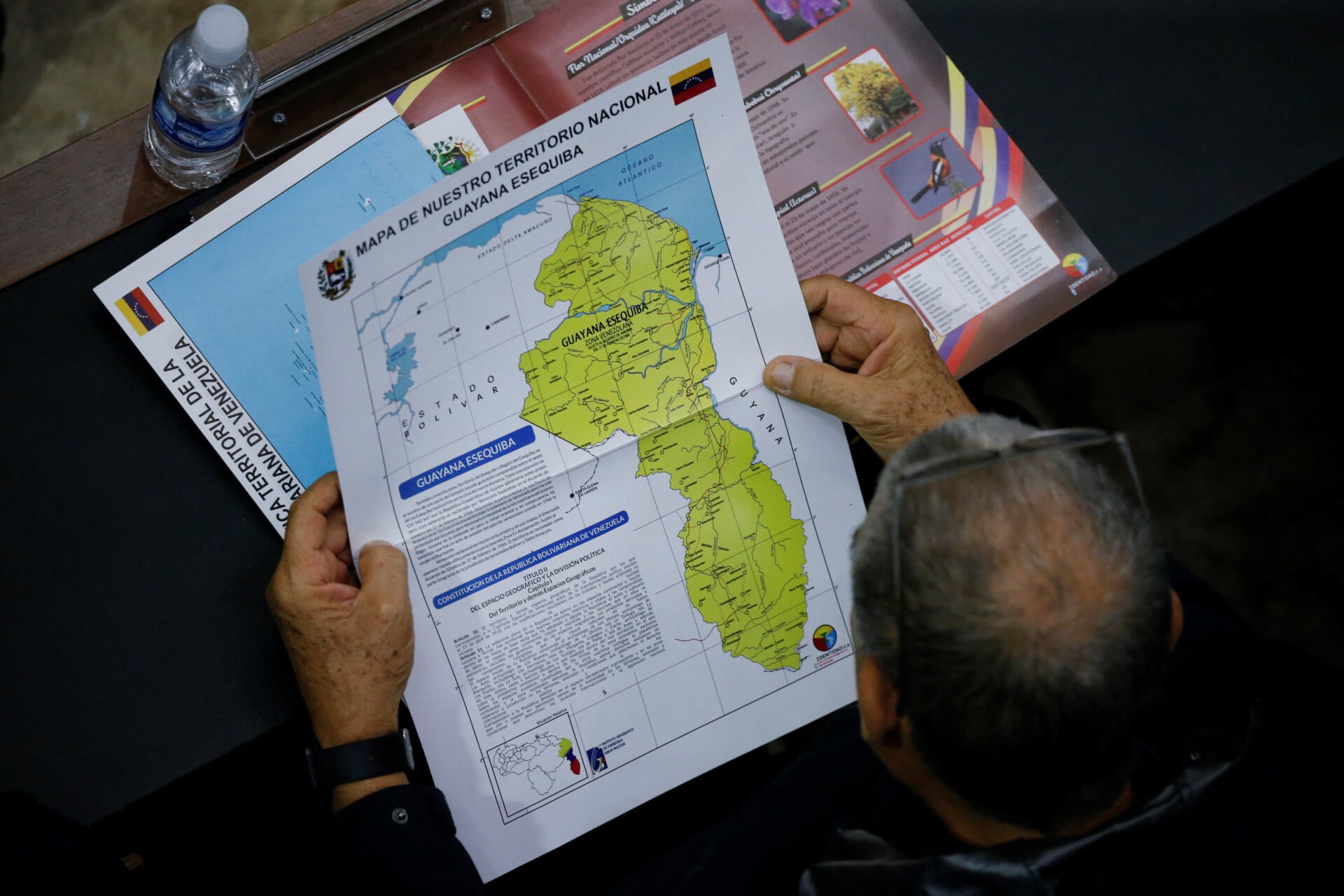
The economy favours the country and politically. President Irfaan Ali's re-election reassures markets, while Nicolás Maduro's arrest weakens Venezuela's claims on Guyanan territory.
This allows research to be restarted in areas previously considered «prohibited».
At the same time, energy giants are accelerating. New floating production systems (FPSO) come earlier than the schedule, with the aim of rapidly increasing production.
The wealth that can become a trap
The other aspect of success is darker. The economy is becoming increasingly dependent on oil. Already, in 2025, fossil fuel revenues cover about half of the state budget, while oil production corresponds to three quarters of GDP.
Food and housing prices have increased by 75% since 2021. The oil sector absorbs the workforce. And the money flood creates risks of waste and customer practices. Her ghost «the curse of resources» He's coming back.
REUTERS/Leonardo Fernandez Vilaria
The big bet
The government invests in infrastructure – roads, bridges, energy projects – and tries to contain inflation. But the pressure is increasing.
As revenue swells, the temptation for uncontrolled spending grows. The question is not whether Guyana will be rich. It's whether he'll be able not to pay the price. Because in commercial history, oil does not only bring wealth. He's bringing seizures.
naftemporiki.gr with information from Economist

