
From Dubai to London and Hong Kong, license plates have been converted into modern coats of arms for people of wealth and power.
«After a certain point, money ceases to matter. It's about the game.». The phrase is attributed to Aristotle Onassis and, regardless of exactly how it was formulated, describes with striking accuracy a world where value ceases to be measured in terms of utility and begins to be measured in terms of symbolism. A world where a license plate can cost more than a Ferrari LaFerrari, a Bugatti Chiron or a luxury residence on the Blue Coast.
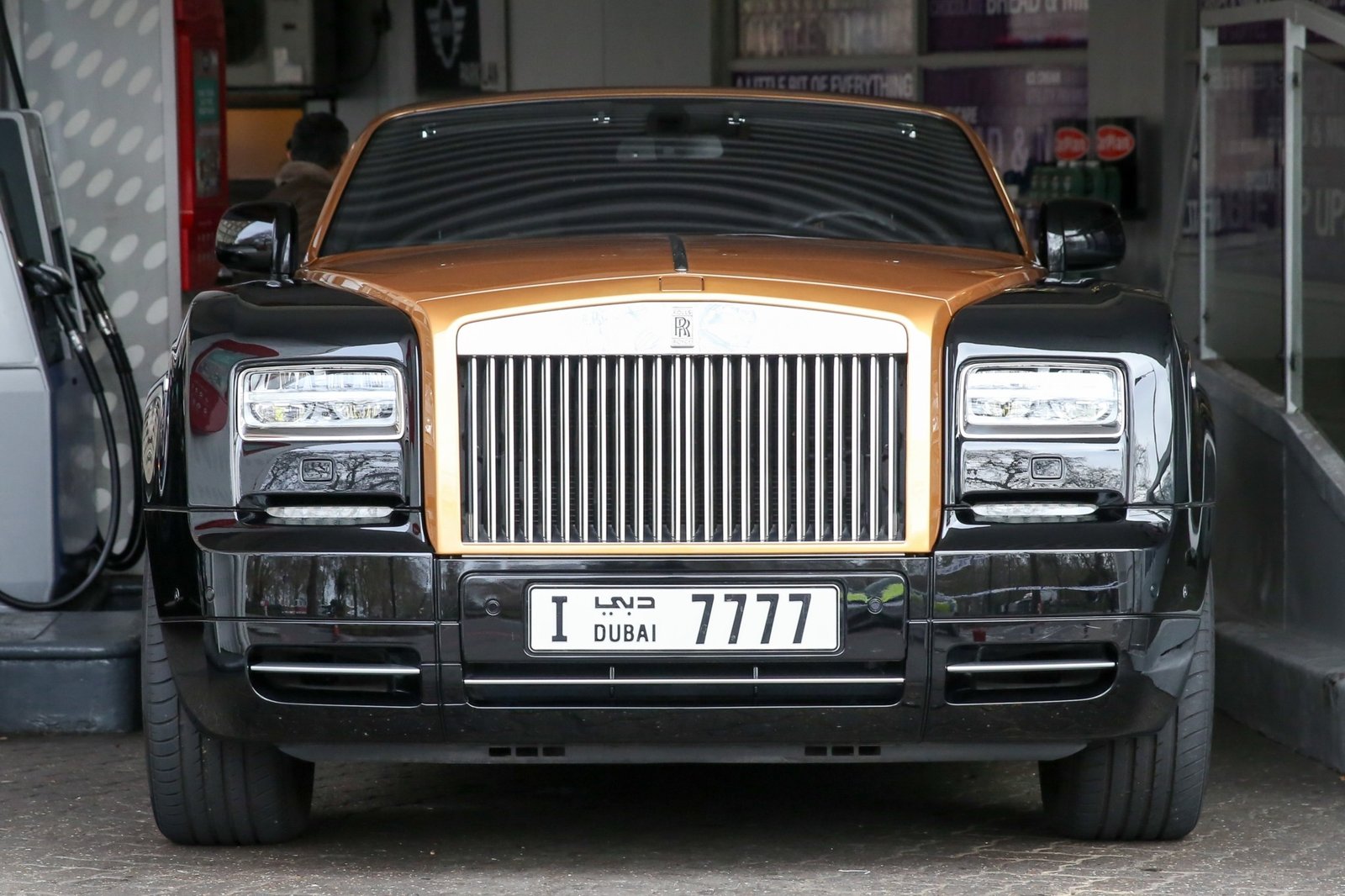
Vanity plates or personalised registries are a mirror of society and reveal how people perceive wealth, social status and the concept of exclusiveness.
In the world of vanity plates as they call them, it is not about moving. It's uniqueness. And uniqueness, as it has proved for decades, is one of the most expensive goods that one can buy.
The sign that costs more than a hypercar
At a time when the value of a hypercar can exceed five million euros and Ferrari collectibles change hands for tens of millions, the idea that a piece of aluminum with a number may cost more than the car in which it is placed seems almost unreasonable. Yet, in 2023 a sign marked «P7» was sold to Dubai for 55 million dirham, an amount corresponding to around 14 million euros, breaking down every previous world record. The remarkable thing is that nobody just bought a number. He bought the right to own something unique.
This market is much more interesting than figures show. In fact, vanity plates or personalised regenerations are a mirror of society and reveal how people perceive wealth, social status and the concept of exclusiveness. In the United States, for example, personalized signs have been a form of personal expression for decades. The driver does not buy social prestige but a small public extension of himself. A name, a pun, a reference to his favorite actor or even a private joke that only his friends understand. It is no coincidence that Americans often describe vanity plates as the first «social networking profile» long before Facebook and Instagram appear.
Identity and signature
Self-moving meets personal expression, but also something deeper. Man's need to leave his fingerprint on an object that is otherwise identical to thousands of others. The sign becomes the little personal story that travels daily on the streets. Perhaps that is why vanity plates have remained popular for decades, despite the evolution of technology and the change in social habits.
In Britain, on the contrary, the personified signs gained a different dimension. There their market evolved into a peculiar investment ecosystem, with auctions, collectors and specialized companies managing numbers and letters in the same way as others manage works of art or vintage cars. From 1989 to now, sales of personal plates have yielded more than £2 billion to the British public, while certain signs have gained almost mythical status.
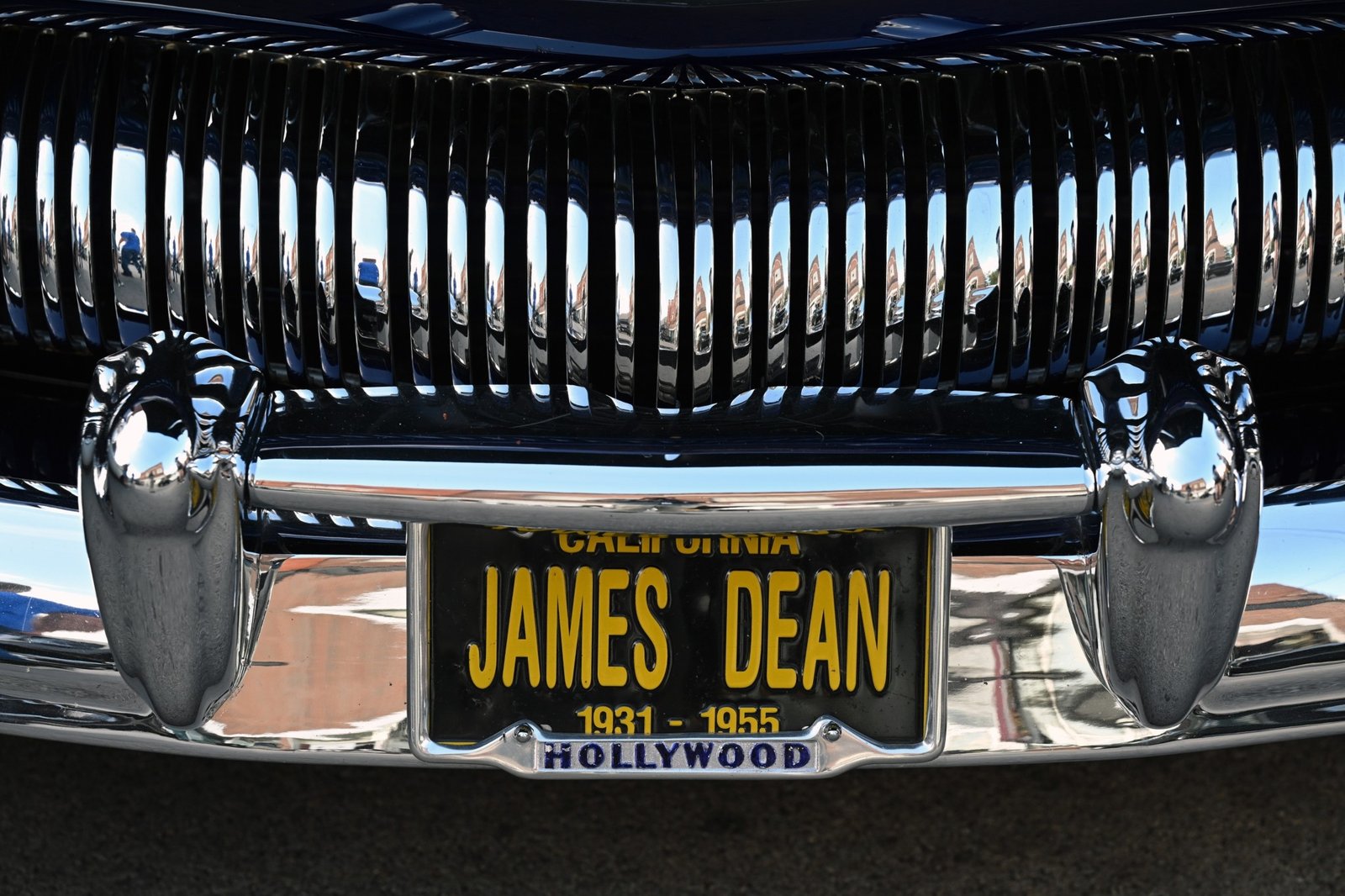
In the US the driver does not buy social prestige but a small public extension of himself. A name, a pun, a reference to his favorite actor or a private joke that only his friends understand.
No one is more characteristic than the famous «F1»Theoretically it's just a letter and a number. But in practice it is perhaps the most recognizable sign in the world. Its value is not only in its rarity. The «F1» It condenses into two characters the entire history of Formula 1. Speed, technology, competition, champions, myths and millions of friends of motor sport around the world. That is why the sign has long been considered one of the most expensive collectible items of British motor, with estimates that have occasionally exceeded $20 million.
A characteristic of the dynamics acquired by the vanity plates market is the existence of entire companies engaged solely in purchasing, selling and managing them. One of the best-known examples in Britain is "The Private Plate Company" (and several more) which has been active in purchasing private plates for more than three decades and offers access to tens of millions of available combinations through the British DVLA system. The existence of such specialized companies proves that personalized signs have evolved from a peculiar luxury to an organized market of collectors and investment goods, with its own network of merchants, auctions and investors.
The value of a sign, of course, is not always determined by whether it was sold, but often also by how much it is valued by the collector market itself. In the United States there are some typical examples showing how far the logic of rarity can go. In 2021, an old Volvo V70 was offered for sale in New York for $20 million, not because of the car itself but because of the sign «NEW YORK» who was accompanying her. It is one of the first personified signs issued to the State of New York in the early 1970s, which gives it historical and collectible value, as it is essentially part of American car history.
Even more impressive is the case of the sign «MM» in California, which was offered for sale for $24.3 million. The amount sounds unrealistic, but behind it lies the logic that governs each collector's market: universal recognition and the possibility of multiple interpretations. The two letters can refer to names, companies, brands or even to a model such as Mercedes-Maybach, in which its owner was commercially targeting. Although its sale at this price was never confirmed, the valuation itself reveals the size of expectations that can create a unique sign.

The F1 sign has long been considered one of the most expensive collectible items of British motor, with estimates that have occasionally exceeded $20 million. Photo: www.carreg.co.uk
In Europe the phenomenon is less spectacular
In Britain, beyond the legendary F1, the sign «25 O» was sold in 2014 for around £518,000, while the «1 D», which refers to the band One Direction, reached 352,000 pounds in auction. In Switzerland, where signs belong to cantons and are officially auctioned, the sign «ZH 24» of Zurich canton was sold for more than 300,000 Swiss francs, while several one-digit and two-digit numbers have occasionally exceeded the 100,000 francs barrier. In Belgium, the sign «1» It has for years been considered one of the most valuable figures in the country, while in Luxembourg the one-digit numbers are treated almost as family heirlooms transferred from generation to generation. Even in Germany, where the same auction culture does not exist, the very short combinations of letters and numbers referring to corporate names or personally initially can gain significant commercial value.
But none of this compares with what is happening in the United Arab Emirates. There signs are not just accessories or investments. It's a social language. In an area where luxury is part of everyday life and roads host some of the most expensive cars in the world, diversification can no longer come from the vehicle itself. When everyone has Rolls-Royce, Bentley or Ferrari, the real distinction lies in what the sign says. This explains why single-digit numbers have gained almost mythological value. The number «1» represents the top of the social pyramid. The number «7» It has special gravity as it is associated with the seven emirates that make up the country, while the one-digit plates in general are considered the absolute power symbol. They are not purchased for practical reasons. They're bought because they're rare. And rarity has always been the raw material of luxury. The less available is something, the more value it acquires in the eyes of those who want to stand out.
Of particular interest is the case in Hong Kong, where signs have been linked to local traditions and superstitions. There the numbers are not just numbers. Some are considered lucky and other jinxes, depending on the way they are pronounced in the cantonese dialect. Number 8, for example, is linked to wealth and prosperity, which explains why signs that include it are sold at extremely high prices. On the contrary, number 4 refers vocalally to the word «death» and is avoided by many buyers. Thus, the value of a sign is determined not only by the rarity, but also by the cultural references it carries.
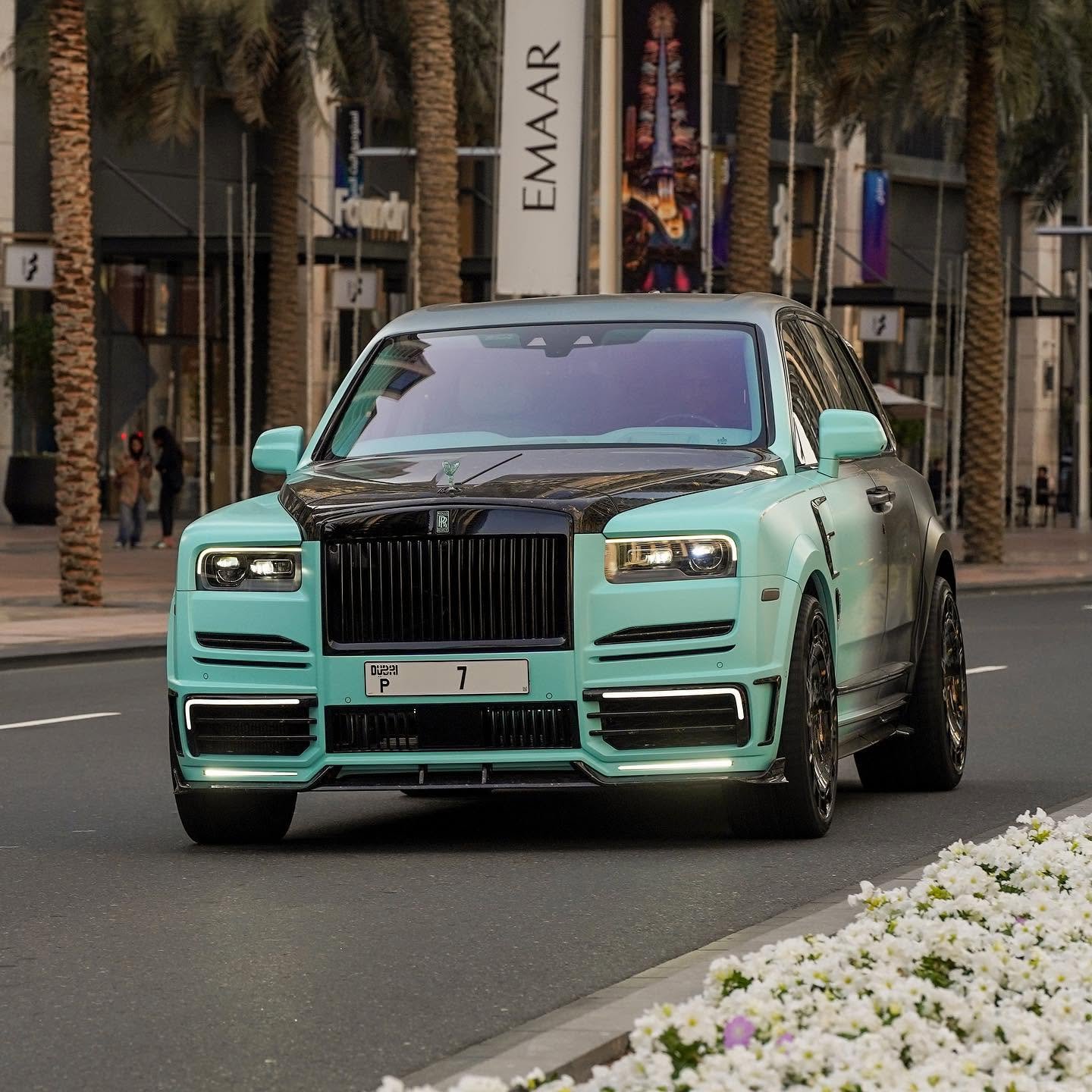
In April 2023 the sign P7 was sold for the amazing amount of $15 million finding "home" that year in a Rolls-Royce Cullinan. Photo: Mansory/Facebook
The list of the most expensive signs in the world
At the top is the P7 Dubai, which was sold for about $15 million. Here is the sign. «1» of Abu Dhabi with $14.5 million, and right after that one meets AA9, D5 and AA8 from Dubai, which exceeded or touched the $10 million. Then there are the signs «5», «2» and «09», also sold against amounts ranging from $5 to nearly $7 million. Numbers fill in the ten «7» and «9», proving that the most accurate signs in the world are not complex words or elaborate character combinations, but the simplest possible numbers.
Interestingly, signs follow exactly the same logic as works of art, rare watches, or collectible cars. None of this is costed based on the material it's made of. A Picasso painting is not worth millions because of its canvas and colors. A Ferrari 250 GTO is not valued in tens of millions because it has better metal than the other cars. Value results from rareness, history, and especially from people's desire to acquire something that few can acquire. With this logic, a sign such as F1 in Britain or P7 in Dubai works more as a cultural object than as a car component. It represents a narrative, a success story, a position in the social hierarchy.
Yet history is not only about vanity. In many cases these auctions are linked to charity purposes. Revenue from the sale of P7 was allocated to the programme «1 Billion Meals Endowment», while several more auctions in the United Arab Emirates finance social and humanitarian actions. The contradiction is almost ironic: the desire for social visibility is transformed into a mechanism for financing public benefit.
Maybe this is the element that makes vanity plates so exciting. They're not really signs. These are stories, class symbols. The way people want to see themselves and, above all, the way others want to see them. «There is something worse than talking about you, not talking about you at all.» said Oscar Wilde with his familiar phlegmatic humor. This ancient need that remains alive to this day, not only to be but also to look above the rest. Even if that is why they no longer need shiny gold coats, but a humble aluminum surface and a number.
Photos: Getty Images/Ideal Image

