
The car is called Xiaomi SU7. The company behind it is the same one that makes smartphones that have millions of Greeks in their pocket. And the story of why he doesn't even come here is more exciting than it seems at first glance.
The company that built a car like a smartphone.
The Xiaomi He entered the car industry in 2024 with a bet most considered bold, if not reckless. He had no experience in motoring, no factories, no network. But he had something that few companies in the world have: a comprehensive digital ecosystem, with smartphone, home, tablets, wearables and artificial intelligence. The car was the last piece of the puzzle and of course the most costly.
The SU7 sedan was released in China and the market went crazy. The new generation of SU7, presented in March 2026, collected 15,000 orders in just 34 minutes.
He surpassed Tesla Model 3 in sales in China within 2025, marking a turning point for the premium electric sedan category. And Xiaomi didn't stop there. SU7 Ultra broke the production electric car record at Nürburgring, completing the round in time that left Porsche Taycan and Rimac Nevera behind.
Four models, four hits
Today, the Xiaomi Auto has already built a remarkable range. SU7 sedan in its new format forms the basis — an electric premium with autonomy up to 830 km and an electric motor V6s Plus. The company's YU7, SUV, collected over 240,000 orders within the first 18 hours of its launch and has delivered 232.000 units by April 2026.
YU7 GT, the racing version of SUV, recorded lap time at Nürburgring Nordschleife 7:22,755, surpassing the previous SUV class record by 14 seconds. The YU7 GT yields a total of 990 horsepower, thanks to a two electric motor system, with an estimated acceleration of 0-100 km/h near 2 seconds. These figures face it not with other Chinese SUVs, but with Porsche Cayenne Turbo GT and Audi RS Q8.
The Xiaomi It also prepares YU7 GT as the first model developed in collaboration with European engineers, combining performance, comfort and driving dynamics. But all this for the Chinese, at least for now...
The reason he's not here
The problem for Europe — and of course for Greece — is that success came much faster than production capacity. Waiting times for SU7 reached 41 weeks, while for some versions of YU7 waiting exceeds one year, with an average of 58 weeks. China. How many cars are left for Europe?
The financial framework adds another parameter. In the first quarter of 2026, Xiaomi Auto delivered 80,856 cars and the EV sector showed revenue of 19.9 billion Wan — and operating losses of 3.1 billion Wan. The company grows rapidly, sells, but still invests more than it makes. According to today's data, Xiaomi Auto plans official entry into Europe in the second half of 2027, starting in Germany.
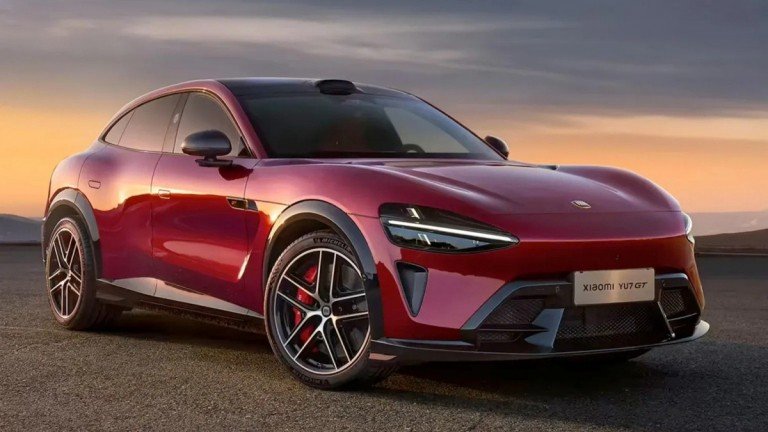
Xiaomi YU7 GT
Munich as a starting point for Europe
He opened a research and development centre in Munich, led by executives who have experience in BMW, Porsche and Lamborghini. The -friend of newsauto- Rudolf Dittrich, who had worked on the BMW M4 GT3 program, leads the center, while in the dynamic vehicle head is Claus-Dieter Groll, BMW veteran with experience in series 3, 4, Z4, X5, X6 and X7.
The President Xiaomi, Lu Weibing, already tested driving 800 km in Germany, from Berlin to Hamburg and from there to Frankfurt, assessing both the car and the European charging infrastructure. On the highway - without speed limit - SU7 Ultra stepped on it and up to 260 km/h! He's happy, the truth is...
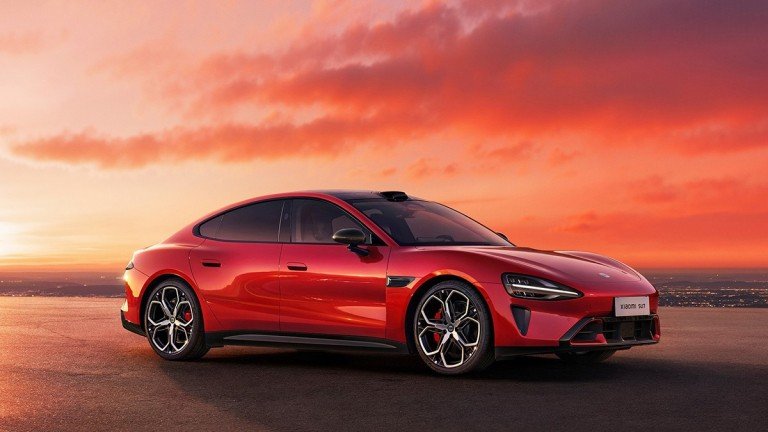
Xiaomi SU7
Customs, customs and the difficult European equation
In addition to logistics, there is also the issue of cost. Since October 2024, the EU has imposed countervailing duties on Chinese electrics. For Xiaomi, this translates into a basic duty of 10% plus an additional charge of 20.7%, i.e. a total of around 30.7%. If it is a new vehicle, the total customs duties reach 45.3%.
This means that while SU7 starts at around 28,000 euros in China, in Europe estimates converge at a starting price of between 35,000 and 40,000 euros, taking into account customs duties, certification and adaptation to the CCS2 standard. A price that still makes it competitive against Tesla Model 3 and BYD Seal, but without its impressive tariff advantage in China.
Greece: at the end of the line
Today there is no official presence Xiaomi Auto in Europe. One can obtain an SU7 or YU7 via direct import platforms from China, but there is no formal type approval for Europe and by extension for Greece, apart from that there is no service network, spare parts, trained technicians, etc.
The Xiaomi Auto plans to enter Europe in the second half of 2027, starting in Germany. British skilled models are expected to follow from the first half of 2028.
For Greece, the scene is even more specific. Large markets, such as Germany, France, the Netherlands, Norway and Spain, will come first — There are larger volumes, more mature electric drive and charging infrastructure. The Greek market will only follow after the European plan has stabilised.
Chinese brands held only 0.4% of EV sales in the EU in 2019, while in 2024 they reached 8%. The Xiaomi He wants to be the next major Chinese brand to make this jump in Europe. But he's not going to do it in a hurry and be exposed.
So the question is not whether the Xiaomi He wants to come to Greece. He does. The question is when will it have enough cars, enough economic stability and enough European maturity to do it right. The answer, with today's data, probably doesn't fall until 2028.
Share it

