
The summer period is completed leaving a strong financial footprint on the budgets of Greek households, with the fuel pump highlighted in the irrefutable «witness» the pressure on the market.
Intense economic pressures were received by Greek households during the summer due to high fuel prices, which exceeded the psychological limit of two euros
Unleaded petrol, firmly established above the psychological limit of EUR 2 per litre, it was not just a number in the light paintings of the stations but the determining factor that shaped the map of this year's holidays.
The data and labellings (ERTnews) of the former president of the Panhellenic Federation of Fuel Agents (POPEK), George Asmatoglu, clearly reflect a new reality: the forced change of consumer habits, the limitation of movements and the revision of the summer escape model.
The X-ray of the values: From international dashboard to Greek pump
The progress of fuel prices during August has been a result of international oil fluctuations. Asmatoglu explained, the increases experienced by drivers at the peak of the summer period were the result of the upward trajectory followed by international crude oil prices over the previous weeks. The barrel was reinforced by the $88 levels, exceeded $92 and touched $94, inevitably supporting refining prices and the wholesale market.
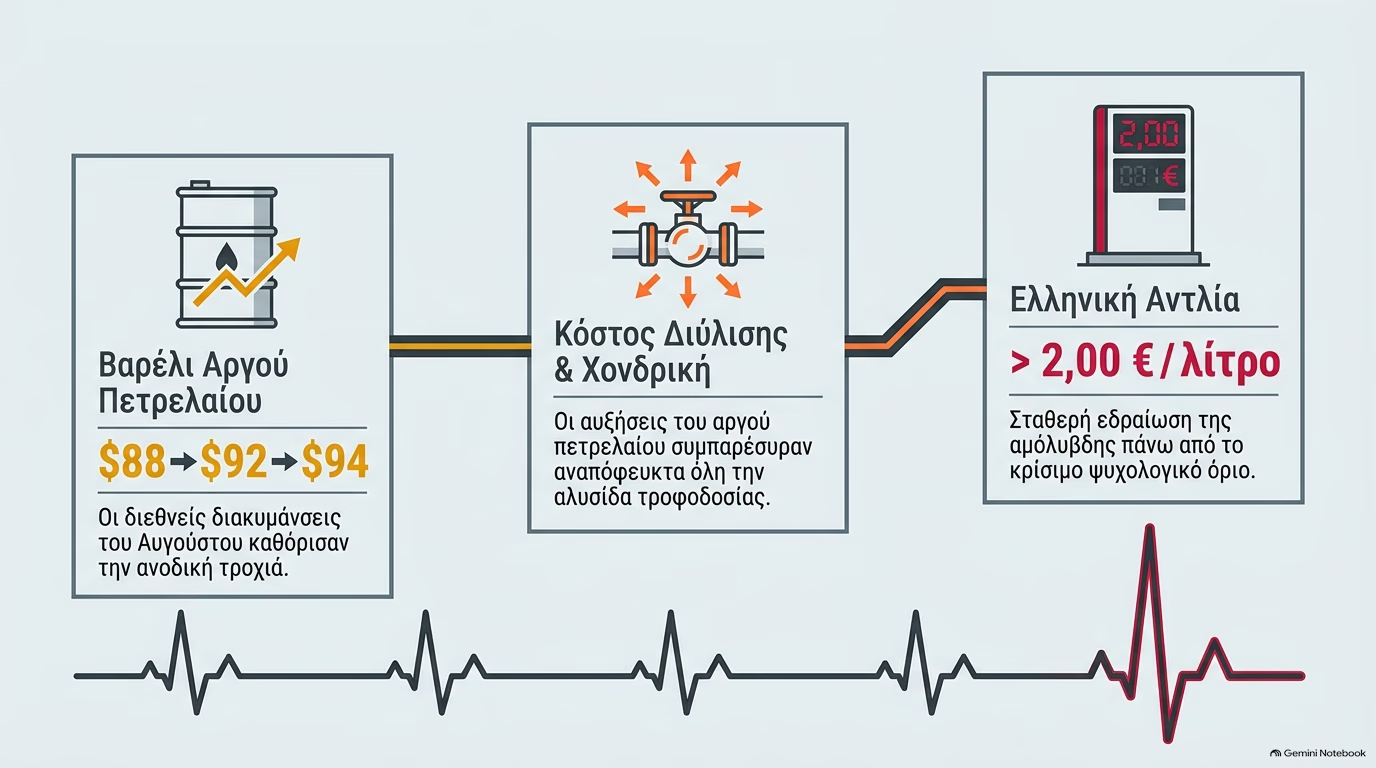
According to the official figures of the Ministry of Development, the average nationwide price of unleaded petrol was set at 2,015 euros per litre. In the island regions, Cyclades, Dodecanese and also in difficult continental areas of the country, additional transport costs ejected the price of unleaded near or above 2.50 euros per litre. These prices made the cost of moving prohibitive for a large part of the population.
The print on the holidays
The fuel pump revealed a deeper socio-economic shifting trend. Maintaining the unleaded over the 2 euro barrier forced thousands of households to adjust their holiday plan.
According to Mr Asmatoglu, the image of the large urban centres in August was revealing: traffic in cities remained significantly higher compared to previous years, confirming that a significant percentage of citizens either failed to travel at all or drastically limited the duration of their stay outside the walls.
At the same time, the drivers who moved narrowed down traffic and consumption. The use of IX was limited to the absolutely necessary routes.
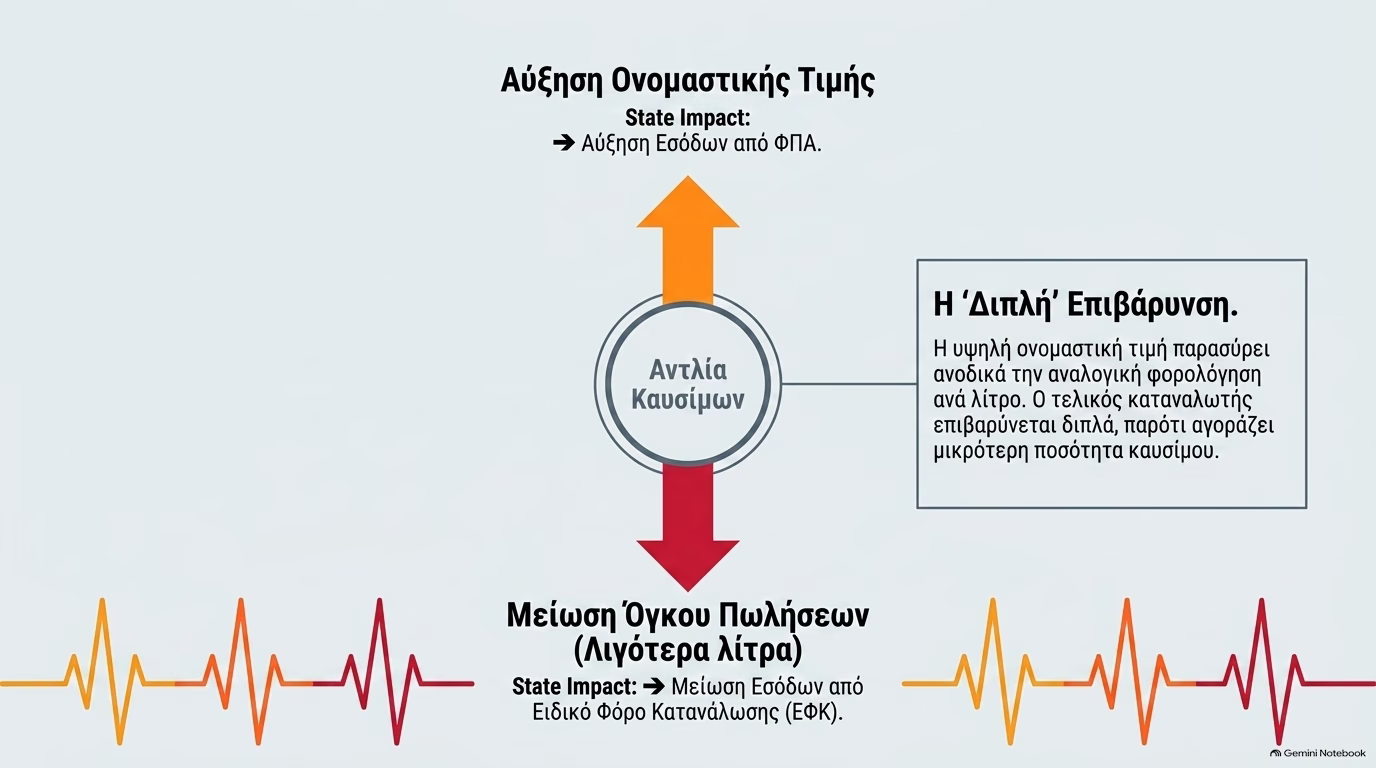
The decrease in sales volume at the stations is clearly reflected in state revenue. Public funds record reduced receipts from the Special Consumption Tax (EFK), a development which confirms the reduction of the total quantity consumed in litres.
On the contrary, VAT revenue appears to be increased, as the high nominal price is bringing the proportional taxation per litre up, twice the final consumer.
What about prices in the next period
Regarding price developments in the next period, Mr Asmatoglu appears restrained. Although the latest data from international markets show a tendency to lower the prices of crude, this de-escalation does not instantly reach the consumer tank.
Due to the time lag of the tariff mechanism from refineries to stations, high prices are expected to be maintained at least until mid-week. As long as the international fall is maintained with lasting duration, then only the reduction in the retail market will begin to be gradually reflected.
Next big headache: Heating oil
As summer moves towards its end, the anguish of the market and households shifts from summer travel to winter needs. Maintaining traffic oil at high levels raises intense concerns about the starting price of heating oil.
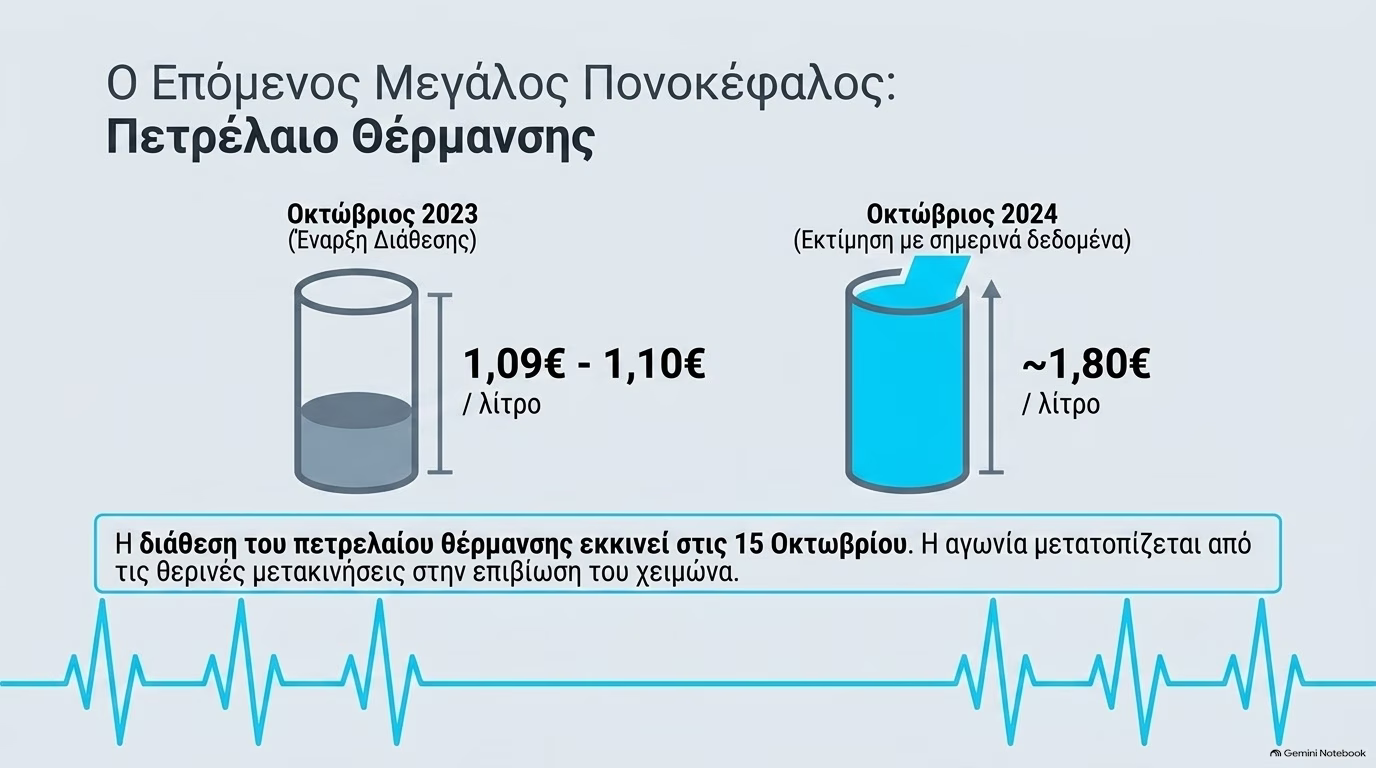
The disposal of heating oil begins on 15 October and it is necessary to improve the climate in international markets by then.
Last October, at the start of the supply of heating oil, the starting price averaged between EUR 1.09 and EUR 1.10 per litre. With today's data, its price would be close to 1.8 euros a litre.
If international prices do not stabilise at lower levels, Greek households will be asked to face a double wave of accuracy. After the increased cost of summer travel, meeting heating needs threatens to develop into the next major financial bet of autumn.
The fuel market is in a delicate balance, where prolonged accuracy test consumer strengths and compresses domestic demand volume.

