
If there is something that is essential to the development of the Artificial Intelligence and more generally in the 4th Industrial Revolution, this is the... clouds. With the cloud being the only way to store the data needed to develop the next generation of digital services, Greece claims a leading position by attracting more and more data centers to its territory.
Our country is developing into a key hub of digital services within an environment of accelerated demand for cloud infrastructure and applications A and is expected to receive investments that will exceed 50 billion euros over the coming decade. The big news, however, is not just that. It is also the fact that if we observe the map of their location data centers in the country, we will notice that interest in giga or hyperscale data centers (large scale) has focused on areas mainly in Northern Greece, opening jobs there and contributing to decentralisation.
Think about it. «big 4» data centers and cloud data storage services, i.e. AWS (Amazon), Google and Microsoft, have already been active in our country in investments to create data centers, and global colossians of real estate, investment and infrastructure development, such as EXA Infrastructure, participate in the projects or chart their presence in Greece. Nothing is cost-free of course: a typical data center needs space (as three times the OAKA field), current (as much as it consumes a city like Drama annually) and water (as much as Trikala drink annually)...
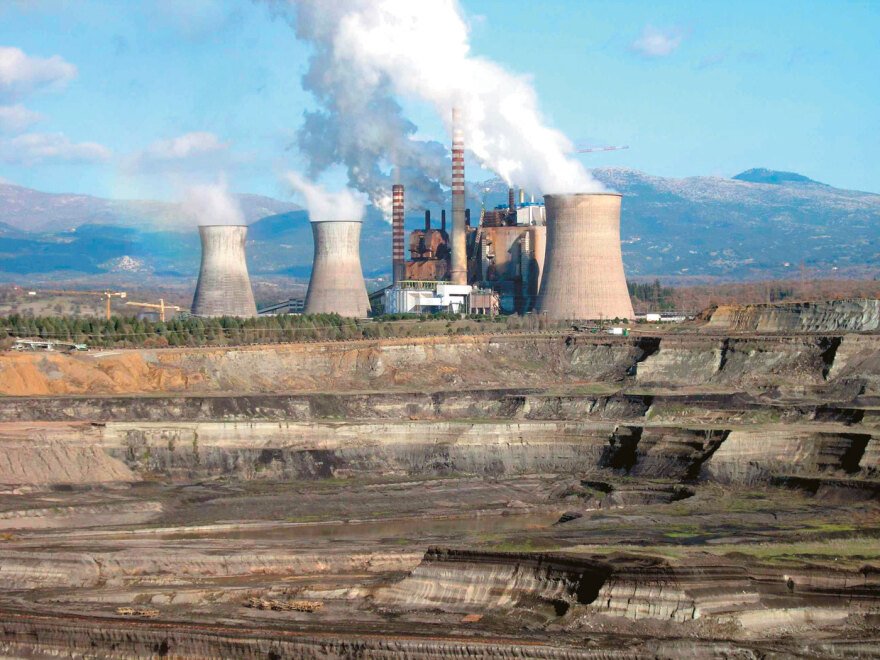
No more lignite.
The Greek government has seen the explosion of interest in creating data centers and makes sure to get... pole position in it. Typical is the design for the giga data center location in collaboration with interested investors from «big 4» in Kozani, with PPC, which owns the lignite plant. This is expected to turn into a huge data center, in which data going up the cloud from across Europe will be stored. This centre is expected to attract an investment of EUR 5.75 billion and open around 2,000 permanent jobs.
The project seems attractive, given that it is an area with available plots, stable interconnection and position that can support development to the North, West, but also the new developing market of the Middle East and Turkey. PPC has the advantage of participating in the project of the underwater fiber optic cable EMC West and the program of electricity interconnection Greece – Egypt GREGY.
According to datacentermap.com data processed by «SUBJECT»Today in Greece there are 29 data centers from 19 investors. Of these, 19 are located in Attica, which is approaching a point of saturation, four in Thessaloniki, two in Chania, and one in Volos, Kozani, Orchomenos and Heraklion Crete.
As a result of a study by PwC on behalf of the Greek government, data centers in our country have a recorded investment interest that has exceeded 1 GW of power and is mainly concerned with Attica (~65%). Total expressed interest moves between 1.4 and 2.2 GW.
According to the PwC site study, 36 requests for connection of new installations with a total capacity of around 1.4 GW have been submitted to the IPTO transport system and the DEDGE distribution network. Of these, about 30% have already received terms of association, indicating that part of the investment projects are in a mature stage. To these add the interest that they have officially expressed investors for extra 0.8 GW projects. On the basis of the information available, the total investment interest in Greece is estimated to be between 1.4 and 2.2 GW.
The largest demand for energy from data centers has Attica with 800 to 1,260 MW (of which 330 MW have received terms of association), followed by Western Macedonia with 140-440 MW and Boeotia with 275 MW. Crete (45 MW), Corinth (40-80), Thessaloniki (30 MW), Megalopoli (25 MW) and Filippiada (0.4 MW) have entered the map.
The same site study states that the creation of the centres of this power (1GW) would lead to «unlock» Multiplying benefits, helping Greece develop into a digital infrastructure hub. This in practice translates to 10 billion euros of investment (10 million per MW, before computing equipment, in the construction of data centers), opening 1,000 fixed jobs and developing through additional infrastructure and supporting services for data centers. Thus, the combination of digital investments in data centers, underwater fibre optic cables and supercomputers helps create a digital hub.
But this is not the full picture. New agreements are coming or have already come to Greece, which significantly improve the country's leadership position as a data transfer hub in Southeast Europe, contributing to the strengthening of an attractive environment for companies seeking efficient and reliable data trafficking.
$1.34 billion by 2029
A recent study by the consulting and analysis company Arizona says the data centers market in Greece is expected to record cumulative investments of over $1.34 billion by 2029. The authors of the study say that Greece's advantageous geographical location, as a hub connecting Europe, Africa, the Middle East and Asia, places it as an attractive destination for strategic investments in data centres. Arizona's study states that «Greece is expected to add more than 67,819 sq mi of data centres during the period 2024-2029». And global cloud service providers, such as Google and Microsoft, have made a significant contribution to the purchase of data centres in Greece and to increasing the extent of these.
Hydrobora
Data centers may be welcome to any economy, but there is also the price: for their operation they need safe spaces with mild climatic conditions, adequate and stable electrical connection, as well as water. Every chatbot question consumes energy, and water, with the increasingly use of AI explaining the increase up to five times over the required computing power worldwide.
In FLAP-D regions (Frankfurt, Paris, London, Amsterdam, Dublin) the completeness of existing facilities exceeds 90% and there is saturation of the electricity network with delays and restrictions on the development of new facilities. In Dublin data centers consume every year 20% of total energy consumed by all Ireland annually!
The PwC study concludes that at national level there is electricity adequacy, but the relative mismatch between areas of high availability and demand causes concern. From 1.9 GW today, the total UN Network capacity for data centers infrastructure is expected to reach 2.9 GW by 2034. All this regional development creates a claimable market of up to 5 GW from the wider region of Southeast Europe and the Middle East, PwC analysts say, as the development of demand for electricity for data centers in Europe, the Middle East and North Africa (EMEA) leads to a triple increase.
Energy costs
According to data from the International Energy Commission (IEA), the electricity consumption of a data center is colossal: a typical mid-sized data center (about 15-20 MW) consumes 130,000 to 175,000 megawatt hours (MWh) per year, equivalent to the electricity needed by 30,000 to 40,000 households, namely Drama or Karditsa every year. In the AI era energy needs have been launched. According to official data from the International Energy Agency, total global consumption of data centers is expected to exceed 1,000 Terawatt hours (TWh), a size equal to the full energy consumption of a country such as Japan or Germany.
«Invisible» is also the energy cost of everyday life, since a simple Google search consumes about 0,0003 kWh, while a question on ChatGPT needs 10 times more current (about 0,003 kWh) due to complex processing. Creating an AI video for just 5 seconds consumes electricity as much as a microwave at the end for an entire hour!
Το υδρολογικό κόστος είναι ένα άλλο μεγάλο κομμάτι, καθώς σημαντική για τα data centers είναι η ψύξη, η οποία επιτυγχάνεται και με τη χρήση νερού. Σύμφωνα με στοιχεία της Eurelectric, τα giga data centers που χρησιμοποιούν ψύξη από νερό απαιτούν από 1 έως 5 εκατομμύρια κυβικά μέτρα νερού τον χρόνο. Αυτά συνήθως αποστερούνται από τους αντλιοταμιευτήρες, ενώ χώρες όπως η Κίνα έχουν αρχίσει να υιοθετούν ριζοσπαστικές λύσεις, όπως η χωροθέτηση υποθαλάσσιων (!) data centers για επίτευξη ψύξης χαμηλού κόστους.
Aς το δούμε αναλυτικότερα. Σύμφωνα με στοιχεία της Brookings, ένα τυπικό μεσαίου μεγέθους data center (15-20 MW) καταναλώνει κατά μέσο όρο 1,1 έως 1,9 εκατομμύρια λίτρα νερού τη μέρα. Η ποσότητα αυτή ισοδυναμεί με την ημερήσια κατανάλωση 1.000 νοικοκυριών.
Ωστόσο, στα σύγχρονα γιγαντιαία data centers (hyperscale) που υποστηρίζουν εφαρμογές AI, η κατανάλωση μπορεί να εκτοξευθεί στα 3,8 έως 19 εκατομμύρια λίτρα ημερησίως. Αυτό στην πράξη ισοδυναμεί με την ετήσια κατανάλωση νερού μιας ολόκληρης πόλης, μεγέθους από 10.000 έως 50.000 κατοίκων.
Με λίγα λόγια, ένα giga data center καναλώνει ετησίως τόσο νερό όσο θα χρειάζονταν για να ξεδιψάσουν πόλεις όπως η Ναύπακτος, η Κως και η Ζάκυνθος, αλλά και μεγαλύτερες για τα hyperscale data centers, όπως τα Τρίκαλα, τα Ιωάννινα, το Αγρίνιο και η Κατερίνη. Βέβαια, η κατανάλωση εξαρτάται άμεσα από το ενεργειακό φορτίο. Ετσι, ένα τυπικό data center 100 MW καταναλώνει περίπου 2 εκατομμύρια λίτρα νερού την ημέρα.
Οι άλλες απαιτήσεις
Πάντως, τα data centers, τα οποία αποτελούν κρίσιμες υποδομές της ψηφιακής οικονομίας και δραστηριότητας, δεν χρειάζονται μόνο ρεύμα και νερό. Υπάρχουν δύο βασικές προϋποθέσεις που απαιτούνται ώστε να λειτουργούν: η αξιόπιστη παροχή ενέργειας και η υψηλής χωρητικότητας τηλεπικοινωνιακή συνδεσιμότητα. Σε ό,τι αφορά το δεύτερο κομμάτι, αυτό επιτυγχάνεται σε μεγάλο βαθμό μέσω των υποθαλάσσιων καλωδίων οπτικών ινών, τα οποία μεταφέρουν το μεγαλύτερο μέρος της διεθνούς διαδικτυακής κίνησης μεταξύ χωρών και ηπείρων. Οταν τα καλώδια φτάνουν στην ξηρά καταλήγουν σε σταθμούς προσαιγιάλωσης (Cable Landing Stations), απ’ όπου μέσω χερσαίων δικτύων οπτικών ινών διασυνδέονται με data centers, όπου γίνεται η επεξεργασία, αποθήκευση και δρομολόγηση της ψηφιακής κίνησης προς το Διαδίκτυο, τις υπηρεσίες cloud και τους τελικούς χρήστες.
Η εγγύτητα των data centers σε υποθαλάσσια καλώδια μειώνει την καθυστέρηση (latency), αυξάνει τη χωρητικότητα και ενισχύει την αξιοπιστία των διεθνών δικτύων. Στο πλαίσιο αυτό, η Αθήνα και η Κρήτη, λόγω των πολλών νέων επενδύσεων σε υποθαλάσσια καλώδια και ψηφιακές υποδομές που βρίσκονται σε εξέλιξη, αναδεικνύονται σταδιακά σε σημαντικούς ψηφιακούς κόμβους (digital hubs) της Μεσογείου.
Παρεμπιπτόντως, το mega project της Microsoft στα Σπάτα και το Κορωπί προβλέπει την κατασκευή 3 data centers. Μόνο το κεντρικό συγκρότημα στα Σπάτα σχεδιάζεται να έχει κτιριακή επιφάνεια κοντά στα 15.000 – 20.000 τ.μ. Περίπου δηλαδή όσο το μεγαλοπρεπές Μουσείο της Ακρόπολης στην Αθήνα, ή αν θέλετε σε γηπεδικούς όρους όσο τρεις φορές ο αγωνιστικός χώρος του ΟΑΚΑ.
Με μια σειρά λοιπόν από τεράστιους παίκτες του ελληνικού και του ξένου επιχειρείν να έχουν ανακοινώσει, να τρέχουν ήδη ή να προγραμματίζουν επενδύσεις στο cloud στην Ελλάδα, τα ακίνητα σε περιοχές εκτός του πυκνού αστικού ιστού, όπως τα Μεσόγεια, είναι δημοφιλέστατα. Κι αυτό γιατί σε αυτές τις περιοχές υπάρχουν οικόπεδα που προσφέρονται για τη χρήση τους ως data center: δηλαδή, είναι μεγάλα σε έκταση, μπορούν να δομηθούν σε αυτά τα κτίρια που θα στεγάσουν τα υπολογιστικά συστήματα, βρίσκονται κοντά σε βασικές υποδομές της χώρας, έχουν τις κατάλληλες κλιματολογικές συνθήκες και το μικρότερο ρίσκο (από πυρκαγιές, πλημμύρες και άλλες φυσικές καταστροφές), ενώ έχουν και… λογική τιμή.

