
Today, the housing crisis is developing into one of the most thorny socio-economic problems which the new generation is called upon to face. With rents galloping and wages remaining pinned down, the acquisition of housing seems to most young adults in Greece as an impossible scenario, entraping them in a prolonged dependency on the family home.
The economic impasse leads to a prolonged puberty, preventing personal independence and aggravating the country's demographic problem
Image is familiar to hundreds of thousands of Greek households: a thirty-year-old worker, with a degree, possibly a master's degree, returning this afternoon from his job in the room where he grew up.
In the same walls hosting his teen posters, today are the documents of his tax declaration and his professional notes. Extending residence in the home is not a cultural whim or a choice of comfort, but a tough economic necessity.
The recent OECD report entitled «Investing in Youth: Greece’s Path to Financial Independence» It captures in the most relentless way the structural crisis that prevents the country's younger generation from passing the door towards complete independence.
The X-ray of a... prolonged puberty
The findings of the OECD report make up a landscape of deep social and economic asphyxiation. In Greece, nearly 74% of young people aged 20 to 29 live with their parents. This percentage places the country in the top positions of the relevant list among OECD member states, next to countries such as Korea, Italy, Spain and Slovakia, abstaining from Nordic and North European countries, where leaving the family home takes place early in the early years of adulthood.
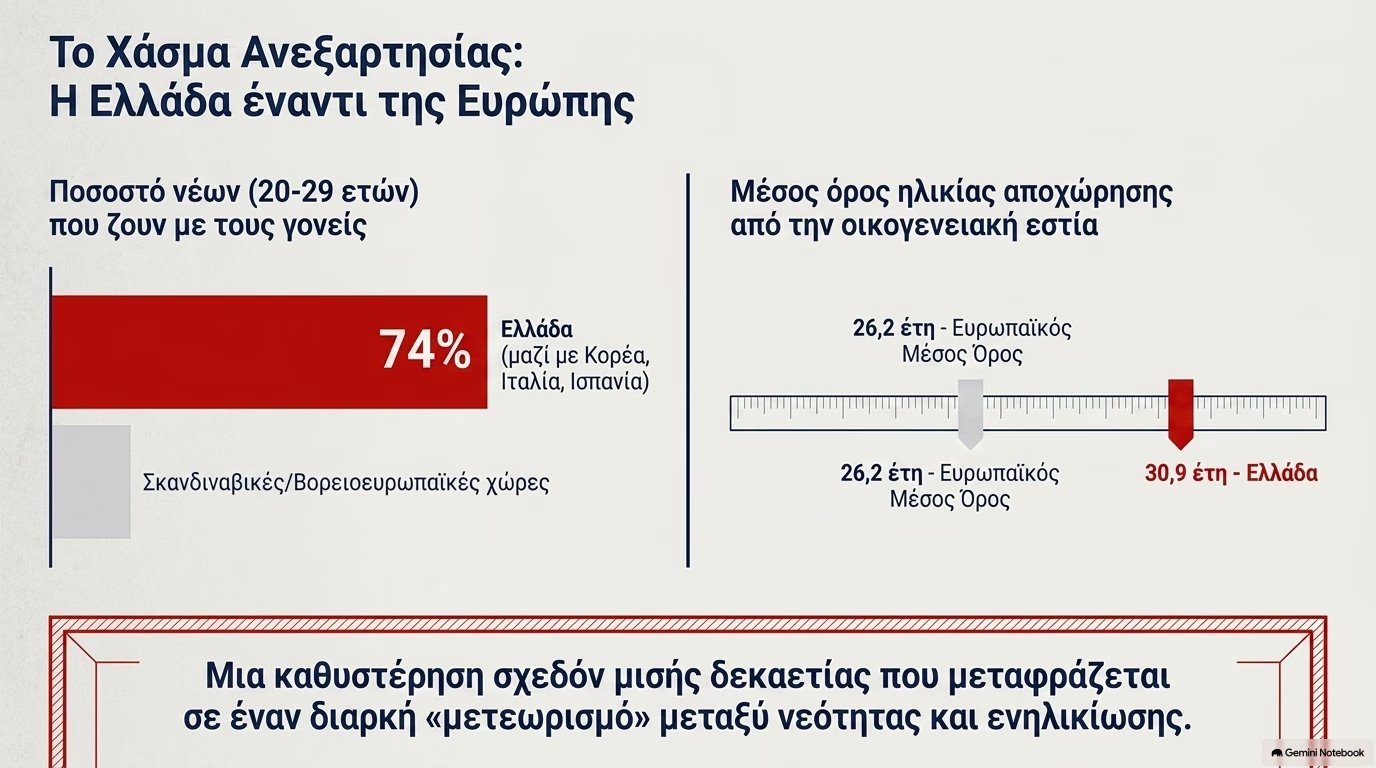
Even more indicative is the average age in which Greeks eventually manage to open their own home: 30.9 years. While the European and international average is 26.2 years, in Greece the transition to autonomous living is delayed by almost half a decade. Staying at home is not just a statistical size· translates into suspension of personal plans, delay in family creation and a lasting feeling «flatulence» between youth and adulthood.
Housing crisis: When rent swallows the salary
What, though, is due to this prolonged dwelling life? The answer lies in the profound disproportion between housing costs and disposable income.
For a young man aged 18 to 29 who dares to live alone in Greece, housing costs take on nightmare dimensions. The OECD report reveals that young people are invited to spend, on average, over 60% of their income only to cover rent and general interest accounts. This is more than twice the European average, which ranks housing costs in Greece as the most unbearable in Europe.
In the major urban centres, such as Athens and Thessaloniki, the situation is even more dramatic. Nearly 8 out of 10 young people devote over 40% of their income to the roof, far exceeding the internationally accepted 30% safety limit. The launch of real estate prices, the widespread spread of short-term leases of Airbnb type and the lack of available, quality and affordable housing have turned rental into an elusive dream.
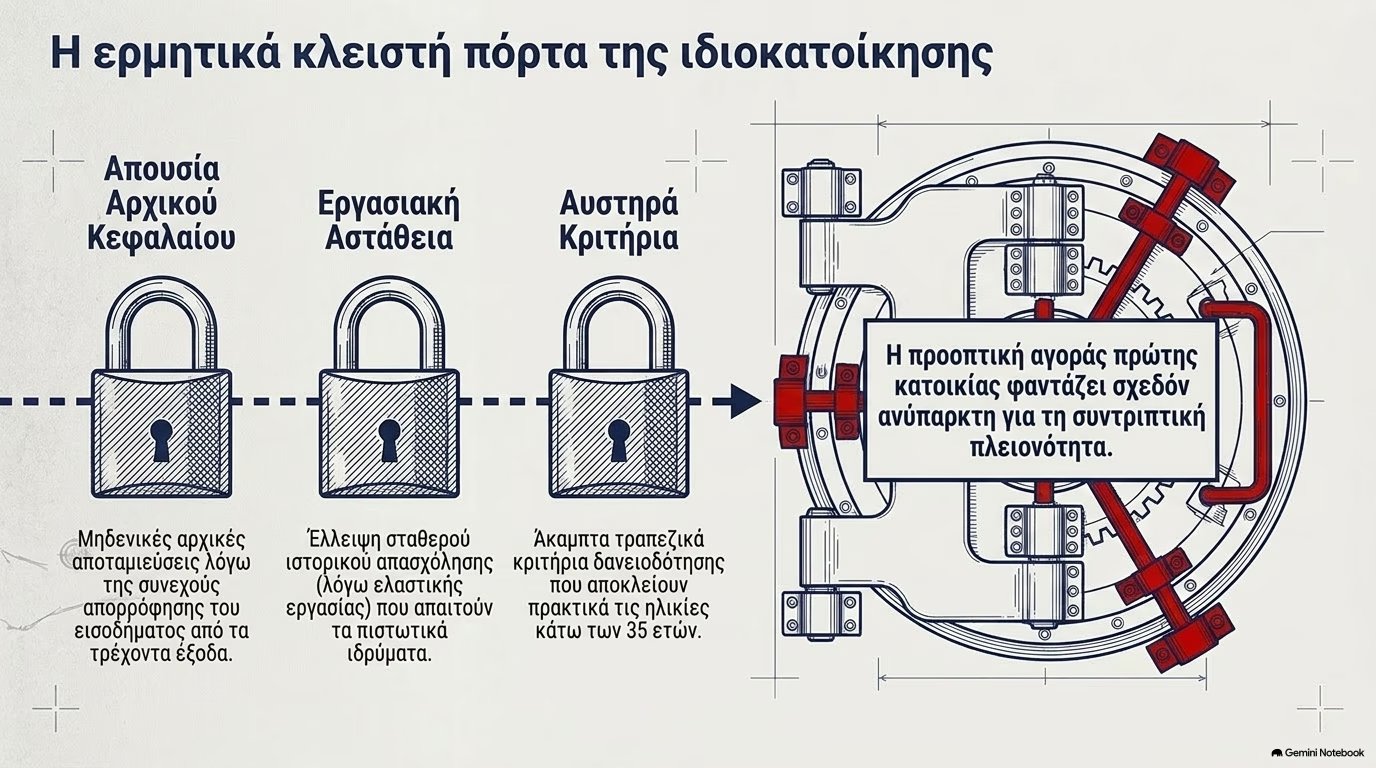
At the same time, the prospect of purchasing first residence seems almost nonexistent to the vast majority. The absence of initial savings, the strict banking lending criteria and the lack of stable historical employment keep the doors of bank lending tightly closed for ages under 35.
The labour market and psychological pressure
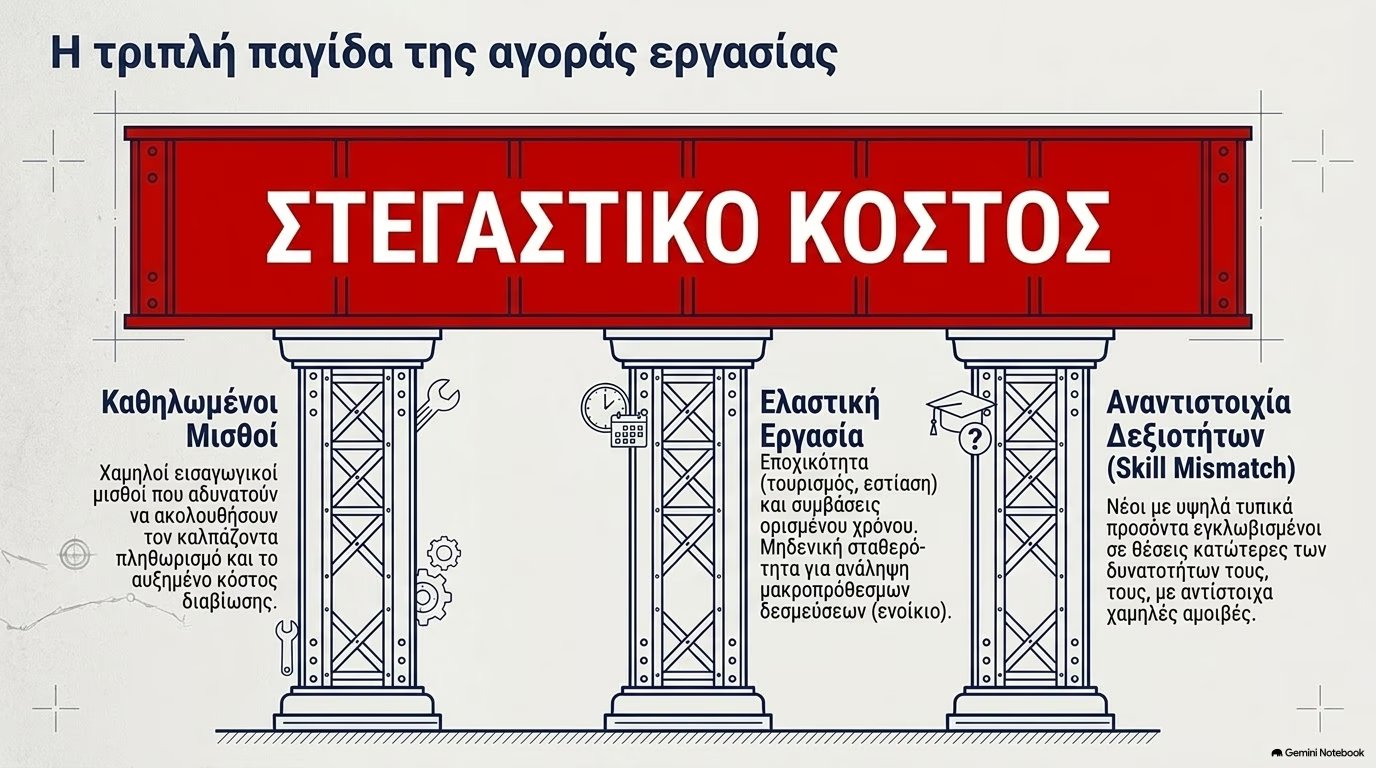
Το στεγαστικό πρόβλημα δεν λειτουργεί εν κενώ· συνδέεται άμεσα με τις δομικές αδυναμίες της ελληνικής αγοράς εργασίας. Παρά τη μείωση της ανεργίας των νέων σε σχέση με τα δραματικά επίπεδα της προηγούμενης δεκαετίας, η ποιότητα των θέσεων εργασίας παραμένει χαμηλή.
Οι νέοι στην Ελλάδα συχνά έρχονται αντιμέτωποι με:
- Χαμηλούς εισαγωγικούς μισθούς: Οι αμοιβές παραμένουν καθηλωμένες, την ώρα που ο πληθωρισμός και το κόστος διαβίωσης καλπάζουν.
- Ευέλικτες και προσωρινές μορφές απασχόλησης: Η εποχικότητα (ιδιαίτερα στον τουρισμό και την εστίαση) και οι συμβάσεις ορισμένου χρόνου δεν παρέχουν τη σταθερότητα που απαιτείται για την ανάληψη μακροπρόθεσμων οικονομικών δεσμεύσεων, όπως ένα ενοίκιο.
- Αναντιστοιχία δεξιοτήτων: Πολλοί νέοι με υψηλά τυπικά προσόντα αναγκάζονται να εργαστούν σε θέσεις κατώτερες των δυνατοτήτων τους, με αντίστοιχα χαμηλές αμοιβές.
Η οικονομική αυτή ομηρία έχει βαρύ ψυχολογικό και κοινωνικό αντίκτυπο. Σύμφωνα με την έρευνα «Risks That Matter» του ΟΟΣΑ, περίπου το 70% των νέων 18-24 ετών στην Ελλάδα δηλώνουν έντονα ανήσυχοι για το αν θα μπορέσουν να βρουν ή να διατηρήσουν κατάλληλη και προσιτή στέγη στο μέλλον. Η αβεβαιότητα αυτή καλλιεργεί ένα αίσθημα παρατεταμένης ανασφάλειας, ματαιώνει τη δημιουργία οικογένειας και τροφοδοτεί το δημογραφικό πρόβλημα της χώρας, ενώ παράλληλα διατηρεί ζωντανό το κύμα φυγής νέων επιστημόνων στο εξωτερικό (brain drain).
Το στοίχημα των πολιτικών: Αρκούν τα μέτρα;
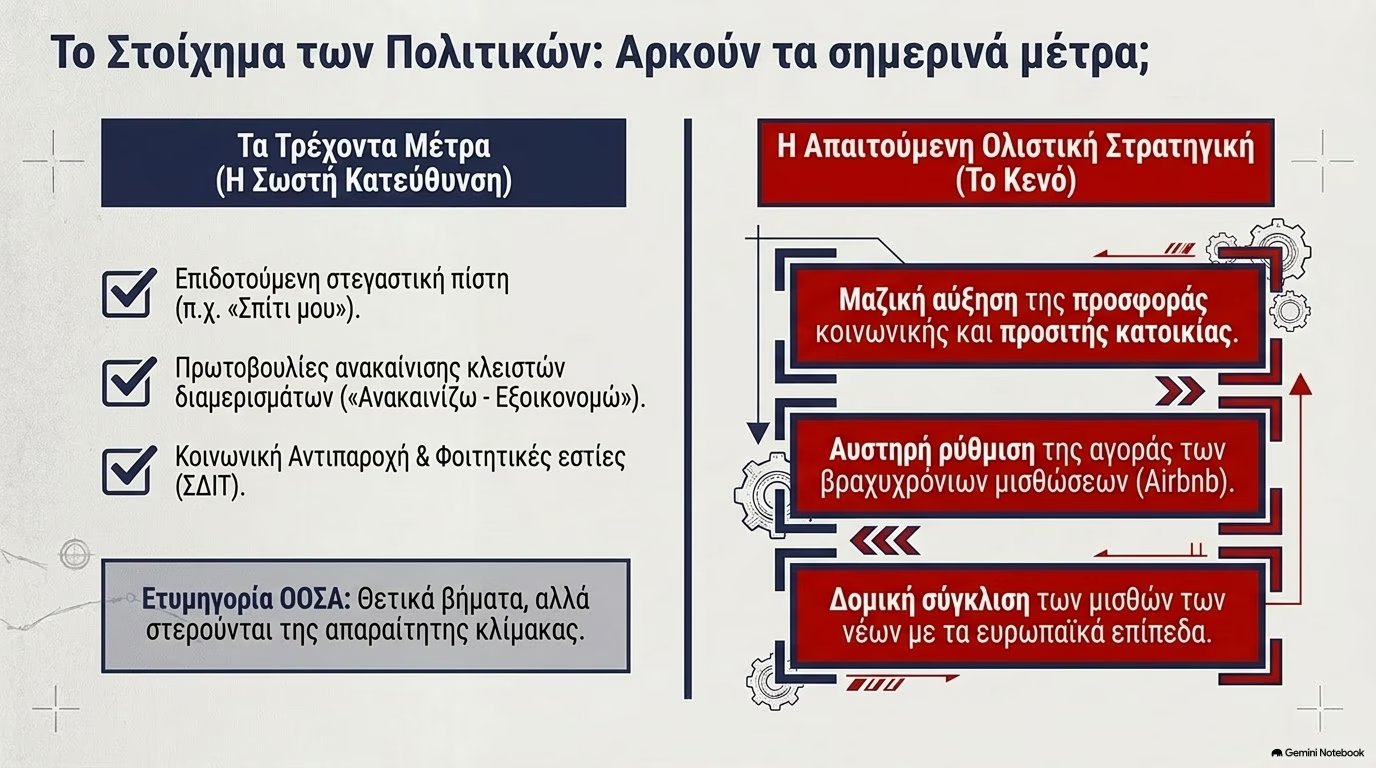
Απέναντι σε αυτή τη διαρθρωτική κρίση, η ανάγκη για ουσιαστικές παρεμβάσεις είναι επιτακτική. Η πολιτεία έχει θέσει σε εφαρμογή ορισμένα μέτρα στο πλαίσιο της στεγαστικής πολιτικής και του Εθνικού Σχεδίου Δράσης για το Δημογραφικό, όπως:
- Τα προγράμματα επιδοτούμενης στεγαστικής πίστης (όπως το «Σπίτι μου»), που διευκολύνουν την αγορά κατοικίας με χαμηλότοκα δάνεια για νέους.
- Πρωτοβουλίες ανακαίνισης κλειστών διαμερισμάτων, με στόχο τη διοχέτευσή τους στην αγορά με προσιτά ενοίκια (π.χ. «Ανακαινίζω – Εξοικονομώ για Νέους»).
- Το θεσμό της Κοινωνικής Αντιπαροχής και την επέκταση των φοιτητικών εστιών μέσω ΣΔΙΤ.
Ωστόσο, όπως επισημαίνουν οι αναλυτές του ΟΟΣΑ, τα μέτρα αυτά, αν και κινούνται προς τη σωστή κατεύθυνση, χρειάζεται να αποκτήσουν μεγαλύτερη κλίμακα και συνέχεια. Η αντιμετώπιση του στεγαστικού αδιεξόδου απαιτεί μια ολιστική στρατηγική που θα συνδυάζει την αύξηση της προσφοράς κοινωνικής και προσιτής κατοικίας, τη ρύθμιση της αγοράς των βραχυχρόνιων μισθώσεων, αλλά κυρίως τη σύγκλιση των μισθών των νέων με τα ευρωπαϊκά επίπεδα.
Εγκλωβισμένοι στο παιδικό δωμάτιο
Το «Home Sweet Home… με τους γονείς» αποτυπώνει όμως μια βαθιά κοινωνική πραγματικότητα. Η γενιά των 20άρηδων και των 30άρηδων στην Ελλάδα δεν ζητά πολυτέλειες· διεκδικεί το βασικό δικαίωμα στην αυτονομία και την ανεξαρτησία. Όσο το παιδικό δωμάτιο παραμένει το μοναδικό καταφύγιο απέναντι στην οικονομική καταιγίδα, η χώρα θα συνεχίσει να στερείται τη δυναμική, τη δημιουργικότητα και την εξέλιξη που μόνο μια οικονομικά ανεξάρτητη νεολαία μπορεί να προσφέρει.

