
A new investment in the battery sector comes to change the balance in the European car industry, dynamically putting an entire area on the electricity map.
While Europe is trying to limit its dependence on Asia to critical components and raw materials for electric cars, Chinese companies continue to strengthen their presence in the Old ContinentThis time not by introducing cars but by investing in the European industry itself.
One of the biggest moves of this kind is being prepared by Chinese Gotion, which plans to invest EUR 940 million in the creation of two new factories in Bayadolid, Spain.
ARTICLE CONTINUES AFTER ADVERSION
Gotion is far from unknown in the European car industry. It is one of the major battery manufacturers worldwide, with Volkswagen becoming its largest shareholder, having invested around EUR 1.1 billion in the Chinese company. Both sides maintain close strategic cooperation in the battery sector, while Gotion has already developed a productive presence in Europe.

The new investment in Spain is a highly ambitious industrial project directly linked to electricity and battery production. When the two units reach full operation expected to create around 1,000 permanent jobs; 2,500 people will be employed during the construction of the facilities.
The first of the two units will focus the recycling of batteries and the recovery of so-called «black mass». It is the material resulting from the processing of used batteries and includes valuable raw materials such as lithium, nickel, cobalt and manganese, which can be recovered and reused in the production of new accumulators.
ARTICLE CONTINUES AFTER ADVERSION
The second unit will have a different but equally crucial role, as it will be dedicated to the production of descents for batteries. In this way, the investment will cover two important pieces of the value chain, from recovering strategic materials to producing components necessary for electric car batteries.
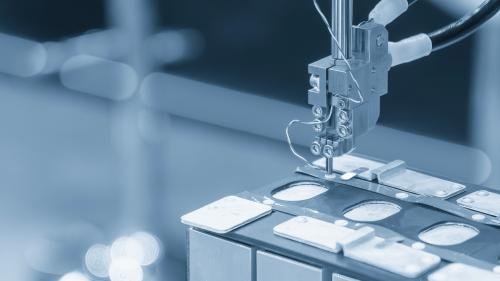
The two facilities are planned to develop about 700,000 square meters east of Bayadolid, further strengthens the already strong automotive character of the area, where Renault, Iveco and a large network of components industry companies are also active.
According to the design, the project will begin with the creation of the battery recycling plant and will then follow the descent factory. When their development is completed, the two plants will have an annual production capacity of around 200,000 tonnes each.
ARTICLE CONTINUES AFTER ADVERSION
Public funding of EUR 138 million has been approved for the implementation of the investment through the Spanish PERTE programme for the Electric and Connected Vehicle, while construction work is expected to begin in 2027.
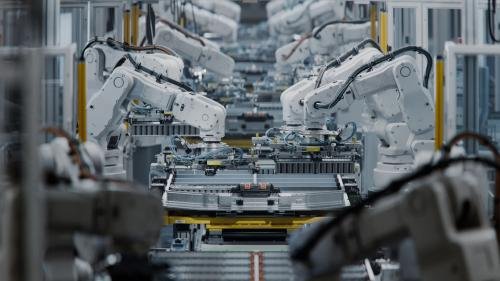
Particular emphasis is also placed on the environmental footprint of the project, with Gotion stating that new installations will have zero emissions. At the same time, the Chinese company wants to use advanced production, research and artificial intelligence technologies, with the aim of making the new industrial complex a point of reference in the circular economy as well.

