
From the protagonist of developments in artificial intelligence OpenAI is today «back» by Anthropic, since the development of ChatGPT, its leading consumer product has slowed significantly.
At the same time, Fidji Simo's departure caused reordering of responsibilities among Sam Altman's top deputys, while the sales sector has been involved in a costly battle to attract new customers.
Meanwhile, Anthropic surpassed OpenAI in both its revenue and valuation, which is now approaching $1 trillion thanks to the Claude Code programming tool.
At the same time, the company accelerates plans for an initial public bid in the fall, starting meetings with potential investors, stressing its progress towards its competitor, according to the Wall Street Journal.
For his part Altman, published X earlier this month that «We haven't had the best 12 months we've ever had, which is mostly my fault, but we're ready to have our best 12 months to date.».
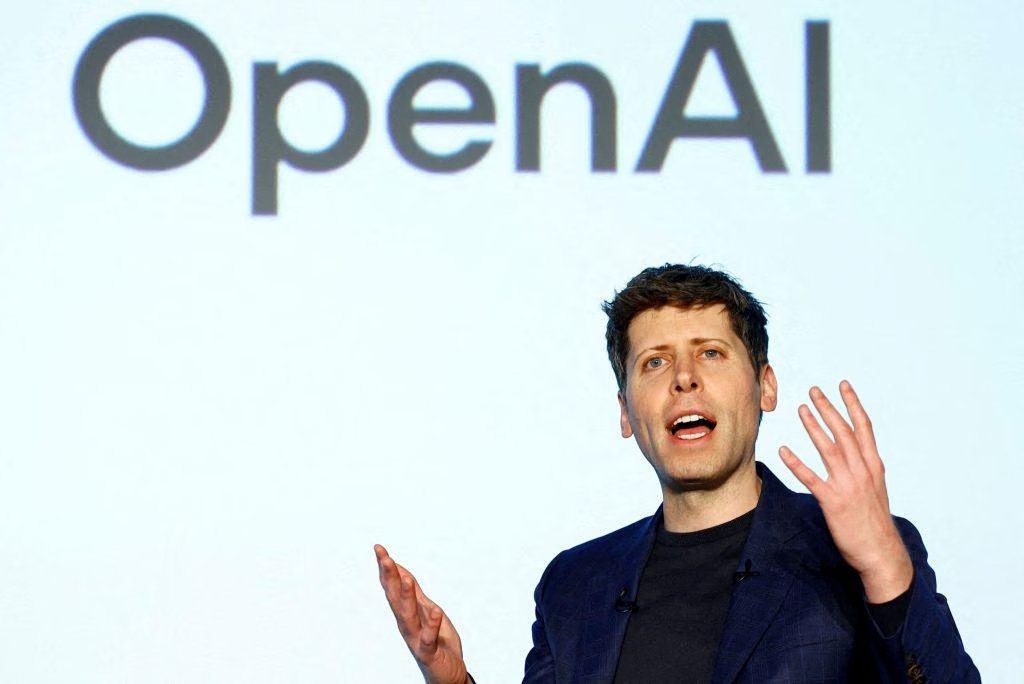
How Anthropic took the lead
Initially, Altman based the business's development on ChatGPT, betting that more people would register on the chatbot while AI would become more and more of their lives.
Instead, Claude Code's success made it clear that the biggest profits came from selling tools to software developers and the major companies that employed them.
While OpenAI sought a number of fancy projects, from a video generator to consumer devices and chips, its smallest and most targeted opponent filled the gap, developing a coding tool that helped her to conquer the lead.
OpenAI's reaction
OpenAI then released a number of new models focused on programming and other professional tasks and commissioned its president, Greg Brockman, to renew its product range.
It also concluded an agreement with Amazon on the sale of artificial intelligence tools to its customers and hired its former CEO Slack, Denise Dresser, as its first general revenue manager.
Altman is also in Washington this week to meet with Trump government officials and lawmakers to present a new model, as the government is in talks about further regulation of the industry.
At the same time, OpenAI executives are trying to draw up pricing plans for the Codex product for businesses, including price reductions that could help it gain market share.
However, this risks eroding its profit margins, which are also closely monitored in the light of an initial public offer.
The Battle of Models
In 2024 OpenAI was in a better position with regard to the companies it is now trying to re-approach. In autumn of the year he launched a number of models of reasoning (reasoning models), which were able to process step by step problems before answering.
This possibility proved suitable for drawing up a code, but was lagging behind in its education: that is, OpenAI models were not sufficient to handle more complex tasks.
For its part, Anthropic took the opposite approach: With its own model of reasoning called Sonnet 3.7, which launched a few months later, within 2025, the company reported that it focused on «real world work» reflecting the way businesses actually used artificial intelligence.
Codex problems proved to be an early warning signal to the upcoming challenges. Following the public announcement of the tool by OpenAI in May, its performance was below expectations. Software engineers turned against the Claude Code of Anthropic.
Many developers felt Codex was too slow and clumsy to use, which led OpenAI to change the product, so that it emulated Anthropic more. The company also created a new team, called «coding ninja», aiming to ensure that new models were designed in a way that customers would find useful.
But OpenAI executives were also distracted from other, more pressing issues, such as correcting a worsening relationship with Microsoft, its largest investor.
Then, they spent valuable computing resources on other projects that eventually failed, including the application of video creation called Sora.
Google's role
Meanwhile, ChatGPT's development suddenly slowed down after Google's own consumer chatbot began to record a vertical rise in popularity.
Then, the company lost an internal goal to reach a billion weekly active users by the end of the year, although it touched this number recently.
In a short time, Anthropic's growth rate far exceeded that of OpenAI, as it did with its appreciation.
When the Blackstone partnership was wrecked
When executives proposed to Blackstone a partnership to create a new company to sell artificial intelligence tools to the companies of the portfolio of private investment funds, they didn't... sting.
Blackstone chose Anthropic for this particular project, while OpenAI later concluded a separate deal with other investment fund market players.
Will OpenAI be back in the lead?
The company recently released a «application» incorporating Codex with ChatGPT and a web browser and stated that it has increased the number of users for the new product, as well as the autonomous Codex application, to 10 million users.
This month, a new model, called GPT 5.6 Sol, was released, which immediately became a success with developers and led Anthropic to extend access to its own powerful Fable model to compete with it.
OpenAI also benefits from a wider reaction from industry against Anthropic, which has been accused of trying to keep away from the US cheaper, Chinese models.
Source: ot.gr

