
In the TÜV reliability report, electric cars were first examined with the same severity that has been applied to conventional models for decades and the general picture shows that this technology has matured. Most electric vehicles proved particularly durable, with reliability indicators almost identical to those of gasoline-powered versions. However, within this environment of progress, two Tesla models stood out negatively, creating intense debate on the German market and not only.
So the new data reveals that most electric models move above average reliability. The Mini Cooper SE, Audi Q4 e-tron and Fiat 500e For example, they gathered very good performance in the 2-3 year class, proving that a modern electric motor and a proper after-sales package can ensure reliability in the best thermal models. In the same category, conventional cars such as Mazda2, Mercedes-Benz B-Class and Volkswagen T-Roc found at the top, with particularly low damage rates, close to 3%.
The picture changes radically with Tesla. Greek best seller electric Model 3 and European best seller Model Y were found at the end of the ranking, with harm rates that exceed every previous in the decade. The Model 3 shows 13,1% damage, while the Model Y It reaches the impressively high 17.3%, performance that turns it not only into the worst electric vehicle of research but also into the worst car overall in the category 2-3 years over the last ten years. These figures show that after two or three years of use, Tesla's two models record many problems.
Although the report does not analyse one by one the defects, the management of the organisation confirms that the Model Y presents high failures in the transmission system, suspensions and brakes, i.e. parts that form the trunk of safety and road behaviour. These elements increase concern, particularly for a model that is among Europe's most commercial electric vehicles.
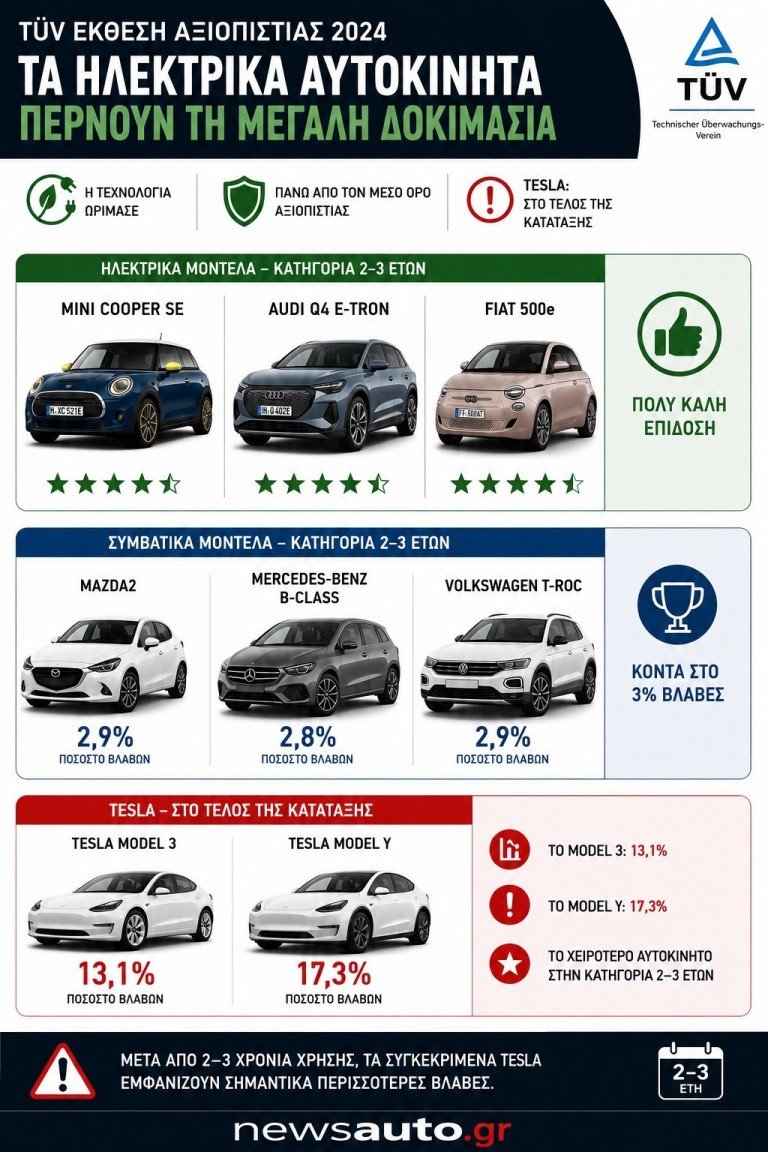
The comparison with the entire electric market becomes even more pronounced when it is taken into account that most models passed the test with performance similar to or better than conventional ones, while showing that electric drive technology has significant differences from brand to brand, with the quality of manufacture, production control and life of critical mechanical components such as batteries remaining decisive factors.
TÜV's research was based on 9.5 million technical checks carried out from summer 2024 to summer 2025. Failure rates were calculated on the basis of defects that could endanger driving safety or deprive a vehicle of the possibility of obtaining traffic authorisation. Although the range of kilometres and the way each vehicle is maintained affect performance, the results are the most objective indicator of the European industry.
NEWS TODAY
Electrics remain more expensive than thermals
He's here and he'll surprise you.
With 139 euros, you have everything.
Follow it. newsauto. gr Google News and learn all the news first
Share it

